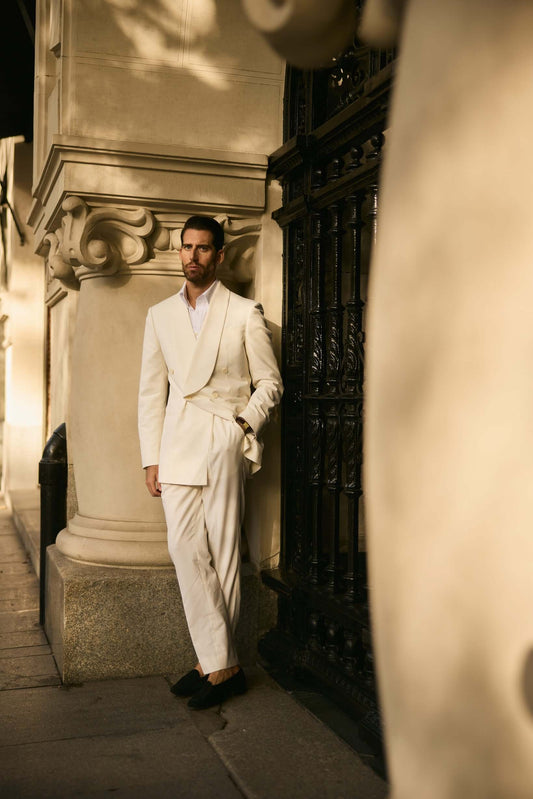

Business Professional Attire for Men: 2026 Dress Code Guide
Last modified:Business professional attire for men typically means a matching suit, dress shirt, conservative tie, leather dress shoes, and understated accessories. Navy and charcoal suits paired with white or light blue shirts remain dependable choices for corporate offices, interviews, client meetings, presentations, and other formal professional settings.
Modern business professional dress is less rigid than it once was, but fit, coordination, and the right level of formality still matter. Workplace expectations can vary by industry and employer, so the goal is to look polished without confusing business professional with business casual or more formal dress codes.
What Is Business Professional Attire for Men?

Business professional attire for men typically consists of a matching two-piece suit, dress shirt, tie, leather dress shoes, and minimal accessories. Navy, charcoal, and medium gray are among the most versatile suit colors, while white and light blue remain reliable shirt choices. The dress code is commonly associated with corporate offices, finance, law, interviews, client meetings, presentations, and executive settings.
Business Professional Attire at a Glance

| Item | Business Professional Standard |
|---|---|
| Suit | Navy, charcoal, or medium gray matching suit |
| Shirt | White, light blue, or a subtle professional pattern |
| Tie | Solid, striped, or subtly patterned conservative tie |
| Shoes | Black or dark brown leather Oxfords or Derbies |
| Belt | Leather belt coordinated with shoe color |
| Fit | Tailored and comfortable without appearing excessively tight |
| Patterns | Solid colors or understated stripes and checks |
| Accessories | Minimal and purposeful |
| Jeans | Generally not part of traditional business professional attire |
| Sneakers | Usually too casual for a traditional business professional dress code |
What Does Business Professional Mean for Men Today?

Business professional is a structured workplace dress code built around polished tailoring, conservative styling, and attention to detail. It is more formal than business casual and is commonly expected when professional appearance plays an important role in client confidence, workplace protocol, or executive presentation.
You are most likely to encounter business professional dress in corporate offices, finance, law, consulting, executive environments, important client meetings, presentations, and job interviews.
Modern workplaces may interpret the dress code differently, but the safest approach is still a coordinated suit, dress shirt, appropriate footwear, and restrained accessories. When an employer provides its own dress-code policy, that guidance should take priority.
Business Professional vs Business Formal vs Business Casual

Business professional, business formal, and business casual are related dress codes, but they do not always require the same level of formality. Employers may also use these terms differently, so workplace-specific guidance should always be considered.
| Dress Code | Typical Outfit | Tie | Matching Suit |
|---|---|---|---|
| Business Formal | Conservative dark suit, crisp dress shirt, restrained tie, polished formal shoes, and minimal accessories | Expected | Yes |
| Business Professional | Matching suit, dress shirt, tie, and leather dress shoes with slightly more flexibility in colors and subtle patterns | Usually | Yes |
| Business Casual | Dress trousers or chinos, collared shirt, and optional blazer | Usually optional | No |
For a deeper explanation of the more formal end of the spectrum, see our formal dress code for men guide. If your workplace allows more flexibility, read our complete guide to business casual for men.
Best Business Professional Suits for Men

A matching suit remains the foundation of traditional business professional attire. The strongest options are usually understated enough for repeated office wear while still looking polished in meetings, presentations, and client-facing situations.
Best Suit Colors
- Navy: highly versatile and appropriate across a wide range of professional environments.
- Charcoal gray: a conservative option that works particularly well for formal offices and client-facing roles.
- Medium gray: a flexible choice for everyday professional wear and year-round use.
If you are comparing options, our guide to the best suit colors for men explains how common shades differ, while our navy suit combinations guide provides practical shirt, tie, and shoe pairings.
Best Suit Style for Business Professional Attire

A single-breasted two-button suit with notch lapels is one of the safest choices for everyday professional wear. Solid fabrics are the most versatile, although restrained pinstripes and subtle checks can also work in workplaces that allow slightly more personality.
The jacket should sit cleanly across the shoulders, close without obvious pulling, and maintain enough room for comfortable movement. Trouser length should create a clean line without excessive fabric stacking over the shoes.
Fit usually has a greater effect on the finished appearance than choosing a more expensive fabric or a more fashion-forward silhouette. A correctly proportioned suit can look sharper and more professional than an expensive suit that fits poorly.
Build a Suit for the Way You Work
Choose the fabric, fit, and details for a business suit designed around your measurements and professional wardrobe.
DESIGN YOUR CUSTOM BUSINESS SUITBusiness Professional Outfit Examples for Men

There is no single required combination, but these outfit formulas provide reliable starting points for common professional situations.
Classic Corporate Outfit
Navy suit + white dress shirt + burgundy or navy tie + black leather Oxfords.
Finance or Legal Office Outfit
Charcoal suit + white dress shirt + conservative navy tie + black Oxfords.
Client Meeting Outfit
Navy suit + light blue dress shirt + textured navy tie + dark brown Oxfords.
Executive Business Outfit
Charcoal two-piece or three-piece suit + white shirt + understated patterned tie + polished black shoes.
Modern Business Professional Outfit
Medium gray suit + pale blue dress shirt + dark navy tie + dark brown leather Derbies.
The most important principle is consistency: the suit, shirt, tie, footwear, and accessories should look as though they belong at the same level of formality.
Business Professional Dress Shirts for Men

The dress shirt creates the visual foundation beneath the suit. Color, collar shape, fabric, sleeve length, and overall fit all influence how polished the outfit appears.
Best Shirt Colors
- White: the most conservative and versatile option.
- Light blue: professional, adaptable, and easy to pair with navy or gray suits.
- Subtle stripes: appropriate when the pattern remains restrained.
- Very light gray: suitable in many modern professional environments.
Best Shirt Collars
Point, semi-spread, and spread collars can all work with business suits. The best choice depends on your face proportions, tie knot, and jacket lapels. Our guide to types of shirt collars explains the differences in greater detail.
Best Dress Shirt Fabrics
Poplin, broadcloth, and twill are practical options for professional shirts. The ideal fabric depends on climate, desired texture, opacity, and how frequently the shirt will be worn.
A business shirt should sit comfortably around the neck when buttoned, allow movement through the shoulders, and finish at the correct sleeve length so a small amount of cuff can show beneath the jacket sleeve.
Complete Your Professional Wardrobe
Choose your collar, cuff, fabric, and fit to create a dress shirt designed to work with your business suits.
DESIGN A CUSTOM DRESS SHIRTDoes Business Professional Require a Tie?

In traditional business professional environments, a tie is usually expected. This is particularly true in finance, law, executive settings, interviews, formal presentations, and important client meetings.
Some modern workplaces apply the term more loosely, so company policy and local workplace culture should always be considered. However, if an invitation or employer specifically requests business professional attire and provides no additional guidance, wearing a conservative tie is the safer interpretation.
Best Ties for Business Professional Attire
- Solid navy, burgundy, dark green, or other restrained colors
- Classic diagonal stripes
- Small geometric or repeating patterns
- Silk or understated textured fabrics
Avoid novelty designs, oversized patterns, and very bright contrasts. The tie should complement the suit and shirt rather than become the dominant element of the outfit.
For more combinations, see our guide on how to match a tie with a suit.
Best Shoes for Business Professional Attire

Footwear can change the formality of an otherwise well-styled suit. For traditional business professional attire, polished leather dress shoes remain the safest choice.
Best Options
- Black leather Oxfords: the most conservative option for formal professional settings.
- Dark brown Oxfords: pair particularly well with navy and many gray suits.
- Leather Derbies: slightly less formal than Oxfords but appropriate in many professional workplaces.
Loafers may work in less conservative offices, but sneakers generally shift a suit toward a more casual interpretation. Whatever style you choose, shoes should be clean, polished, and in good condition.
See our complete men's dress shoes guide for more detail on professional footwear styles.
What Accessories Complete a Business Professional Look?

Business professional attire rewards restraint. Accessories should support the outfit rather than compete for attention.
- A leather belt coordinated with the shoe color
- A simple dress watch
- Dark dress socks that cover the leg when seated
- A white or subtly patterned pocket square, if desired
- Understated cufflinks with appropriate shirts
- A discreet tie bar when appropriate
- A structured briefcase, portfolio, or professional work bag
Avoid excessive jewelry, oversized watches, novelty accessories, or anything that makes the outfit feel more suited to nightlife than the workplace.
Can You Dress Business Professional Without a Suit?
Usually, a matching suit is the clearest interpretation of traditional business professional attire. A blazer worn with contrasting trousers generally moves the outfit closer to business casual, even when the individual pieces are polished.
Some modern workplaces use “business professional” more loosely and may allow coordinated separates. If you are unsure, follow your employer's written dress code or choose the more formal option for important meetings, interviews, and client-facing situations.
If you are deciding between tailored separates, read our comparison of a blazer vs sport coat vs suit jacket.
Business Professional Attire for a Job Interview

When an interview calls for business professional attire, it is usually better to choose a conservative combination rather than experiment with unusual colors or highly noticeable accessories.
- Navy or charcoal suit
- White or light blue dress shirt
- Conservative tie
- Black or dark brown polished leather shoes
- Minimal accessories
The suit should fit properly through the shoulders and chest, the shirt should be pressed, and the shoes should be clean and polished.
For more detailed interview-specific guidance, read our guide to interview suits for men.
Business Professional Attire for Client Meetings

Client meetings often call for a polished version of your normal office wardrobe, particularly when meeting a new client or representing your company in a formal setting.
A navy or charcoal suit, light dress shirt, conservative tie, and polished leather shoes create a dependable foundation. Avoid introducing too many statement pieces at once. The objective is to appear prepared and professional without allowing clothing to distract from the conversation.
Business Professional Attire by Season

Business professional clothing can be adapted to the season without changing the basic level of formality. Fabric weight, construction, and layering usually make a greater difference to comfort than dramatically changing the dress code.
Warm Weather
- Lightweight wool
- Breathable suit construction
- Light to medium gray and navy suits
- Lightweight dress shirts
Cold Weather
- Heavier wool
- Flannel and textured suiting
- Darker navy and charcoal tones
- A tailored overcoat for commuting
If you regularly dress for warmer temperatures, our summer suit fabric guide explains the differences between common warm-weather options.
Best Suit Fabrics for Business Professional Attire
- Wool: one of the most versatile choices for professional suits.
- Lightweight wool: useful for warm climates and extended indoor wear.
- Flannel: a practical colder-weather option with a softer texture.
- Wool blends: can offer added durability and wrinkle resistance depending on the blend.
Fabric should be selected according to climate, frequency of use, comfort, and the level of structure you prefer.
If you are comparing warm-weather options, read our guide to linen vs wool suits.
What Does Modern Business Professional Attire Look Like?

Modern business professional attire is less about abandoning traditional tailoring and more about refining it. Cleaner proportions, comfortable construction, quality fabrics, and thoughtful details can make professional clothing feel current without making it casual.
Modern Updates That Can Work
- Cleaner, more natural tailoring
- Comfortable rather than excessively tight silhouettes
- Softer shoulder construction where appropriate
- Refined textures and understated patterns
- Contemporary trouser proportions that still maintain a clean line
What Usually Makes the Outfit Too Casual
- Sneakers in conservative workplaces
- T-shirts instead of dress shirts
- Very short suit jackets
- Extremely skinny ties or overly tight tailoring
- Casual separates when a matching suit is expected
- Bold prints that dominate the outfit
The goal is not to look old-fashioned or trend-driven. A modern business professional outfit should still look appropriate several years from now.
Business Professional Attire Checklist for Men

Before leaving for the office, an interview, or an important meeting, use this quick checklist:
- The suit sits cleanly across the shoulders.
- The jacket closes without obvious pulling.
- The shirt is clean and pressed.
- The collar fits comfortably when buttoned.
- The tie is properly proportioned and reaches approximately the belt area.
- The jacket sleeve allows a small amount of shirt cuff to show.
- The trouser length creates a clean break without excessive stacking.
- The shoes are clean and polished.
- The belt coordinates with the shoes.
- Dress socks cover the leg when seated.
- Accessories remain understated.
- The overall outfit matches the formality expected by your workplace or event.
Common Business Professional Mistakes to Avoid

- Wearing casual shoes when traditional dress shoes are expected
- Skipping a tie in a workplace that still requires one
- Choosing excessively loud patterns or colors
- Wearing a jacket that pulls across the chest or shoulders
- Allowing trousers to stack heavily over the shoes
- Wearing shirt sleeves or jacket sleeves that are noticeably too long
- Choosing an excessively tight suit in an attempt to look more tailored
- Wearing an overly loose shirt collar
- Combining too many statement accessories
- Treating business professional and business casual as interchangeable
- Arriving with wrinkled shirts or unpolished shoes
When in doubt, prioritize fit, simplicity, and consistency over trying to make every item stand out.
Frequently Asked Questions About Business Professional Attire
What is business professional attire for men?
Business professional attire for men typically includes a matching suit, dress shirt, tie, leather dress shoes, and understated accessories. Navy, charcoal, and medium gray suits are common choices.
Does business professional require a tie?
In traditional business professional environments, yes. Some modern workplaces may relax the rule, but a conservative tie remains the safer option when the dress code specifically says business professional.
Can you wear business professional attire without a suit?
Usually, a matching suit is the clearest interpretation. A blazer with contrasting trousers is more commonly associated with business casual, although workplace policies can vary.
Is a gray suit business professional?
Yes. Charcoal and medium gray suits are widely used for professional office wear and pair easily with white, light blue, and other understated dress shirts.
What color shirts are business professional?
White and light blue are among the safest choices. Very subtle stripes and light gray can also work depending on the workplace.
Can brown shoes be worn with business professional attire?
Yes. Dark brown leather shoes work particularly well with navy and many gray suits. Black remains the more conservative choice for highly formal professional settings.
Is a blazer considered business professional?
Usually not when worn with contrasting trousers. A blazer is more commonly part of business casual attire, while traditional business professional dress usually calls for a matching suit.
What is the difference between business professional and business formal?
The terms sometimes overlap, but business formal is generally interpreted as the more conservative dress code. Business professional also commonly includes a suit, dress shirt, tie, and leather shoes, although some modern workplaces allow slightly more flexibility.
What is the difference between business professional and business casual?
Business professional normally centers on a matching suit and more formal accessories. Business casual typically allows trousers or chinos, an open-collar shirt, loafers, and an optional blazer instead of a complete suit.
Can a three-piece suit be worn in business professional settings?
Yes. A well-fitted three-piece suit can work particularly well in executive, financial, legal, and formal client-facing environments. See our 2-piece vs 3-piece suit guide for a complete comparison.
Build a Business Professional Wardrobe That Lasts
Business professional attire is ultimately about consistency. A well-fitted suit, clean dress shirt, appropriate tie, polished shoes, and restrained accessories create a dependable foundation for interviews, client meetings, presentations, leadership roles, and everyday professional environments.
Rather than building a wardrobe around short-lived trends, focus on versatile colors, proper proportions, quality fabrics, and garments that can be combined repeatedly.
Dress for the Role Without Settling for Off-the-Rack Fit
Build a professional wardrobe around your measurements, workplace, and personal style.
DESIGN YOUR CUSTOM SUIT