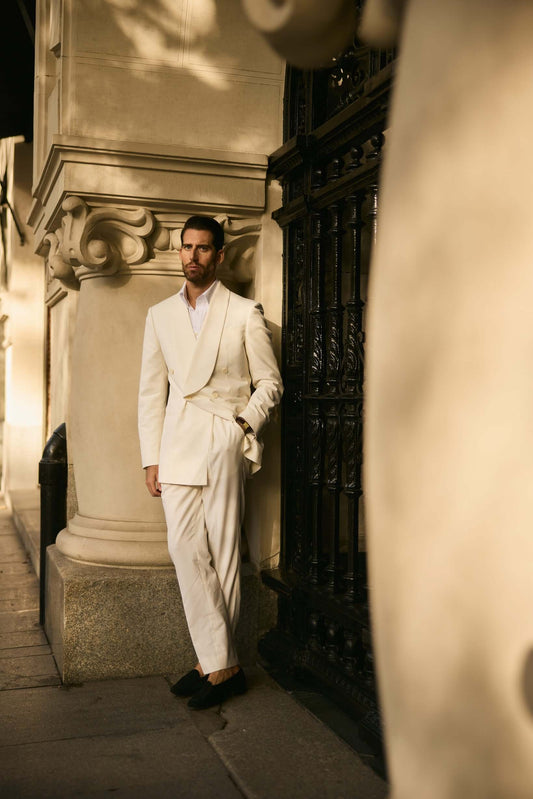

How Should a Suit Fit? The Complete Fit Checklist for Men
Last modified:Share
One of the most common questions men ask when buying a suit is also one of the most important: how should a suit fit?
A suit can be expensive, well-made, and stylish — but if it doesn’t fit properly, none of that matters. Fit affects how the suit looks, how it feels, and how confident you appear wearing it. This checklist walks through every part of a suit, step by step, so you know exactly what to look for and what “good fit” actually means.
The Golden Rule of Suit Fit
Before getting into details, remember this:
A suit should follow your body’s shape without clinging to it or hanging off it.
It should feel comfortable when you stand, sit, and move — not something you’re constantly adjusting.
Shoulders: The Most Important Checkpoint
If the shoulders don’t fit, the suit doesn’t fit. This is the hardest part of a jacket to alter properly.
A suit fits correctly at the shoulders when:
- The shoulder seam ends exactly where your shoulder ends
- The jacket lies flat without bumps or divots
-
There’s no pulling or collapsing
If the shoulders are too wide or too narrow, it’s best to size up or choose a custom option.
To see how proper shoulder structure looks, browsing a well-fitted men’s wear collection can be helpful:
Explore Men’s Wear
Jacket Chest and Button Closure
When buttoned, the jacket should sit cleanly across your chest.
Check for:
- No pulling or strain around the button
- No “X” shape forming when buttoned
-
Enough room to move comfortably
You should be able to slide a flat hand between your chest and the jacket without feeling tight or loose.
Jacket Length: Getting the Proportions Right
A properly fitted jacket balances your upper and lower body.
A good rule of thumb:
- The jacket should cover your seat
-
When your arms are relaxed, the hem should sit around your knuckles
Too short looks trendy but can throw off proportions. Too long looks dated and bulky.
Custom jackets are designed with these proportions in mind, which is why many men prefer custom tailoring.
Sleeve Length: Small Detail, Big Impact
Sleeve length is one of the easiest ways to spot a well-fitted suit.
The correct sleeve length:
- Shows about ¼–½ inch of shirt cuff
-
Ends right at your wrist bone
If sleeves are too long, the suit looks sloppy. Too short, and it looks undersized.
If you want to see how sleeve length is handled in custom garments, the custom sportscoat builder gives a good visual
reference:
Customize a Sportscoat
Collar Fit: Watch the Back of the Neck
The collar should rest lightly against your shirt collar without gaps.
Red flags include:
- A gap between jacket collar and shirt collar
- Wrinkles forming below the collar
-
The jacket riding up when you move
These issues often point to posture or balance problems that standard sizing doesn’t address well.
Trouser Waist: Secure but Comfortable
Your trousers should stay up without a belt pulling them tight.
Proper waist fit means:
- No pinching
- No sagging
-
No need to constantly adjust
If you’re between sizes or struggle with waist fit, custom trousers usually solve this easily.
You can see different trouser fit options in the tailored trousers designer:
Design Tailored Trousers
Trouser Seat and Rise
The seat (rear) and rise (crotch depth) affect comfort more than most people realize.
A good fit looks like:
- No excess fabric bunching
- No pulling across the seat
-
Comfortable movement when sitting
Problems here are common with ready-made suits and often fixed with custom adjustments.
Trouser Length: The Break Explained
The “break” is how the trousers fall over your shoes.
Common options include:
- No break: Modern, clean
- Slight break: Most versatile
-
Full break: Traditional
There’s no single correct answer — but the hem should look intentional, not accidental.
Overall Fit: Slim, Regular, or Relaxed?
Fit style matters just as much as measurements.
- Slim fit: Closer to the body, modern
- Regular fit: Balanced and versatile
-
Relaxed fit: More room, classic comfort
The best choice depends on your build and how you plan to wear the suit.
If you want to compare different fits visually, browsing the suit and tuxedo collection can help:
Browse Suits & Tuxedos
Why Custom Suits Make Fit Easier
Understanding how a suit should fit is one thing. Achieving it with standard sizing is another.
Custom suits adjust for:
- Shoulder slope
- Arm position
- Posture
- Proportions
-
Balance
Modern tailoring has made this process easier, especially with digital measurement tools.
If you’re curious how modern measurements work, this guide explains it clearly:
How AI Measurements Deliver a Perfect Fit
Quick Suit Fit Checklist
Before you buy, ask yourself:
- Do the shoulders sit cleanly?
- Does the jacket button without pulling?
- Is the length balanced?
- Do the sleeves show shirt cuff?
-
Are the trousers comfortable standing and sitting?
If you’re answering “no” to more than one of these, tailoring or customization will make a noticeable difference.
Conclusion
So, how should a suit fit?
It should feel natural, balanced, and comfortable — while looking clean and intentional from every angle.
Understanding fit helps you avoid costly mistakes and makes shopping for suits far less frustrating. Whether you’re buying your first suit or upgrading your wardrobe, prioritizing fit will always give you the best return.
If you’re ready to explore better-fitting options:
-
Browse custom suits:
View the Collection -
Get guidance on fit:
Contact the Team -
Review your selections:
View Your Cart