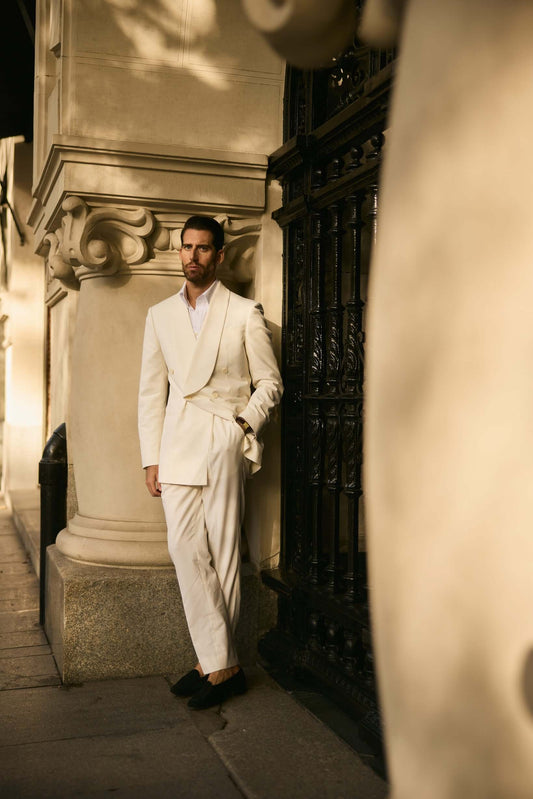

Linen vs Wool Suit: Everything You Need to Know Before Buying
Last modified:Choosing the right suit fabric can be just as important as choosing the right fit. Two of the most common options men compare are linen and wool — especially when shopping for warm-weather or year-round suits.
If you’re deciding between a linen vs wool suit, this guide explains the real differences in comfort, appearance, durability, and versatility, so you can choose the fabric that actually works for how and where you’ll wear your suit.
Quick Answer: Linen vs Wool Suit
A linen suit is best for hot weather, outdoor weddings, beach events, and relaxed summer dressing. A wool suit is better for business, formal events, interviews, travel, and year-round wear because it holds its shape, wrinkles less, and looks more polished.
If you are buying your first custom suit, wool is usually the safer choice. If you already own a versatile wool suit, linen is an excellent second suit for warm-weather occasions.
Why Suit Fabric Matters More Than Most Men Expect
Fabric affects:
- How the suit drapes on your body
- How comfortable it feels throughout the day
- How formal or relaxed it looks
- How well it holds its shape over time
Two suits can be cut the same way and still feel completely different depending on the fabric. That’s why understanding linen and wool is so important before buying.
What Is a Linen Suit?
Linen is made from flax fibers and is known for its breathability and lightweight feel. It’s one of the oldest textiles used in menswear and remains a popular choice for hot climates.
Key Characteristics of Linen Suits
- Extremely breathable
- Lightweight and airy
- Natural texture
- Wrinkles easily
Linen suits are designed to feel relaxed and effortless. Wrinkles aren’t a flaw — they’re part of the look.
For a broader comparison of warm-weather fabrics, including cotton and tropical wool, read our summer suit guide.
When a Linen Suit Makes Sense
Linen works best when comfort is the top priority.
Ideal Situations for Linen
- Summer weddings
- Outdoor events
- Beach or destination settings
- Hot, humid climates
If you value staying cool over maintaining a crisp appearance, linen is hard to beat.
However, linen suits look best when the fit is clean and intentional. Excess fabric can quickly make the suit look sloppy.
If you want to explore warm-weather tailoring options, our collection of linen suits for men and lightweight summer suits provides useful inspiration for seasonal dressing.
What Is a Wool Suit?

Wool is the most versatile and widely used suit fabric — and for good reason. High-quality wool regulates temperature naturally, making it suitable for both warm and cool conditions.
Key Characteristics of Wool Suits
- Breathable and temperature-regulating
- Holds shape well
- Drapes cleanly
- Wrinkle-resistant compared to linen
Wool suits range widely in weight and texture, from lightweight tropical wool to heavier flannel.
Why Wool Is the Most Versatile Option
For most men, wool offers the best balance between comfort, structure, and appearance.
Wool Works Well For
- Business wear
- Formal events
- Year-round use
- First custom suit purchases
Because wool maintains structure better, it’s also more forgiving when worn for long hours.
If you’re building a foundational wardrobe, wool remains the most common fabric choice in custom suits because of its versatility, durability, and year-round performance.
Linen vs Wool Suit: Quick Comparison Table

| Feature | Linen Suit | Wool Suit |
|---|---|---|
| Best For | Summer, beach weddings, casual events | Business, formal events, year-round wear |
| Breathability | Very high | High, especially lightweight wool |
| Wrinkle Resistance | Low | High |
| Formality | Casual to semi-formal | Business to formal |
| Structure | Relaxed and soft | Clean and sharp |
| First Suit Choice | Better as a second suit | Best first suit option |
Linen vs Wool Suit: Side-by-Side Comparison
Breathability
- Linen: Extremely breathable
- Wool: Breathable, especially in lighter weights
Wrinkling
- Linen: Wrinkles easily
- Wool: Holds shape well
Formality
- Linen: Casual to semi-formal
- Wool: Business to formal
Seasonality
- Linen: Best for summer
- Wool: Suitable year-round
Durability
- Linen: Softer, less durable over time
- Wool: Stronger and longer-lasting
Which Fabric Looks More Polished?
Charcoal wool remains one of the most versatile options because it transitions easily from business settings to formal occasions. For styling ideas, explore our guide to charcoal suit combinations. The fabric’s natural structure allows lapels to roll better, jackets to sit cleaner, and trousers to maintain their shape.
Linen, by contrast, creates a more relaxed aesthetic. It looks intentional in casual or outdoor settings but can feel out of place in formal or corporate environments.
This is why linen is often chosen for events — while wool dominates everyday professional wear.
Comfort: It Depends on the Situation
Linen feels cooler in direct heat and humidity. Wool, especially lightweight wool, adapts better across changing temperatures.
For example:
- Outdoor summer wedding → Linen
- All-day meetings → Wool
- Travel-heavy schedule → Wool
- Beach destination → Linen
Fabric is only one part of the equation. Choosing the right color can have an equally large impact on versatility. If you're deciding between navy, charcoal, gray, or brown, see our guide to the best suit colors for men.
Fit Matters Even More With Linen
Because linen wrinkles and drapes softly, fit becomes even more important. A linen suit should:
- Sit cleanly at the shoulders
- Be tailored close but not tight
- Avoid excess fabric
Poor fit amplifies linen’s tendency to look unstructured.
Custom tailoring helps manage this by controlling proportions and balance — especially in lighter fabrics.
If you’re curious how modern measurement methods improve fit accuracy, this guide explains it clearly:
How AI Measurements Deliver a Perfect Fit
How Fit Changes the Look of Linen and Wool
Linen and wool react differently on the body. Linen has a softer drape, so poor proportions become more visible. Sleeves that are too long, trousers with too much break, or a loose jacket waist can make linen appear messy instead of relaxed.
Wool is more structured, which makes it more forgiving. It supports sharper shoulders, cleaner lapels, and a stronger trouser line. This is why wool is often recommended for men who want one suit that looks polished across many settings.
If you are unsure which silhouette works best, this guide explains the difference between classic, modern, and slim suit styles.
Best Suit Fabric by Occasion

For Business and Professional Wear
Wool is the stronger choice for business settings because it looks cleaner throughout the day. It keeps the jacket structured, helps trousers hold their crease, and feels more appropriate in offices, meetings, and client-facing environments.
For more guidance on professional dressing, read our guide to business professional attire for men.
For Summer Weddings
Linen works beautifully for summer weddings, especially outdoor or destination events. Its texture feels relaxed, elegant, and seasonal. However, if the wedding is formal, evening-based, or held indoors, lightweight wool may still look more refined.
If the dress code is more formal, you may also want to design your 3-piece suit for a more refined wedding look. You can also browse our complete collection of wedding suits for different wedding styles and dress codes.
For Travel
Wool is usually better for travel because it wrinkles less and recovers its shape more easily. Linen can look stylish on vacation, but it may need more care after sitting, packing, or long wear.
For Black Tie or Formal Events
Wool is the clear winner for formal events. Linen usually looks too relaxed for black tie, formal dinners, and polished evening dress codes. For formal occasions, structured wool suits and tuxedos create a sharper silhouette.
If you need formalwear, compare options in our tuxedo vs suit guide and review the complete formal dress code for men before choosing your outfit.
Can You Own Both? Absolutely
Many men find the best solution is not choosing between linen and wool — but owning both for different purposes.
A common approach:
- Wool suit for business, interviews, formal events
- Linen suit for summer, travel, outdoor occasions
This gives you maximum comfort and versatility without forcing one fabric to do everything.
Which Fabric Is Better for First-Time Buyers?
For most men, a navy or charcoal 2-piece custom suit offers the best balance of versatility, formality, and long-term value. If you are ready to build one, you can design your 2-piece suit with your preferred fabric, color, and fit.
It:
- Works in more situations
- Looks more polished
- Requires less maintenance
- Lasts longer
Once you understand how a suit should fit and feel, adding a linen suit becomes much easier and more intentional.
How to Care for Linen and Wool Suits

Linen Suit Care
- Hang the suit immediately after wearing
- Accept light wrinkles as part of the natural look
- Steam carefully instead of over-pressing
- Avoid wearing the same linen suit repeatedly without rest
Wool Suit Care
- Brush the suit after wear
- Use a wide suit hanger to preserve shoulder shape
- Let the suit rest between wears
- Dry clean only when necessary
Both fabrics last longer when properly cared for, but wool generally requires less daily attention and is easier to maintain for regular use.
Can You Wear a Wool Suit in Summer?
Many men assume wool is only for cold weather, but lightweight wool and tropical wool are designed specifically for warmer temperatures.
Compared to linen, lightweight wool wrinkles less, drapes more cleanly, and often looks more professional throughout the day.
For business travel, office wear, and formal summer events, lightweight wool is often the preferred choice even in warm climates.
Final Verdict: Linen vs Wool Suit
If you need one suit that can handle business meetings, weddings, interviews, travel, and formal occasions, wool is the clear winner. Its structure, durability, and versatility make it the best investment for most men.
If your priority is maximum breathability for hot weather, outdoor events, or destination weddings, linen delivers unmatched comfort and a relaxed seasonal look.
For many well-dressed men, the ideal solution is owning both: a versatile wool suit for year-round wear and a linen suit reserved for summer occasions.
FAQs About Linen vs Wool Suits
Q1. Is linen better than wool for summer suits?
A. Linen is usually better for very hot and humid weather because it is lighter and more breathable. However, lightweight wool can still work well in summer if you need a sharper or more formal look.
Q2. Is a wool suit too hot for summer?
A. Not always. Lightweight wool and tropical wool are designed to breathe better than heavy wool fabrics. For business, travel, and formal summer events, lightweight wool can be more practical than linen.
Q3. Do linen suits wrinkle easily?
A. Yes. Linen wrinkles naturally, and that relaxed texture is part of its appeal. If you want a crisp, structured look, wool is the better option.
Q4. Which suit fabric is better for weddings?
A. Linen is excellent for beach, outdoor, and destination weddings. Wool is better for formal weddings, evening weddings, and traditional ceremonies.
Q5. Which suit fabric should I buy first?
A. Wool is usually the better first suit because it works for more occasions, holds its shape better, and looks more polished. Linen is a great second suit for summer and relaxed events.
Q6. Can linen suits be formal?
A. Linen suits can be semi-formal, but they rarely look as formal as wool suits. For black tie, business formal, or evening events, wool is usually the better choice.
If you’re ready to explore well-fitted suits in both fabrics:
- Browse custom suits:
View the Collection - Get guidance choosing the right fabric:
Contact the Team - Review your selections:
View Your Cart