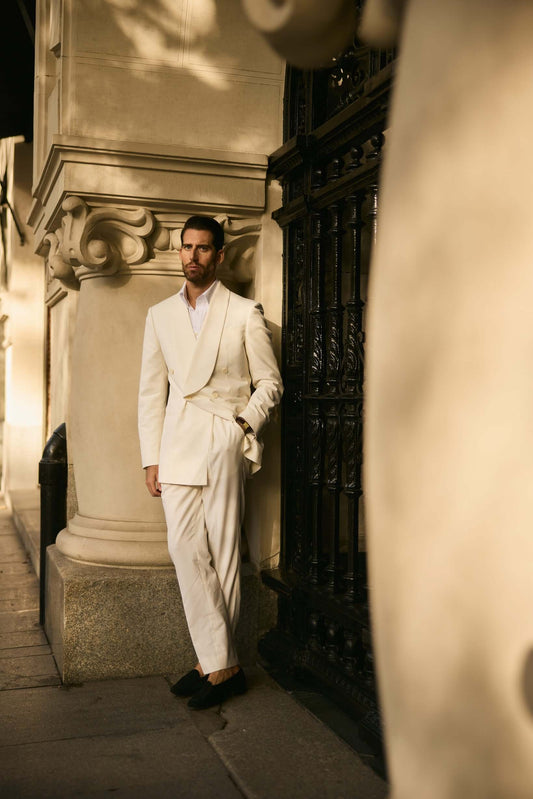

Tuxedo vs Suit: What’s the Difference & When to Wear Each
Share
Many men use the words “tuxedo” and “suit” interchangeably — but they’re not the same thing. While both are formal garments, the details, level of formality, and occasions they’re meant for are very different.
If you’ve ever wondered about the tuxedo vs suit difference, this guide breaks it down clearly so you know exactly when to wear each — and why choosing the right one matters.
The Core Difference Between a Tuxedo and a Suit
At a glance, a tuxedo looks similar to a suit. The real differences are in the details.
A suit is designed for versatility.
A tuxedo is designed specifically for formal occasions.
Those design intentions show up in fabric choices, accessories, and overall styling.
What Is a Suit?
A suit typically consists of:
- A jacket
- Matching trousers
It can be worn with a wide range of shirts, ties, and shoes, making it suitable for business, events, and formal occasions.
Key Features of a Suit
- Fabric-covered lapels
- Fabric trousers (no satin trim)
- Designed to be worn with a necktie
- Pairs with leather dress shoes
Suits come in many colors, fabrics, and fits — which is why most men own more suits than tuxedos.
To see how suits vary across styles and settings, browsing the men’s wear collection can be helpful:
Explore Men’s Wear
What Is a Tuxedo?
A tuxedo is a more formal garment traditionally worn in the evening.
It usually includes:
- A jacket with satin or grosgrain lapels
- Matching trousers with a satin side stripe
- A formal shirt
- A bow tie
Key Features of a Tuxedo
- Satin lapels (shawl or peak)
- Satin stripe on trousers
- Designed to be worn with a bow tie
- Typically paired with patent leather or highly polished shoes
Tuxedos are built for elegance and formality — not versatility.
You’ll see formal options in the tuxedo collection:
Browse Tuxedos
Tuxedo vs Suit Difference: Side-by-Side
Formality
- Suit: Business to formal
- Tuxedo: Formal to black-tie
Lapels
- Suit: Fabric lapels
- Tuxedo: Satin or grosgrain lapels
Trousers
- Suit: Plain fabric
- Tuxedo: Satin side stripe
Accessories
- Suit: Necktie or no tie
- Tuxedo: Bow tie, formal shirt
Versatility
- Suit: Very versatile
- Tuxedo: Occasion-specific
When Should You Wear a Suit?
A suit is the right choice for most formal and semi-formal occasions.
Best Occasions for a Suit
- Business and professional settings
- Weddings (non–black-tie)
- Job interviews
- Formal daytime events
- Social gatherings
If the dress code doesn’t explicitly say “black tie,” a suit is usually appropriate.
Suits are also easier to rewear, making them a better long-term wardrobe investment.
You can explore versatile options in the custom suits and tuxedos collection:
Browse Custom Suits
When Should You Wear a Tuxedo?
A tuxedo should be worn when the event calls for elevated formality.
Best Occasions for a Tuxedo
- Black-tie weddings
- Formal evening galas
- Award ceremonies
- Upscale evening events
If the invitation says “black tie,” a tuxedo isn’t optional — it’s expected.
Can You Wear a Suit to a Wedding Instead of a Tuxedo?
Yes — in most cases.
Unless the wedding is explicitly black-tie, a well-fitted suit is perfectly acceptable and often preferred.
Many modern weddings choose suits over tuxedos for:
- Daytime ceremonies
- Outdoor venues
- Destination weddings
If you’re planning wedding attire, this overview of wedding suits for men provides helpful guidance:
Browse Wedding-Ready Suits
Fit Matters More Than the Garment Type
Whether you’re wearing a suit or a tuxedo, fit determines how formal and polished the outfit looks.
A poorly fitted tuxedo will look worse than a well-fitted suit.
Key fit priorities:
- Clean shoulders
- Smooth chest and lapel lines
- Proper sleeve and trouser length
- Comfortable movement
This is why many men opt for custom tailoring, especially for formalwear.
If you’re curious how modern measurement methods improve fit accuracy, this guide explains it clearly:
How AI Measurements Deliver a Perfect Fit
Which Is Better to Own: A Suit or a Tuxedo?
For most men, a suit should come first.
Why a Suit Is the Better First Investment
- Can be worn in many settings
- Easier to style
- More cost-effective over time
A tuxedo makes sense if:
- You attend frequent black-tie events
- You’re planning a formal evening wedding
- You already own versatile suits
Can a Suit Be Styled to Look More Formal?
Yes — to a point.
A dark navy or black suit with:
- A crisp white shirt
- A black tie or bow tie
- Polished black shoes
can look very formal. However, it still won’t replace a tuxedo at true black-tie events.
Conclusion
Understanding the tuxedo vs suit difference comes down to formality, detail, and occasion.
Suits offer versatility and everyday elegance.
Tuxedos deliver traditional, black-tie formality.
Choosing the right one ensures you look appropriate, confident, and well-dressed — without overdoing or underdressing.
If you’re deciding between the two or planning for an upcoming event:
-
Browse suits and tuxedos:
View the Collection -
Get guidance on formalwear:
Contact the Team -
Review your selections:
View Your Cart