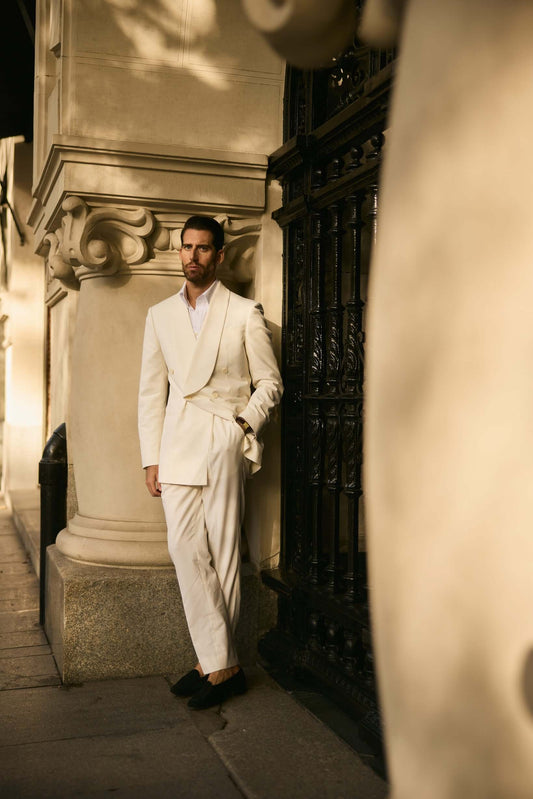

Tuxedo vs Suit: Key Differences & When to Wear Each
Last modified:Many men use the words “tuxedo” and “suit” interchangeably—but they are not the same thing. Although both are tailored garments, they differ significantly in their detailing, level of formality, styling, and intended occasions.
If you’ve ever wondered about the tuxedo vs suit difference, this guide breaks it down clearly so you know exactly when to wear each — and why choosing the right one matters.
Quick answer: The main difference between a tuxedo and a suit is that a tuxedo traditionally features satin or grosgrain detailing on the lapels, buttons, pockets, and trousers and is intended for black-tie events. A suit generally uses matching fabric throughout and offers greater versatility for business, weddings, interviews, and formal or semi-formal occasions.
Tuxedo vs Suit at a Glance

If you're short on time, this table highlights the biggest differences between a tuxedo and a suit.
| Feature | Suit | Tuxedo |
|---|---|---|
| Formality | Business to formal | Black tie and formal evening events |
| Lapels | Matching fabric | Satin or grosgrain |
| Trousers | Plain fabric | Traditionally features a satin or grosgrain side stripe |
| Tie | Necktie or open collar | Traditionally a black bow tie |
| Dress Shirt | Standard dress shirt | Formal white dress shirt or tuxedo shirt |
| Shoes | Leather Oxfords, Derbies or Loafers | Patent leather or highly polished Oxfords |
| Best For | Business, weddings, interviews | Black-tie weddings, galas, award ceremonies |
| Versatility | Excellent | Occasion-specific |
The Core Difference Between a Tuxedo and a Suit
At a glance, a tuxedo looks similar to a suit. The real differences are in the details.
A suit is designed for versatility.
A tuxedo is designed primarily for black-tie and formal evening occasions.
Those design intentions show up in fabric choices, accessories, and overall styling.
What Is a Suit?

A suit typically consists of:
- A jacket
- Matching trousers
It can be worn with a wide range of shirts, ties, and shoes, making it suitable for business, events, and formal occasions.
Key Features of a Suit
- Lapels made from the same fabric as the jacket
- Matching trousers without a formal side stripe
- Can be worn with a necktie, bow tie, or open collar
- Pairs with Oxfords, Derbies, loafers, and other leather dress shoes
Suits come in many colors, fabrics, and fits — which is why most men own more suits than tuxedos.
Suit construction, silhouette, and styling can vary significantly. Our guide to the different types of men’s suits explains when each style works best.
How to Tell a Suit from a Tuxedo in Seconds

At first glance, a tuxedo and a suit may look nearly identical. However, a few distinctive details make it easy to tell them apart.
- Contrasting Lapels: Traditional tuxedos feature lapels faced in satin or grosgrain, while suit lapels normally use the same fabric as the jacket.
- Formal Trouser Stripe: Traditional tuxedo trousers feature a satin or grosgrain stripe along the outside seam, while suit trousers do not.
- Formal Accessories: Tuxedos are traditionally worn with a bow tie, formal shirt, and often cufflinks or shirt studs.
- Occasion: Tuxedos are reserved for black-tie events, while suits work for everything from business meetings to weddings.
If you notice contrasting formal lapels, covered buttons, a trouser stripe, and traditional black-tie accessories, you are almost certainly looking at a tuxedo.
What Is a Tuxedo?

A tuxedo is a more formal garment traditionally worn in the evening.
It usually includes:
- A jacket with satin or grosgrain lapels
- Matching trousers with a satin side stripe
- A formal shirt
- A bow tie
Key Features of a Tuxedo
- Lapels traditionally faced in satin or grosgrain
- Peak and shawl lapels are the most traditional options
- Trousers commonly feature a matching formal side stripe
- Traditionally worn with a black bow tie and formal white shirt
- Paired with patent leather shoes, polished Oxfords, or formal evening slippers
Tuxedos are built for elegance and formality — not versatility.
Tuxedos are available in several lapel styles, colors, and constructions. Learn more in our guide to the different types of tuxedos for men, or explore the custom tuxedo options.
7 Key Differences Between a Tuxedo and a Suit
1. Lapel Material
Suit lapels are normally made from the same fabric as the jacket. Tuxedo lapels are traditionally faced with satin or grosgrain, creating the subtle contrast and sheen associated with black-tie attire.
2. Jacket Buttons and Pocket Trim
Suit buttons are usually made from horn, corozo, metal, or plastic. Tuxedo buttons are traditionally covered in the same satin or grosgrain used on the lapels. Some tuxedo jackets also feature matching trim around the pockets.
3. Trouser Details
Suit trousers use the same fabric throughout. Traditional tuxedo trousers have a satin or grosgrain stripe running along the outside seam and are generally designed without belt loops.
4. Shirt Style
A suit can be paired with many dress-shirt styles and colors. A tuxedo is normally worn with a formal white shirt featuring a covered placket, pleated front, or bib front, depending on the look.
For more guidance, see our guide to the best tuxedo shirts for men.
5. Neckwear
Suits can be worn with a necktie, bow tie, or open collar depending on the dress code. Traditional black-tie attire calls for a black bow tie, ideally in a material that complements the tuxedo lapels.
6. Shoes
Suits work with Oxfords, Derbies, loafers, and other refined leather shoes. Tuxedos are conventionally paired with black patent leather shoes, highly polished Oxfords, or formal evening slippers.
7. Intended Occasion
A suit is designed to move between professional, social, and formal settings. A tuxedo serves a narrower purpose: traditional black-tie and highly formal evening occasions.
When Should You Wear a Suit?
A suit is the right choice for most formal and semi-formal occasions.
Best Occasions for a Suit
- Business and professional settings
- Weddings (non–black-tie)
- Job interviews
- Formal daytime events
- Social gatherings
If the dress code doesn’t explicitly say “black tie,” a suit is usually appropriate.
Suits are also easier to rewear, making them a better long-term wardrobe investment.
For professional settings, see our guide to business professional attire for men. You can also explore custom suits designed for business, weddings, and formal events.
When Should You Wear a Tuxedo?
A tuxedo should be worn when the event calls for elevated formality.
Best Occasions for a Tuxedo
- Black-tie weddings
- Formal evening galas
- Award ceremonies
- Upscale evening events
If the invitation says “black tie,” a tuxedo is the traditional and expected choice.
Suit vs Tuxedo by Occasion
The right choice depends primarily on the stated dress code, followed by the venue, time of day, and level of formality.
| Occasion | Recommended Choice | Why |
|---|---|---|
| Job Interview | Suit | A navy or charcoal suit looks professional without appearing overdressed. |
| Business Meeting | Suit | Tuxedos are evening garments and are not appropriate for conventional business settings. |
| Daytime Wedding | Suit | A suit better matches the lighter formality and daytime setting. |
| Cocktail Wedding | Suit | A dark, well-tailored suit usually satisfies cocktail attire. |
| Black-Tie Wedding | Tuxedo | A tuxedo is the traditional and expected choice when the invitation states black tie. |
| Black-Tie Optional Wedding | Either | A tuxedo is preferred, but a dark formal suit is generally acceptable. |
| Prom | Either | Choose according to the event guidance and the level of formality you want. |
| Formal Gala | Tuxedo | Most evening galas follow black-tie or similarly formal conventions. |
| Cocktail Party | Suit | A tuxedo is normally more formal than the occasion requires. |
| Award Ceremony | Depends on Dress Code | Formal ceremonies may require a tuxedo, while less formal events permit a suit. |
| Funeral | Suit | A restrained dark suit is respectful; a tuxedo would be inappropriate. |
| Formal Evening Dinner | Depends on Dress Code | Wear a tuxedo for black tie and a dark suit for standard formal attire. |
For a broader explanation of invitation terminology, read our formal dress code guide for men and our comparison of formal vs black-tie attire.
Before attending a formal event, review our guides to styling a classic black tuxedo and common black-tie mistakes to avoid.
Attending prom? Explore custom prom suits and tuxedos designed for the event’s dress code and your preferred level of formality.
Can You Wear a Black Suit Instead of a Tuxedo?
Yes—but only when the dress code allows it.
A black suit can work well for cocktail parties, business dinners, formal weddings, and many evening celebrations. However, if the invitation specifically says black tie, a tuxedo is the expected choice.
| Event | Black Suit | Tuxedo |
|---|---|---|
| Cocktail Party | Recommended | Usually too formal |
| Standard Wedding | Usually appropriate | Optional only when the event is highly formal |
| Black-Tie Optional Event | Acceptable if styled formally | Preferred |
| Black-Tie Event | Does not fully meet the dress code | Expected |
| Business Event | Appropriate | Not appropriate |
A black suit can create a refined evening look, but it does not become a tuxedo simply because it is worn with a white shirt and black bow tie. For the complete dress code, see our guide to black-tie attire for men.
Can You Wear a Suit to a Wedding Instead of a Tuxedo?
Yes — in most cases.
Unless the wedding is explicitly black-tie, a well-fitted suit is perfectly acceptable and often preferred.
Suits are often preferred over tuxedos for:
- Daytime ceremonies
- Outdoor venues
- Destination weddings
The venue, ceremony time, and stated dress code should guide your decision. Read our complete guide to wedding suits for men, or explore custom wedding suits.
Common Suit vs Tuxedo Mistakes to Avoid

- Wearing a necktie instead of a bow tie with a traditional tuxedo.
- Assuming every black suit is a tuxedo.
- Pairing brown shoes with a black tuxedo.
- Wearing a tuxedo to daytime business events.
- Ignoring the event's stated dress code.
- Choosing trendy accessories that overpower classic tailoring.
Following the event's dress code is always more important than trying to stand out. A properly fitted navy suit is often more appropriate than an overdressed tuxedo.
Why Fit Matters for Both Suits and Tuxedos
Whether you’re wearing a suit or a tuxedo, fit determines how formal and polished the outfit looks.
A poorly fitted tuxedo can look less polished than a well-fitted suit, although the garment must still match the stated dress code.
Key fit priorities:
- Clean shoulders
- Smooth chest and lapel lines
- Proper sleeve and trouser length
- Comfortable movement
This is why many men opt for custom tailoring, especially for formalwear.
Fit also depends on how the garment is produced. Our custom tailored suit guide explains why individual measurements and proportion adjustments matter.
You can also learn how AI suit measurements compare with traditional measuring methods.
Essential Accessories for Suits vs Tuxedos

| Accessory | Suit | Tuxedo |
|---|---|---|
| Necktie | Standard option | Not traditional for black tie |
| Bow Tie | Optional | Traditional choice |
| Cufflinks | Optional | Common with French-cuff shirts |
| Pocket Square | Optional | A restrained white pocket square is traditional |
| Cummerbund | Not worn | Optional traditional waist covering |
| Waistcoat | Optional for a three-piece suit | Optional low-cut alternative to a cummerbund |
| Belt | Common | Traditionally avoided |
| Shirt Studs | Not normally required | Optional with compatible formal shirts |
Avoid wearing a cummerbund and waistcoat together. Both serve as formal waist coverings, so select one according to the design of your tuxedo and shirt.
Which Is Better to Own: A Suit or a Tuxedo?
For most men, a suit should come first.
Why a Suit Is the Better First Investment
- Can be worn in many settings
- Easier to style
- More cost-effective over time
A tuxedo makes sense if:
- You attend frequent black-tie events
- You’re planning a formal evening wedding
- You already own versatile suits
Can a Suit Be Styled to Look More Formal?
Yes — to a point.
A dark navy, charcoal, or black suit with:
- A crisp white shirt
- A black tie or bow tie
- Polished black shoes
can look very formal. However, it still won’t replace a tuxedo at true black-tie events.
The result still depends on the invitation. Read our comparison of formal vs semi-formal attire when the expected dress code is unclear.
Should You Buy or Rent a Tuxedo?
Buying a tuxedo can provide better long-term value when you regularly attend black-tie weddings, charity galas, formal dinners, award ceremonies, or other evening events. Ownership also allows you to achieve a more precise fit and choose the lapels, fabric, shirt, and accessories you prefer.
Renting may be more economical when you need a tuxedo for a single event, expect your measurements to change, or rarely attend black-tie occasions. Before renting, allow enough time for alterations and confirm exactly which accessories are included.
Men who do not yet own versatile formalwear should normally purchase a navy or charcoal suit before investing in a tuxedo. Our guide to the best suit colors for men can help you choose a practical first investment.
Suit or Tuxedo: Which One Should You Choose?
- Business Meeting? Choose a suit.
- Job Interview? Choose a suit.
- Daytime Wedding? Choose a suit.
- Cocktail Party? Usually a suit.
- Black-Tie Invitation? Choose a tuxedo.
- Black-Tie Optional Event? Choose a tuxedo or a dark formal suit.
- Formal Evening Gala? Choose a tuxedo.
When in doubt, follow the dress code listed on the invitation. If none is provided, consider the venue, time of day, and expected level of formality.
Expert Style Advice
Choosing between a tuxedo and a suit isn't about which garment is more expensive—it's about respecting the occasion. A well-fitted navy or charcoal suit is appropriate for most formal events, while a tuxedo should be reserved for true black-tie occasions where its satin detailing and traditional styling are expected. Regardless of which you choose, proper fit, quality tailoring, and attention to accessories will always make a stronger impression than the garment itself.
Frequently Asked Questions
Can you wear a tuxedo without a bow tie?
Traditional black-tie etiquette calls for a bow tie. While some modern styles use a necktie, a bow tie remains the classic choice.
Is every black suit considered a tuxedo?
No. A tuxedo is defined by satin or grosgrain detailing and formal accessories, not simply by its color.
Can I wear a tuxedo during the day?
Traditionally, tuxedos are intended for evening events. Daytime weddings and business occasions generally call for a suit.
Do tuxedos always have satin lapels?
Traditional tuxedos normally feature lapels faced in satin or grosgrain. Some contemporary or velvet dinner jackets use different treatments, but contrasting formal lapel facing remains one of the clearest tuxedo characteristics.
Should the groom wear a tuxedo?
A groom may choose a tuxedo for a black-tie, highly formal, or elegant evening wedding. A well-tailored suit is generally more suitable for daytime, outdoor, destination, cocktail, and semi-formal weddings.
Can I wear brown shoes with a tuxedo?
Black patent leather or highly polished black dress shoes remain the traditional choice for tuxedos.
Is a dinner jacket the same as a tuxedo?
A dinner jacket is the formal jacket worn as part of a black-tie outfit. In American usage, “tuxedo” often refers to the complete ensemble, while “dinner jacket” may refer specifically to the jacket.
What does black-tie optional mean?
Black-tie optional means a tuxedo is preferred but not mandatory. A dark navy, charcoal, or black suit worn with a white dress shirt, conservative tie, and polished black shoes is generally acceptable.
Can you wear a regular dress shirt with a tuxedo?
A clean white dress shirt can work with some modern tuxedos, but a dedicated tuxedo shirt provides the most traditional appearance. Formal options may include a covered placket, pleated front, bib front, French cuffs, or shirt studs.
Can you wear a tuxedo to a wedding as a guest?
Wear a tuxedo as a wedding guest when the invitation states black tie or black-tie optional. For most daytime, cocktail, beach, or semi-formal weddings, a suit is the more appropriate choice.
Conclusion
Understanding the tuxedo vs suit difference comes down to formality, detail, and occasion.
Suits offer versatility and everyday elegance.
Tuxedos deliver traditional, black-tie formality.
Choosing the right one ensures you look appropriate, confident, and well-dressed — without overdoing or underdressing.
Choose the option that matches your event, dress code, and personal style:
- Design a custom suit for business, weddings, and versatile formalwear.
- Design a custom tuxedo for black-tie weddings, galas, and formal evening events.
- Browse suits and tuxedos to compare available styles.
- Contact the Bold Italia team for help choosing the appropriate formalwear.