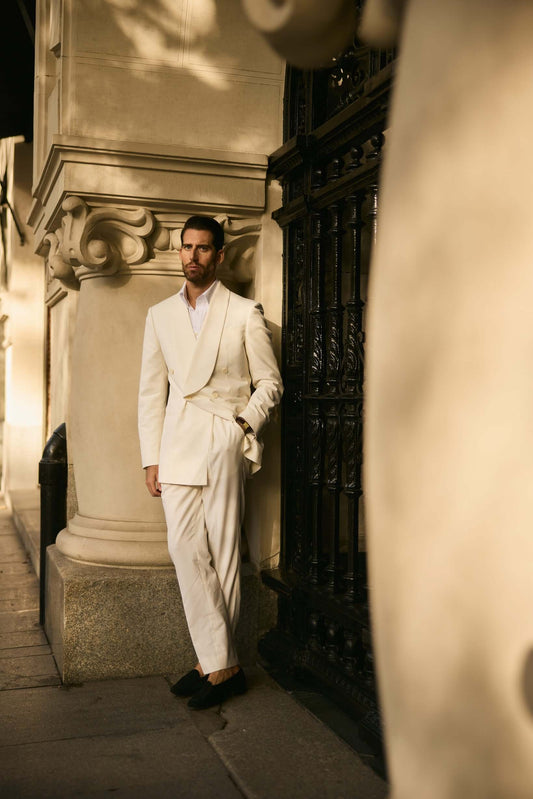

Wedding Suits for Men: Modern, Classic & Custom Options
Last modified:Choosing the right wedding suit is different from buying an everyday suit. This is one of the most photographed outfits you'll ever wear, so it needs to look right on the wedding day and still feel timeless when you look back at the photos years later.
The best wedding suit depends on more than color or current trends. Dress code, venue, season, fabric, fit and the overall style of the wedding should all influence the decision. Whether you're considering a classic navy suit, a modern two-piece, a formal three-piece suit or a fully custom design, this guide will help you choose the right option for the occasion.
Quick Answer: The best wedding suit for a groom should match the wedding's dress code, venue and season while fitting comfortably and proportionately. Navy and charcoal wool suits remain versatile choices for traditional weddings, while lighter neutrals, linen blends and softer tailoring work particularly well for warm-weather or destination ceremonies. Three-piece suits add formality, while a tuxedo is the appropriate starting point when the dress code calls for black tie.
Key Takeaways
- Start with the dress code. A black-tie wedding requires a different approach from a beach, garden or semi-formal ceremony.
- Navy and charcoal are versatile wedding suit colors, while light grey, tan, beige, green and other seasonal shades can work well depending on the setting.
- Wool is the most versatile wedding suit fabric, while linen and lightweight blends are useful for warmer climates and destination weddings.
- A three-piece suit creates a more formal appearance, while a two-piece suit generally feels cleaner and more relaxed.
- Fit matters more than the fit label. A wedding suit should follow your proportions without pulling, sagging or restricting movement.
- Order early. Custom production, delivery and final adjustments should be completed well before the wedding day.
Which Wedding Suit Should You Choose?

There is no single wedding suit that works for every groom. Start by considering the level of formality, the venue and the expected weather before narrowing down the cut, fabric and color.
| Wedding Style | Recommended Starting Point | Fabric | Colors to Consider | Formality |
|---|---|---|---|---|
| Traditional church or ballroom | Classic two- or three-piece suit | Worsted wool | Navy, charcoal, dark grey | Formal |
| Black-tie evening wedding | Tuxedo | Formal wool or appropriate evening cloth | Black, midnight blue | Very formal |
| Garden or vineyard wedding | Softly tailored two-piece suit | Lightweight wool or linen blend | Light grey, blue, sage, tan | Semi-formal to formal |
| Beach wedding | Lightweight two-piece suit | Linen or breathable blend | Beige, sand, stone, light blue | Relaxed to semi-formal |
| Destination wedding | Lightweight modern suit | Tropical wool, linen or blend | Navy, tan, stone, light grey | Depends on venue |
| Fall wedding | Textured two- or three-piece suit | Wool or seasonal cloth | Charcoal, brown, green, burgundy | Semi-formal to formal |
| Winter wedding | Structured two- or three-piece suit | Wool | Navy, charcoal, deep green | Formal |
If you're starting from scratch, browse our custom wedding suits for ideas across different fabrics, colors and configurations.
Wedding Suit vs. Tuxedo: Which Should the Groom Wear?

A wedding suit and a tuxedo are not interchangeable. A conventional suit generally uses the same or closely related fabric throughout the jacket and trousers, while a tuxedo incorporates formal eveningwear details such as satin-faced lapels and coordinated formal trousers.
Choose a wedding suit when the dress code is formal, semi-formal, cocktail or otherwise allows conventional tailoring. A navy, charcoal or grey suit also offers excellent versatility because it can often be worn again after the wedding.
Choose a tuxedo when the invitation specifies black tie or when the ceremony and reception are intentionally built around formal eveningwear. If you're deciding between the two, see our guide to suit vs. tuxedo. For weddings with an explicit formal evening dress code, our black-tie attire guide explains the key requirements.
Classic Wedding Suits: Timeless and Reliable

Classic wedding suits focus on balanced proportions, traditional colors and understated styling. They are an especially strong choice for grooms who want their wedding photographs to look as appropriate years from now as they do today.
Popular Classic Wedding Suit Colors
- Navy: Versatile enough for daytime and evening ceremonies and easy to coordinate with many wedding color palettes.
- Charcoal: Refined, understated and particularly suitable for formal venues and cooler seasons.
- Mid-grey: A lighter alternative that works especially well for daytime and spring weddings.
- Black: Best when the wedding's styling supports a dark, formal look. For an actual black-tie dress code, choose a proper tuxedo rather than treating a conventional black suit as equivalent eveningwear.
Classic does not have to mean conservative or old-fashioned. Small choices in lapel width, trouser shape, shirt, tie and accessories can make a traditional suit feel personal without compromising its longevity.
Modern Wedding Suits: Clean, Sharp and Contemporary

Modern wedding suits generally use cleaner lines, controlled waist shaping, tapered trousers and a less bulky overall silhouette than many traditional cuts. They work particularly well for city weddings, contemporary venues and grooms who prefer a streamlined aesthetic.
Modern should not mean excessively tight. The jacket should close without strain, the shoulders should sit cleanly and the trousers should provide enough room to sit, walk and dance comfortably throughout the day.
If you're comparing different silhouettes, our guide to men's suit styles explains the differences between classic, modern and slimmer tailoring.
Two-Piece vs. Three-Piece Wedding Suits

Both two-piece and three-piece suits can work exceptionally well for weddings. The better choice depends on the degree of formality, the season and the visual effect you want to create.
Two-Piece Wedding Suit
A two-piece suit is often a better starting point for:
- Warm-weather weddings
- Destination ceremonies
- Modern or minimalist venues
- Grooms who want maximum versatility after the wedding
The absence of a vest creates a cleaner, lighter appearance and makes the outfit easier to adapt to less formal settings later.
Three-Piece Wedding Suit
A three-piece suit adds a matching or coordinated vest, creating greater visual structure and formality.
It works especially well for:
- Traditional weddings
- Formal venues
- Fall and winter ceremonies
- Grooms who want to remain polished after removing the jacket
Read our complete comparison of 2-piece vs. 3-piece suits if you're unsure which configuration suits your wedding.
If you've already decided on a vest, you can design a custom three-piece suit and select the details around your wedding style.
Custom Wedding Suits: Built Around You and the Occasion
A custom wedding suit gives the groom greater control over fit, fabric, proportions and design than a standardized ready-made garment. That can be particularly useful for a wedding because the finished suit needs to look polished from multiple angles while remaining comfortable for hours.
A custom suit can allow adjustments or choices involving:
- Shoulder balance and jacket proportions
- Jacket length
- Lapel style and width
- Button configuration
- Waist shaping
- Sleeve length
- Trouser rise and taper
- Vest proportions
- Fabric and color
- Lining and finishing details
For an online custom suit, reliable body measurements are particularly important because jacket balance, sleeve length, trouser proportions and overall ease all depend on accurate inputs. Digital measurement technology has also made remote custom-suit ordering more practical for customers who cannot attend an in-person fitting.
You can read more about AI suit measurements or browse our custom suits to understand the available options.
Best Fabrics for Wedding Suits
The best wedding suit fabric depends on the temperature, venue, formality and how much structure you want from the finished garment.
Worsted Wool
Wool is one of the most versatile options for wedding suits. It drapes cleanly, holds a tailored shape well and works across a broad range of seasons and dress codes.
Lightweight Wool
Lightweight wool is especially useful for spring, summer and destination weddings where you want traditional tailoring without unnecessary weight.
Linen
Linen is well suited to beach, destination and warm-weather weddings. Its breathable character and naturally softer appearance complement relaxed ceremonies, although some wrinkling is an expected part of the fabric's character.
Browse our linen suits for warm-weather tailoring options.
Linen Blends
Linen blends can offer a useful middle ground when you want some of linen's lightness with better shape retention than pure linen typically provides.
Textured and Seasonal Wool
Fall and winter weddings can support richer textures and heavier cloths, especially when paired with deeper shades such as charcoal, brown, dark green or burgundy.
Velvet
Velvet is better treated as a statement evening option than a universal wedding-suit fabric. It can work particularly well for formal dinner jackets and festive evening receptions.
For a closer comparison of warm-weather and traditional tailoring fabrics, see our guide to linen vs. wool suits.
Best Wedding Suit Colors for Grooms
Wedding suit color should complement the venue, season and overall palette without making the groom look as though he is wearing a costume built around the wedding decorations.
Timeless Wedding Suit Colors

- Navy: Versatile, polished and appropriate across a wide range of venues.
- Charcoal: Formal, understated and particularly strong for evening or cooler-season weddings.
- Mid-grey: Softer than charcoal and especially useful for daytime ceremonies.
Warm-Weather and Destination Colors

- Tan
- Beige
- Stone
- Light grey
- Light blue
These lighter colors work naturally with outdoor, beach and destination settings where a dark formal suit may feel visually heavy.
Statement Wedding Suit Colors

- Forest green
- Olive
- Burgundy
- Brown
Statement colors work best when they complement the season and venue rather than being selected simply because they are fashionable. If green is part of your shortlist, our green suit style guide covers shirt, shoe and accessory combinations in more detail.
Wedding Suits by Season

Spring Wedding Suits
Spring allows more flexibility in both color and fabric. Mid-grey, light blue, navy, sage and restrained neutrals can all work well. Lightweight wool is particularly useful because spring temperatures can vary throughout the day.
Summer Wedding Suits
Summer weddings reward lighter fabrics and breathable construction. Linen, linen blends and lightweight wool are natural starting points, particularly for outdoor and daytime ceremonies.
For more warm-weather options, browse our summer suits.
Fall Wedding Suits
Fall supports deeper colors and additional texture. Navy, charcoal, brown, olive and burgundy can all complement seasonal surroundings without becoming overly thematic.
Winter Wedding Suits
Winter weddings can accommodate more structured tailoring, richer fabrics and three-piece configurations. Navy, charcoal and deeper greens are particularly natural choices for formal cold-weather settings.
How the Wedding Venue Should Influence Your Suit
The same suit can look perfectly appropriate in one venue and unnecessarily formal or casual in another. Consider the physical setting before settling on fabric, color and construction.
Ballroom or Luxury Hotel
Formal two-piece suits, three-piece suits and tuxedos are natural choices. Navy, charcoal, black and midnight blue generally fit the environment well.
Traditional or Church Wedding
Classic tailoring and restrained colors are dependable. Navy, charcoal and grey work particularly well when the ceremony has a traditional tone.
Garden or Vineyard Wedding
Soft tailoring, lighter blues, greys, greens and earth tones can complement an outdoor setting without appearing too casual.
Beach Wedding
Lightweight construction becomes especially important. Beige, stone, light grey and pale blue pair naturally with linen and breathable blends.
Our guide to beach wedding attire for men covers footwear, shirts and dress-code considerations in greater detail.
City or Rooftop Wedding
A clean modern two-piece suit works especially well in contemporary urban settings. Navy, charcoal, dark green or refined lighter shades can all work depending on the time of day and dress code.
How Should a Wedding Suit Fit?

Fit ultimately has more impact on the appearance of a wedding suit than whether the garment is labelled classic, modern or slim. Each part of the suit should work with the rest of the silhouette.
Shoulders
The jacket shoulder should finish close to your natural shoulder. Obvious overhang, deep divots or collapsing fabric can disturb the entire line of the jacket.
Chest and Jacket Closure
When buttoned, the jacket should sit cleanly without strong horizontal pulling around the fastening point. It should also provide enough room to breathe and move comfortably.
Jacket Length
Jacket length should work with your height and torso proportions rather than following an aggressively cropped or excessively long trend.
Sleeves
The sleeve should end cleanly and allow a controlled amount of shirt cuff to remain visible, creating a deliberate transition between the jacket and shirt.
Trouser Waist and Seat
Wedding trousers should sit securely without requiring excessive belt tension. The seat and thighs should remain clean without strong pulling or large amounts of excess fabric.
Trouser Break
The amount of trouser break can vary with the cut and personal preference, but excessive stacking over the shoes can make an otherwise polished suit look unfinished.
Movement
Do not judge wedding-suit fit only while standing still. Sit down, walk, reach naturally and make sure you can move comfortably. The suit needs to perform through the ceremony, photographs, dinner and reception.
Our guide to custom tailored suits explains how measurements and proportions work together to influence the finished fit.
Should the Groom and Groomsmen Wear the Same Suit?
They can, but they do not have to. The goal is to make the wedding party look coordinated while still allowing the groom to remain visually distinct.
Same Suit, Different Accessories
The groom and groomsmen can wear the same suit while using different ties, pocket squares, vests or boutonnieres.
Same Color Family, Different Shade
A groom in deep navy, for example, can be paired with groomsmen in a slightly lighter blue while maintaining visual consistency.
Same Fabric, Different Configuration
Another effective option is for the groom to wear a three-piece suit while the groomsmen wear coordinating two-piece suits.
For more wedding-party ideas, see our guide to groomsmen suits.
How Can the Groom Stand Out Without Overdressing?
Standing out does not require choosing the loudest suit in the room. Small differences are often enough to separate the groom from the wedding party while keeping the overall look cohesive.
Consider:
- A three-piece suit while the groomsmen wear two-piece suits
- A contrasting or textured vest
- A different tie or bow tie
- A distinctive boutonniere
- A slightly different suit shade
- A different lapel treatment
- Personalized accessories
The goal is visual distinction without making the groom look disconnected from the wedding's overall style.
What to Wear With a Wedding Suit

The suit is the foundation of the outfit, but shirts, shoes and accessories determine whether the finished look feels deliberate.
Wedding Shirt
A crisp white dress shirt remains one of the easiest options for formal weddings. Pale blue and other restrained shades can work when the wedding palette and dress code allow greater flexibility.
Wedding Shoes
Black shoes provide a more formal appearance and work naturally with charcoal, black and formal eveningwear. Dark brown shoes coordinate particularly well with navy, blue, tan and many lighter wedding suits.
Tie or Bow Tie
A traditional necktie works across most suited weddings. Bow ties become especially relevant for tuxedos and black-tie settings.
Pocket Square
A pocket square should coordinate with the outfit rather than perfectly reproduce the tie pattern and color. Keeping some distinction between the two usually creates a more considered appearance.
Wedding Vest
A vest adds formality and gives the groom a finished appearance even when the jacket is removed during the reception. Browse our custom dress vests if you are considering a three-piece or contrasting-vest look.
Custom vs. Ready-Made Wedding Suits
Neither option is automatically right for every groom. The best choice depends on your timeline, proportions, budget and how much control you want over the finished garment.
| Factor | Custom Wedding Suit | Ready-Made Wedding Suit |
|---|---|---|
| Fit | Built around individual measurements and proportions | Based on standardized sizing |
| Fabric choice | Usually broader | Predetermined by the retailer |
| Design options | Greater control over styling details | Limited to available inventory |
| Lead time | Requires advance planning | Generally faster |
| Alterations | May still need final refinement | Often necessary for a precise fit |
| Best for | Personalized fit and styling | Short timelines or straightforward sizing |
Ready-made can work extremely well when the base fit is already close and time is limited. Custom becomes particularly useful when standard sizing does not accommodate your proportions or when you want greater control over fabric, color and styling.
For a deeper comparison, read custom suit vs. ready-made.
Can You Wear Your Wedding Suit Again?
Yes, particularly if the suit is built around versatile colors and restrained styling. Navy, charcoal and grey wedding suits can often return to your wardrobe for:
- Business events
- Formal dinners
- Other weddings
- Professional occasions
- Celebrations and evening events
If long-term wear matters, avoid choosing every detail solely around the wedding theme. A versatile suit can still feel distinctive on the wedding day through the shirt, vest, tie, pocket square and other removable accessories.
When Should You Order Your Wedding Suit?
Lead times vary by tailor, customization level, fabric availability and season, so always confirm the production schedule before ordering.
As a general planning principle, start early enough to allow time for measurements, production, delivery and any final adjustments rather than scheduling the suit to arrive immediately before the wedding.
A useful planning sequence is:
- Early planning: Decide on dress code, color, fabric and overall suit style.
- Measurement and ordering: Complete measurements and finalize customization well in advance.
- After delivery: Try on the complete outfit, including shirt and shoes.
- Final adjustments: Complete any necessary refinements before the final week.
- Wedding week: Avoid leaving major tailoring decisions until the last few days.
7 Wedding Suit Mistakes to Avoid

1. Ignoring the Dress Code
Do not choose a suit solely because you like the color or style. First determine whether the wedding is black tie, formal, semi-formal, cocktail or more relaxed.
2. Choosing Color Without Considering the Venue
A dark structured suit that feels natural in a ballroom may look unnecessarily heavy at a midday beach ceremony.
3. Buying an Excessively Tight Suit
Slim tailoring should follow the body rather than restrict it. Pulling around the jacket button, tight sleeves and strained trousers will become even more noticeable as the day progresses.
4. Waiting Until the Last Minute
Delivery delays, adjustments and changes in fit are much easier to handle when there is sufficient time before the ceremony.
5. Overmatching the Wedding Colors
Coordinate with the wedding palette without trying to reproduce the exact colors across the suit, shirt, tie, pocket square and accessories.
6. Forgetting Comfort
A wedding suit has to work while sitting, standing, walking, eating and dancing. Comfort should be evaluated along with appearance.
7. Choosing Trends Over Proportion
Trends can influence individual details, but the foundation of the suit should remain balanced. Well-proportioned tailoring generally photographs better and ages more gracefully than exaggerated styling.
Wedding Suit FAQs
What Color Suit Is Best for a Groom?
Navy and charcoal are among the most versatile choices because they work across many seasons and levels of formality. Mid-grey works particularly well for daytime weddings, while tan, beige, light blue, green and other colors can be effective when they suit the venue, season and wedding palette.
Should a Groom Wear a Two-Piece or Three-Piece Suit?
Both are appropriate. A two-piece suit usually feels lighter and more contemporary, making it useful for warm-weather or destination weddings. A three-piece suit adds formality and gives the groom a polished appearance even after the jacket is removed.
Can a Groom Wear a Suit Instead of a Tuxedo?
Yes, unless the wedding dress code specifically calls for black tie or another level of formal eveningwear. For many formal, semi-formal and daytime weddings, a well-fitted suit is completely appropriate.
How Far in Advance Should a Groom Order a Wedding Suit?
Order early enough to accommodate the supplier's production time, delivery and any final adjustments. Custom suits generally require more advance planning than ready-made options, so confirm the actual lead time before placing the order.
Should the Groom's Suit Match the Groomsmen?
It can, but exact matching is not required. The wedding party can coordinate through the same color family, fabric or overall level of formality while allowing the groom to stand out through a vest, accessories, suit shade or different configuration.
Final Thoughts: Choosing the Right Wedding Suit
The best wedding suit is the one that fits the ceremony, setting and groom rather than simply following the trend of the moment.
Start with the dress code and season. Choose a fabric and color that make sense for the venue. Then focus on proportions, comfort and fit. Whether you choose a classic navy two-piece, a formal three-piece suit or a fully customized design, the goal is the same: a suit that feels comfortable on the wedding day and still looks right in photographs years later.
Ready to create yours? Explore custom wedding suits designed around your measurements, preferred fabric and wedding style.