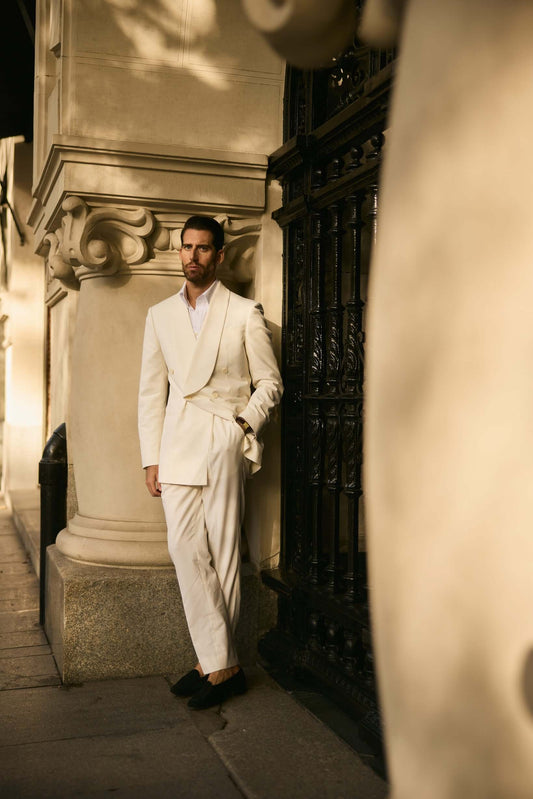

Types of Suits Every Man Should Know (And When to Wear Them)
Last modified:A suit is more than a matching jacket and pair of trousers. Construction, fit, fabric, lapel style, number of pieces, season, and dress code can all turn one suit into something very different from another. A navy two-piece may work for a job interview and an office presentation, while a linen suit belongs more naturally at a summer wedding and a tuxedo is designed for black-tie events.
Understanding the different types of suits helps you choose clothing that fits the occasion rather than simply following trends. It also makes building a versatile wardrobe easier because you can prioritize suits that serve several purposes before investing in more specialized styles.
Quick Answer: The main types of suits for men include two-piece suits, three-piece suits, single-breasted suits, double-breasted suits, business suits, wedding suits, tuxedos, casual suits, linen suits, wool suits, tweed suits, morning suits, and prom suits. Two-piece navy or charcoal suits are the most versatile for business and everyday formal occasions, while three-piece suits add formality, linen suits work well in warm weather, and tuxedos are intended for black-tie events.
Key Takeaways
- A two-piece navy or charcoal suit is usually the most versatile first suit for a man.
- Three-piece and double-breasted suits create a more formal and distinctive appearance.
- Tuxedos are evening formalwear and should not be treated as interchangeable with ordinary business suits.
- Fabric matters: wool works across the widest range of seasons, while linen is especially useful in warm weather.
- Notch, peak, and shawl lapels change the formality and visual character of a suit.
- The right suit depends on the occasion, dress code, climate, body proportions, and desired level of formality.
- Fit ultimately matters more than the name of the suit style. A properly fitted simple suit will generally look better than an elaborate suit with poor proportions.
Types of Suits at a Glance

| Suit Type | Formality | Best For | Best Season |
|---|---|---|---|
| Two-Piece Suit | Medium to High | Business, interviews, weddings, events | Year-round |
| Three-Piece Suit | High | Weddings, formal celebrations, important occasions | Fall, winter, year-round in lightweight wool |
| Single-Breasted Suit | Medium to High | Business, weddings, everyday tailoring | Year-round |
| Double-Breasted Suit | High | Business, evening events, statement tailoring | Year-round |
| Business Suit | High | Offices, presentations, interviews | Year-round |
| Wedding Suit | Medium to High | Grooms, wedding guests, ceremonies | Depends on venue and climate |
| Tuxedo | Very High | Black tie, galas, formal evening weddings | Year-round |
| Casual Suit | Low to Medium | Social events, creative workplaces, relaxed weddings | Spring and summer |
| Linen Suit | Medium | Summer weddings, outdoor events, warm climates | Spring and summer |
| Wool Suit | Medium to High | Business, weddings, formal occasions | Year-round depending on fabric weight |
| Tweed Suit | Medium | Fall events, country weddings, smart casual occasions | Fall and winter |
| Morning Suit | Very High | Traditional daytime formal events | Year-round |
| Prom Suit | Medium to High | Proms and formal school events | Spring |
1. The Classic Two-Piece Suit

A two-piece suit consists of a matching jacket and trousers cut from the same fabric. It is the foundation of most tailored wardrobes because it can move easily between professional, social, wedding, and semi-formal settings.
Navy, charcoal, and medium gray are especially versatile because they pair easily with white and light blue dress shirts, conservative ties, and either black or brown leather shoes.
For most men buying their first serious suit, a navy or charcoal two-piece in lightweight or midweight wool is a strong place to begin.
Best for: business meetings, job interviews, client presentations, networking events, dinners, weddings, and other occasions where polished tailoring is expected.
You can create your own version with the 2-piece suit designer. For professional occasions, our guide to interview suits for men explains how color, fit, shirt choice, and accessories affect the overall impression.
2. The Three-Piece Suit

A three-piece suit combines matching trousers and a jacket with a vest, also known as a waistcoat. The additional layer gives the outfit greater visual structure and usually makes it appear more formal than a comparable two-piece suit.
Three-piece suits work particularly well for weddings, formal celebrations, important business occasions, and events where you want the tailoring itself to become part of the look.
The vest also allows the outfit to remain polished when the jacket comes off. It should fit close to the torso without pulling at the buttons, and ideally the bottom of the vest should cover the trouser waistband.
Best for: grooms, wedding guests, formal dinners, receptions, presentations, milestone celebrations, and dressier business occasions.
Use the 3-piece suit customizer to personalize the jacket, trousers, vest, fabric, and finishing details. If you are choosing between two and three pieces, see our 2-piece vs 3-piece suit comparison.
3. The Single-Breasted Suit

A single-breasted suit jacket has one column of buttons with a relatively narrow overlap at the front. It is the most common suit construction and generally the easiest style to wear.
Two-button jackets dominate modern tailoring because their proportions work for a wide range of body types and occasions. One-button jackets tend to appear more fashion-forward or formal, while three-button designs have a more traditional character.
A single-breasted suit can be businesslike, formal, or relaxed depending on its fabric, structure, lapel, color, and styling.
Best for: almost any occasion requiring a suit, particularly business, interviews, weddings, dinners, and general-purpose tailoring.
4. The Double-Breasted Suit

A double-breasted suit has overlapping front panels and two visible columns of buttons. The classic 6x2 arrangement features six buttons with two functional fastening buttons, although other configurations also exist.
Because of its broader front and usually stronger lapel line, a double-breasted jacket creates a more commanding silhouette than a standard single-breasted jacket. Modern versions can nevertheless look streamlined when the waist suppression, jacket length, and shoulder proportions are balanced correctly.
Peak lapels are particularly common on double-breasted suits and help emphasize the chest and shoulders.
Best for: sophisticated business dressing, evening events, weddings, dinners, and men who want a stronger tailoring statement.
If you are deciding whether a jacket should be worn with matching trousers or as a separate, our blazer vs sport coat vs suit jacket guide explains the differences.
5. The Business Suit

A business suit is defined more by its purpose than by one particular construction. It is typically a restrained two-piece suit in navy, charcoal, gray, or another professional color, made from wool or a similarly refined fabric.
The goal is versatility and credibility rather than drawing attention to the clothing itself. Subtle pinstripes and restrained checks can work in some workplaces, but solid colors remain the easiest choice for interviews, important meetings, and conservative industries.
Notch lapels, moderate-width trousers, clean shoulders, and polished leather shoes create a dependable professional combination.
Best for: corporate offices, client meetings, interviews, presentations, finance, law, consulting, management, and other professional environments.
Browse custom business suits or read our complete guide to business professional attire for men. You can also compare a professional suit vs business suit if you are unsure how those terms are used.
6. The Wedding Suit

A wedding suit can range from a classic navy two-piece to an elegant three-piece, light summer suit, patterned design, or formal tuxedo. The right choice depends primarily on whether you are the groom or a guest, the stated dress code, time of day, season, and venue.
Daytime and outdoor weddings generally allow more flexibility in color and texture. Beige, tan, light gray, blue, green, linen, and lightweight wool can all work when appropriate to the setting. Evening weddings tend to support darker and more formal tailoring.
A groom can also use subtle details such as a distinctive vest, lapel, lining, boutonniere, tie, or pocket square to separate his look from the rest of the wedding party without making the outfit excessively complicated.
Best for: grooms, groomsmen, and guests attending formal, semi-formal, destination, daytime, or evening weddings.
Visit our wedding suits collection or read the wedding suits for men guide for more detailed recommendations.
7. The Tuxedo or Dinner Suit

A tuxedo, also called a dinner suit in British usage, is formal evening wear distinguished from a standard suit by details such as satin or grosgrain lapel facings, covered or decorative buttons, and traditionally a satin stripe along the trouser seam.
Black and midnight blue remain the most traditional colors. Peak and shawl lapels are particularly appropriate, although notch-lapel tuxedos also exist.
For a conventional black-tie outfit, pair the tuxedo with a formal white shirt, black bow tie, appropriate dress shoes, and restrained accessories.
Best for: black-tie weddings, galas, formal evening receptions, award ceremonies, charity events, and other occasions explicitly requesting black tie.
Design a custom 2-piece tuxedo or visit the custom tuxedo collection. Our tuxedo vs suit guide explains the differences in greater detail.
8. The Casual Suit

A casual suit retains the basic idea of matching jacket and trousers but uses softer construction, relaxed fabrics, or less formal styling. The jacket may have minimal padding, patch pockets, lighter canvassing, or an unstructured interior.
Linen, cotton, textured wool, and lightweight blends are common. Depending on the occasion, a casual suit can be worn with an Oxford shirt, polo, knit shirt, open-collar dress shirt, or minimalist footwear rather than a traditional business shirt and tie.
The key distinction is that casual tailoring should still fit properly. Relaxed does not mean oversized, wrinkled, or careless.
Best for: summer events, creative offices, travel, dinners, outdoor celebrations, daytime weddings, and elevated smart-casual occasions.
9. The Linen Suit

Linen suits are designed for warm conditions. Linen fibers allow good airflow and give the fabric a naturally textured appearance that complements relaxed summer tailoring.
Some wrinkling is part of linen's character rather than necessarily a sign of poor quality. Men who prefer a cleaner appearance may choose a linen blend that combines breathability with greater wrinkle resistance.
Stone, beige, tan, light blue, olive, and other lighter colors are especially effective for summer, although navy linen can provide a more versatile option.
Best for: beach weddings, destination weddings, summer parties, outdoor dinners, warm-weather travel, and daytime events.
Browse linen suits and summer suits, or compare linen vs wool suits before choosing a fabric.
10. The Wool Suit

Wool is the benchmark fabric for classic suiting because it combines structure, drape, durability, breathability, and versatility. However, not every wool suit is the same. Fabric weight and weave can make one wool suit comfortable in warm conditions and another much more suitable for winter.
Lightweight worsted wool works well for year-round business use, while heavier flannel and textured wool provide more warmth and visual depth during cooler months.
For a man building a small suit wardrobe, a navy or charcoal wool suit is one of the most practical investments because it can cover business meetings, weddings, interviews, dinners, and many other occasions.
Best for: business, formal events, weddings, interviews, dinners, and year-round tailoring when the correct fabric weight is selected.
11. The Tweed Suit

Tweed is a heavier, more textured wool fabric historically associated with British country clothing. Modern tweed suits retain that visual character but can be cut into cleaner contemporary silhouettes.
Brown, olive, gray, herringbone, windowpane, and earthy patterns are common. Because tweed has more texture than smooth worsted wool, it generally appears less corporate and more seasonal.
Best for: fall and winter weddings, country events, dinners, creative workplaces, smart-casual occasions, and men who prefer traditional texture.
See our vintage tweed suit guide for styling ideas.
12. The Morning Suit

A morning suit is traditional formal daytime attire rather than an ordinary business suit. Its defining piece is the morning coat, which has a cutaway front and tails at the back. It is traditionally paired with formal trousers, a waistcoat, dress shirt, and neckwear.
Morning dress is far less common than ordinary suits or tuxedos and should normally be worn only when the event or tradition specifically calls for it.
Best for: highly formal daytime weddings, certain ceremonial events, traditional race meetings, and other occasions where morning dress is explicitly appropriate.
13. The Prom Suit

Prom tailoring gives younger men more room to express personality through color, texture, lapel choice, accessories, and styling while still respecting the formality of the event.
Navy, black, charcoal, burgundy, green, and lighter seasonal tones can all work depending on the dress code. A classic suit offers more future versatility, whereas a tuxedo creates a more formal evening look.
Best for: prom, school formals, graduation celebrations, and similar evening occasions.
Browse prom suits or review our guide to 2026 prom suit and tuxedo trends.
Types of Suits by Fit

Suit type and suit fit are not the same thing. A two-piece or three-piece suit can be made in several silhouettes depending on how closely the jacket and trousers follow the body.
| Suit Fit | Silhouette | Best For |
|---|---|---|
| Slim Fit | Close through chest, waist and trousers | Men who prefer a sharp contemporary silhouette |
| Modern Fit | Trim but less restrictive than slim fit | Versatile contemporary tailoring |
| Classic Fit | More room through chest and trousers | Traditional styling and comfort |
| Athletic Fit | More room through shoulders and thighs with a shaped waist | Broader or athletic builds |
| Relaxed Fit | Roomier proportions | Comfort-oriented or fashion-forward styling |
The correct fit should follow your proportions rather than forcing your body into a predefined silhouette. Compare slim fit vs regular fit suits and slim fit vs classic fit suits for a more detailed breakdown.
Types of Suit Lapels

Lapels significantly affect how formal or distinctive a suit appears. The three principal styles are notch, peak, and shawl lapels.
| Lapel Style | Appearance | Common Uses |
|---|---|---|
| Notch Lapel | Versatile and understated | Business suits, two-piece suits, everyday tailoring |
| Peak Lapel | Sharper and more formal | Double-breasted suits, tuxedos, wedding suits |
| Shawl Lapel | Smooth continuous curve | Tuxedos and evening wear |
Notch lapels are generally the safest option for a first business suit. Peak lapels create a stronger visual line toward the shoulders, while shawl lapels are most closely associated with formal eveningwear.
Types of Suits by Fabric
Fabric influences how a suit drapes, breathes, handles temperature, resists wrinkles, and fits into a particular dress code.
| Fabric | Best Season | Typical Character |
|---|---|---|
| Worsted Wool | Year-round | Smooth, versatile and professional |
| Linen | Spring/Summer | Breathable, lightweight and relaxed |
| Cotton | Spring/Summer | Casual and breathable |
| Flannel | Fall/Winter | Soft, warm and substantial |
| Tweed | Fall/Winter | Textured and traditional |
| Velvet | Evening/Fall/Winter | Rich and statement-oriented |
| Mohair or Wool-Mohair | Warm weather/Formal | Crisp, resilient and slightly lustrous |
There is no single "best" suit fabric for every situation. A business traveler may prioritize wrinkle resistance, a summer wedding guest may prioritize breathability, and someone building a year-round wardrobe may favor versatile worsted wool.
Types of Suits by Season

Seasonal dressing is primarily about fabric weight, weave, lining, color, and construction rather than simply changing suit styles.
| Season | Recommended Suit Fabrics | Useful Colors |
|---|---|---|
| Spring | Lightweight wool, cotton, linen blends | Navy, light gray, tan, olive |
| Summer | Linen, lightweight wool, cotton | Beige, stone, light gray, blue |
| Fall | Wool, tweed, flannel | Charcoal, brown, olive, navy |
| Winter | Flannel, heavier wool, tweed | Charcoal, navy, dark brown, deep green |
For warmer conditions, see our summer suit fabric guide.
Best Type of Suit for Different Occasions

| Occasion | Recommended Suit | Good Color Choices |
|---|---|---|
| Job Interview | Two-piece business suit | Navy or charcoal |
| Corporate Meeting | Business suit | Navy, charcoal or gray |
| Wedding Guest | Two-piece or three-piece suit | Navy, gray, blue, tan depending on dress code |
| Groom | Three-piece suit or tuxedo | Depends on wedding formality |
| Black-Tie Event | Tuxedo | Black or midnight blue |
| Summer Wedding | Linen or lightweight wool suit | Blue, beige, tan, light gray |
| Funeral | Conservative two-piece suit | Charcoal, dark navy or black where appropriate |
| Cocktail Event | Dark tailored suit | Navy, charcoal or another sophisticated dark tone |
| Prom | Suit or tuxedo | Navy, black, charcoal, burgundy or seasonal colors |
| Creative Workplace | Casual or softly structured suit | Navy, brown, olive, gray |
When an invitation specifies a dress code, the dress code takes priority over general style preferences. Our guides to formal dress codes for men, formal vs semi-formal attire, and black-tie attire for men can help when the invitation wording is unclear.
Suit vs Tuxedo vs Blazer vs Sport Coat

These garments are sometimes treated as interchangeable, but they serve different purposes.
| Garment | Matching Trousers? | Typical Formality | Best Use |
|---|---|---|---|
| Suit | Yes | Medium to High | Business, weddings, formal and semi-formal occasions |
| Tuxedo | Yes | Very High | Black-tie evening events |
| Blazer | No | Medium | Business casual, dinners, smart casual outfits |
| Sport Coat | No | Low to Medium | Casual tailoring, social occasions, textured separates |
A suit jacket is cut as part of a matching set and generally looks best with its corresponding trousers. Blazers and sport coats are designed specifically to work as separates.
Read the complete blazer vs sport coat vs suit jacket comparison for construction and styling differences.
Which Type of Suit Should You Buy First?
For most men, the first suit should be a single-breasted, two-piece navy or charcoal suit in a versatile wool fabric. This combination works across interviews, business meetings, weddings, dinners, presentations, funerals, and many other occasions with only small changes to the shirt, tie, shoes, and accessories.
After that foundation is covered, the next suit should reflect your actual lifestyle. Someone attending many weddings may benefit from a three-piece suit. A man living in a hot climate may get more use from linen or lightweight wool. Someone who regularly attends black-tie functions will eventually need a tuxedo.
How to Choose the Right Suit
Start with the occasion. A job interview, beach wedding, black-tie gala, and creative-office dinner require different levels of formality.
Next consider climate and season. Lightweight wool and linen are easier to wear in warm conditions, while flannel, tweed, and heavier wool provide greater warmth in cooler weather.
Then choose the silhouette. Your suit should follow your body's proportions without pulling across the chest, collar, waist, or trousers. Shoulder fit is especially important because major shoulder alterations can be difficult.
Finally, think about versatility. If you only own one or two suits, neutral colors and restrained details usually provide more combinations than highly distinctive fabrics or fashion-driven designs.
How Should a Suit Fit?
Regardless of whether you choose a two-piece, three-piece, double-breasted, linen, or business suit, fit determines whether the finished outfit looks intentional.
The jacket shoulders should sit cleanly without collapsing or extending excessively beyond your natural shoulder. The collar should remain close to the shirt collar. The jacket should button without creating severe pulling, and the sleeves should allow a small amount of shirt cuff to show.
Trousers should sit securely at the waist, follow the leg cleanly, and have a break appropriate to the cut and personal preference without accumulating excessive fabric over the shoes.
Use our complete men's suit fit checklist for a detailed breakdown.
Why Custom Suits Can Solve Common Fit Problems
Off-the-rack suits are created around standardized size blocks. They can work well when a person's proportions are reasonably close to those blocks, but men with different shoulder widths, posture, arm lengths, chest-to-waist ratios, or trouser proportions may require substantial alteration.
Custom and made-to-measure tailoring allows more of these dimensions and styling choices to be considered from the beginning. Depending on the tailoring process, customers may be able to select fabric, lapels, pockets, vents, lining, buttons, trouser details, and other design elements in addition to fit.
Modern measurement technology is also changing how measurements can be captured. Read how AI-assisted suit measurements work using a phone and why custom-tailored suits can fit differently from off-the-rack clothing.
You can also browse custom suits, custom Italian suits, or the full suit and tuxedo collection.
Common Suit Mistakes to Avoid

One of the most common mistakes is choosing a suit based entirely on trend rather than occasion. A bold wedding suit may look excellent at a celebration but be inappropriate for a conservative interview.
Another mistake is confusing a suit jacket with a blazer. Because a suit jacket is designed with matching trousers, wearing it separately can sometimes make the outfit look incomplete, particularly when the fabric is smooth and formal.
Fit problems are equally noticeable. Jackets that pull heavily at the button, collars that stand away from the shirt, trousers that pool excessively over the shoes, and shoulders that extend well beyond the body can undermine an otherwise expensive suit.
Finally, avoid treating color as more important than context. Navy and charcoal remain versatile because they adapt to many environments, while brighter colors, velvet, linen, and heavily patterned fabrics usually require more consideration.
Frequently Asked Questions About Types of Suits
How many types of suits are there?
There is no single official number because suits can be classified by construction, number of pieces, fit, fabric, lapel, season, and occasion. Common categories include two-piece, three-piece, single-breasted, double-breasted, business, wedding, casual, linen, wool, tweed, and formal evening suits.
What is the most versatile type of suit?
A single-breasted two-piece suit in navy or charcoal wool is generally the most versatile. It can work for business, interviews, weddings, dinners, presentations, and many other semi-formal or formal situations.
What suit should every man own?
For most wardrobes, a well-fitted navy or charcoal two-piece wool suit is the strongest first purchase because it works across the widest variety of occasions.
What is the difference between a two-piece and three-piece suit?
A two-piece suit contains a jacket and matching trousers. A three-piece suit adds a matching vest or waistcoat, creating a more layered and typically more formal appearance.
Is a tuxedo a type of suit?
A tuxedo shares the basic jacket-and-trouser structure of a suit but is a distinct form of formal eveningwear. Satin or grosgrain lapel facings and other formal details distinguish it from a conventional business or wedding suit.
Can you wear a three-piece suit without the vest?
Yes. Removing the vest effectively allows the jacket and trousers to function as a conventional two-piece suit, provided the styling and occasion are appropriate.
What suit is best for a job interview?
For most traditional professional interviews, a well-fitted navy or charcoal two-piece suit with a white or light blue shirt is a dependable choice. The ideal level of formality can vary by industry and company culture.
Is navy or black more versatile?
Navy is generally more versatile for everyday menswear because it transitions easily between business, weddings, daytime events, dinners, and other settings. Black suits tend to have a narrower range of conventional uses.
What type of suit should a wedding guest wear?
A navy, gray, blue, tan, or seasonally appropriate two-piece or three-piece suit works for many weddings, but the invitation's dress code, venue, season, and time of day should determine the final choice.
What type of suit is best for summer?
Linen, lightweight wool, cotton, and breathable blends are strong summer options. Lighter construction and appropriate fabric weight are usually more important than simply choosing a pale color.
Are double-breasted suits still appropriate?
Yes. Modern double-breasted suits remain suitable for business, weddings, dinners, and other tailored occasions. Contemporary versions often use cleaner shoulders and more streamlined proportions than some older designs.
What is a dinner suit?
Dinner suit is a term commonly used in British English for what Americans generally call a tuxedo. It is formal eveningwear traditionally associated with black-tie events.
What is the difference between bespoke and made-to-measure suits?
Made-to-measure tailoring typically adjusts an established pattern to a customer's measurements, while traditional bespoke tailoring begins with an individual pattern created specifically for the wearer and normally involves a more extensive fitting process.
For a detailed comparison, read our bespoke vs tailored suit guide.
Final Thoughts: Which Suit Type Is Right for You?
There is no single suit that is ideal for every man or every occasion. What matters is understanding how construction, fit, fabric, formality, and setting work together.
For maximum versatility, begin with a navy or charcoal two-piece wool suit. Add a three-piece suit if weddings and formal celebrations are common in your calendar, a lightweight or linen suit for warm-weather events, and a tuxedo when black-tie occasions justify one.
Once those foundations are covered, styles such as double-breasted suits, tweed suits, seasonal colors, and distinctive fabrics allow your wardrobe to become more personal without sacrificing practicality.
If you're ready to create a suit around your own proportions and style preferences, browse the Bold Italia Suit custom suit collection or start designing a custom two-piece suit.