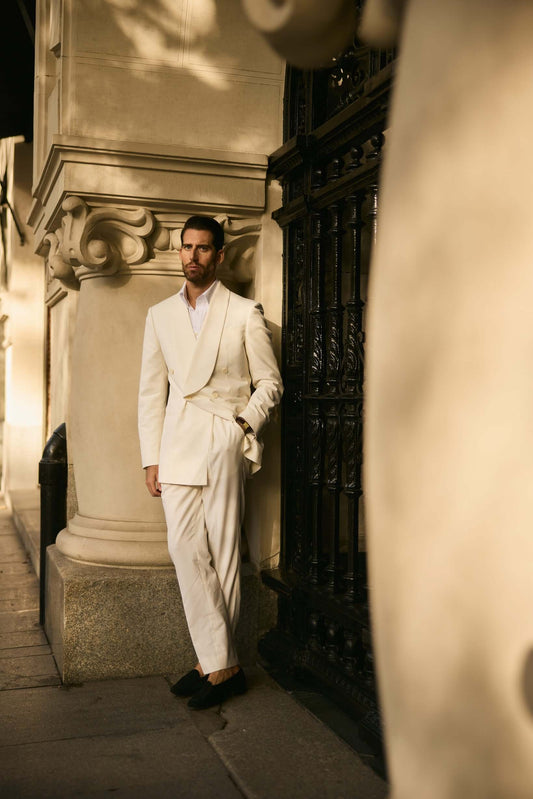

Black Tux Style Guide: How to Wear a Classic Tuxedo Perfectly
Last modified:A black tuxedo is the gold standard of men's formalwear. It has endured for over a century because it works — it flatters, it signals occasion, and it photographs impeccably. But wearing a black tux perfectly requires more than pulling one out of a bag. Every detail matters.
Quick Answer: How Should a Black Tuxedo Be Worn?
A black tuxedo should be worn with a formal tuxedo shirt, black self-tie bow tie, patent leather shoes, and either a cummerbund or waistcoat. Peak and shawl lapels are the traditional choices, while proper fit and restrained accessories are essential for a polished black tie appearance.
The Anatomy of a Black Tuxedo

Black Tuxedo Essentials
| Element | Recommended Choice |
|---|---|
| Lapel | Peak or Shawl |
| Shirt | White Tuxedo Shirt |
| Tie | Black Self-Tie Bow Tie |
| Shoes | Patent Leather Oxfords |
| Accessories | White Pocket Square & Cufflinks |
Before styling, understand what makes a tuxedo a tuxedo — not just a dark suit.
- Satin or grosgrain lapels (peak or shawl) — never notch lapels at black tie
- Matching satin stripe down the trouser leg
- No exterior pockets (or jetted/besom pockets only)
- One-button jacket closure (peak or shawl lapel styles)
- Black bow tie — never a four-in-hand tie at formal black tie
For a deeper comparison of tuxedo vs suit distinctions, read our detailed tuxedo vs suit guide .
Choosing the Right Tuxedo Lapel Style
Shawl Lapel Tuxedo
The shawl lapel is a continuous, rounded lapel without a notch break. It reads as the most elegant and traditional tuxedo style — commonly associated with classic Hollywood and formal dining events. A shawl lapel works beautifully for black tie galas, operas, and charity events.
Peak Lapel Tuxedo
The peak lapel features upward-pointing lapel tips that create a strong, powerful silhouette. It's bolder than the shawl lapel and signals authority and confidence. Peak lapels work for modern black tie events and are extremely popular for weddings.
If you're attending or planning a wedding, understanding the dress code is just as important as selecting the right tuxedo. Our guide to wedding outfits for men explains what to wear for formal, semi-formal, and casual celebrations.
Browse our custom two-piece tuxedo and three-piece tuxedo designs, available in both shawl and peak lapel options.
How to Wear a Black Tuxedo: The Complete Look

Step 1: The Shirt
Always wear a formal tuxedo shirt with a bib front, wing or spread collar, and French cuffs. White only. The shirt is the canvas on which everything else sits.
Not all formal shirts are designed for black tie. Our guide to tuxedo shirts for men explains collar styles, bib fronts, and formal shirt options in greater detail.
Step 2: The Bow Tie
Always wear a self-tie bow tie — never a pre-tied clip-on. A hand-tied bow tie has natural asymmetry that signals authenticity and effort. Black silk or satin bow ties are the only correct choice for black tie events.
Step 3: The Waistcoat or Cummerbund
Traditional black tie calls for either a black waistcoat or a black cummerbund to cover the trouser waistband. A cummerbund should always be worn with the pleats facing upward. A waistcoat is a more formal and layered alternative.
Step 4: The Shoes
Black patent leather oxford shoes are the gold standard for black tie. Opera pumps (black with grosgrain bow) are the most formal option but rarely worn outside the most traditional events. Black velvet loafers are acceptable at slightly less formal black tie occasions.
Step 5: The Accessories
Less is more. Limit your accessory palette to:
- Black bow tie
- Silver or gold cufflinks in onyx or mother-of-pearl
- White pocket square in TV fold (flat, not puffed)
- Black leather or patent leather belt (only if wearing a trouser without side adjusters)
For full guidance on dressing for formal events, read our black tie attire for men guide .
Common Black Tux Mistakes to Avoid

- Wearing a notch lapel suit jacket as a tuxedo substitute — it doesn't work
- Using a pre-tied bow tie — it signals inauthenticity
- Wearing a four-in-hand tie instead of a bow tie
- Pairing a tuxedo with a regular dress shirt that has no bib
- Wearing a tuxedo jacket that doesn't fit properly in the shoulders
For a complete checklist of formal dress code rules, read our formal vs black tie comparison guide .
When Should You Wear a Black Tuxedo?
A black tuxedo is appropriate for black tie weddings, formal galas, award ceremonies, charity events, opera performances, and evening celebrations with a formal dress code. It is generally not appropriate for business events, cocktail attire, or daytime ceremonies unless specifically requested.
Custom Black Tuxedo: The Ultimate Investment
Unlike rental tuxedos, a custom black tuxedo is built around your exact proportions, creating cleaner lines through the shoulders, waist, and trousers.
A custom black tuxedo isn't just better-fitting — it's a wardrobe investment that pays dividends over years of events. From the lapel width to the trouser break, every detail is calibrated to your body and preference.
Explore our custom tuxedo design page to begin building your signature black tie look.
Conclusion
The black tuxedo is an investment in timeless elegance. Worn correctly — with the right shirt, bow tie, shoes, and accessories — it communicates everything about a man's attention to detail and respect for occasion. Master the black tux, and you'll never be underdressed at another formal event in your life.
Frequently Asked Questions
Can I wear a black tuxedo to a wedding?
Yes. A black tuxedo is appropriate for black tie weddings and formal evening receptions.
Should a tuxedo be tailored?
Yes. Proper shoulder fit, sleeve length, and trouser break are essential for a polished appearance.
Can I wear a regular dress shirt with a tuxedo?
A formal tuxedo shirt is recommended because it includes details such as a bib front, French cuffs, and appropriate collar styles.
What shoes should I wear with a black tuxedo?
Patent leather Oxford shoes remain the traditional choice, although velvet loafers may work for some modern black tie events.