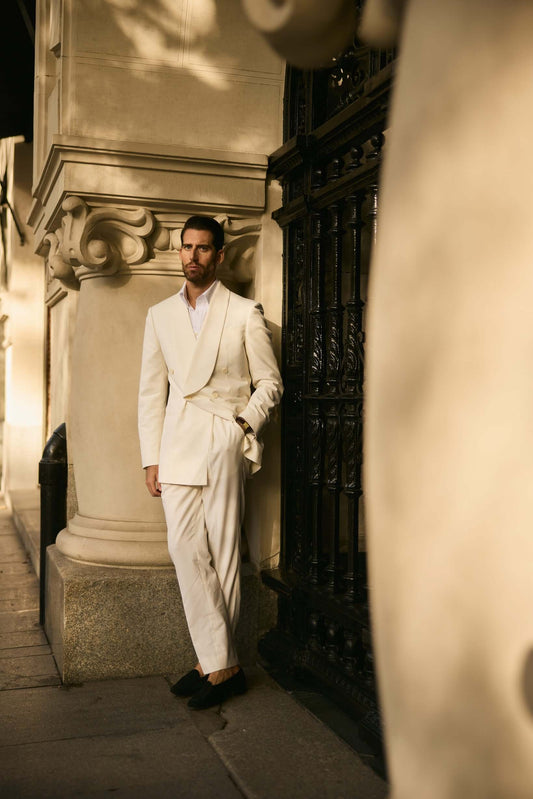
Funeral Attire for Men: What to Wear to a Funeral

Funeral Attire for Men: What to Wear to a Funeral

Last modified:

Choosing the right funeral attire for men is about showing respect, dressing appropriately, and understanding the occasion. Whether you're attending a traditional funeral, memorial service, viewing, or graveside ceremony, your clothing should be understated and considerate of the family's wishes.

For most traditional services, men should wear a black, charcoal, or dark navy suit with a white dress shirt, conservative tie, and polished dark dress shoes. However, appropriate men's funeral attire can vary depending on the dress code, cultural traditions, weather, and whether the service is formal or casual.

This guide explains what to wear to a funeral for men, including suitable suit colors, shirts, ties, shoes, casual alternatives, and complete outfit ideas. You'll also learn what to avoid and how to dress respectfully if you don't own a suit.

Quick Answer: What Should a Man Wear to a Funeral?

For a traditional funeral, a man should generally wear a dark suit, plain white dress shirt, subdued tie, and clean black dress shoes. Black is the most traditional suit color, but charcoal and dark navy are also suitable for many services. Keep patterns and accessories minimal.

If you don't own a suit, dark dress trousers with a collared shirt and conservative blazer can be appropriate. Always follow the family's clothing instructions and any relevant religious or cultural customs.

In This Guide

Men's Funeral Attire at a Glance

Men’s funeral attire guide showing appropriate suits, shirts, ties, shoes, outerwear and accessories

Item Safest Choice Other Appropriate Options Usually Avoid
Suit Black Charcoal or dark navy Bright colors and bold patterns
Shirt White dress shirt Pale blue or another subdued solid Graphic, bright, or heavily patterned shirts
Tie Black or dark solid tie Dark navy, charcoal, muted pattern Novelty prints and bright colors
Shoes Black Oxfords or Derbies Other polished dark dress shoes Running shoes and attention-grabbing footwear
Outerwear Black or charcoal overcoat Dark navy overcoat Bright casual jackets
Accessories Simple and minimal Plain white pocket square, discreet watch Flashy jewelry and statement accessories

What Color Suit Should You Wear to a Funeral?

Black is the traditional funeral suit color, but it is not the only appropriate choice. In many contemporary services, charcoal and dark navy suits are equally respectful.

Black Suit

A black suit is the safest choice for a traditional funeral, particularly when the service is formal or you are unsure about the expected dress code. Pair it with a white shirt, dark tie, and black leather shoes.

Charcoal Suit

Charcoal is an excellent alternative to black. It remains subdued and formal without appearing inappropriate for the occasion. It is also useful beyond funerals, making it a versatile addition to a man's wardrobe.

If charcoal is already part of your wardrobe, our charcoal suit combinations guide explains how this versatile color can be styled for other occasions.

Dark Navy Suit

A dark navy suit is generally appropriate for many funerals and memorial services, particularly daytime services. Choose a deep navy rather than a bright or highly saturated blue and keep the shirt, tie, and accessories conservative.

See our navy suit combinations guide for additional ways to use a navy suit outside solemn occasions.

Can You Wear Grey to a Funeral?

Yes, provided the grey is sufficiently dark. Charcoal is preferable to light or medium grey because it creates a more subdued appearance. A pale grey suit can feel too light for a traditional funeral unless the family has requested less formal or lighter clothing.

Can You Wear Brown or Green to a Funeral?

Dark brown or extremely muted colors may be acceptable at certain informal services, but they are not the safest default. Green suits, tan suits, bright blue suits, and other noticeable colors are better reserved for occasions where personal style is more appropriate.

When no dress instructions have been provided, black, charcoal, or dark navy remains the simplest choice.

The Best Funeral Suit for Men

Best funeral suit for men featuring a dark two-piece suit, white shirt, black tie and polished dress shoes

A funeral suit should look clean and properly fitted without drawing attention to itself. A classic two-piece suit is usually all you need.

Choose:

  • A black, charcoal, or dark navy color
  • A matte or minimally textured fabric
  • A classic or modern fit that follows your proportions
  • Notch lapels for a conventional appearance
  • Minimal decorative detailing
  • Trousers with a clean, intentional break

If you are comparing different silhouettes, our guide to men's suit styles explains classic, modern, and slim suit fits in more detail.

A well-fitted suit is appropriate because it looks composed, not because the funeral is an opportunity to showcase tailoring.

Should You Wear a 2-Piece or 3-Piece Suit?

Both two-piece and three-piece suits can be appropriate for a funeral. A simple two-piece suit is usually the safest choice because it provides a formal, understated appearance without additional layers.

A three-piece suit with a matching waistcoat can also be suitable, particularly for a traditional or formal service. Choose dark, subdued colors and avoid decorative waistcoats, shiny fabrics, or accessories that make the outfit unnecessarily elaborate.

If you're unsure which is better, a dark two-piece suit is a dependable option. For more detail, see our 2-piece vs. 3-piece suit guide.

Can You Wear a Tuxedo to a Funeral?

Generally, you should not wear a tuxedo to a funeral. A tuxedo is traditionally associated with black-tie evening occasions, such as formal galas and certain weddings, rather than funeral services. Even a black tuxedo with a white shirt and black bow tie can appear unnecessarily formal for a typical funeral.

For most traditional services, a black, charcoal, or dark navy business suit is more appropriate. Pair it with a white dress shirt, conservative dark tie, and polished dress shoes.

When might a tuxedo be appropriate? Only when the family has specifically requested black-tie clothing or the circumstances call for that level of formality. If no dress code is stated, choose a conventional dark suit rather than a tuxedo.

If you're unsure how the two garments differ, read our tuxedo vs. suit guide.

Can You Wear a Pinstripe Suit to a Funeral?

A dark pinstripe suit can be appropriate for a funeral if the stripes are subtle and the overall appearance remains conservative. Black, charcoal, or dark navy suits with very fine, low-contrast pinstripes are generally preferable to bold or highly noticeable patterns.

For a traditional funeral, a plain dark suit remains the safest option. A simple dark double-breasted suit can also be appropriate, provided the fit and styling are understated.

What Shirt Should a Man Wear to a Funeral?

A plain white dress shirt is the safest funeral shirt for men. It is understated, formal, and works naturally with black, charcoal, and navy suits.

A pale blue shirt can also work for some services, especially when worn with a charcoal or navy suit. Very subtle solid colors may be acceptable when the funeral is less formal.

Avoid:

  • Bright colors
  • Large checks or stripes
  • Graphic shirts
  • Shiny fabrics
  • Casual short-sleeve shirts at formal services

If you need a formal shirt, a properly fitted custom dress shirt can also become a useful part of your broader formal wardrobe.

What Color Shirt Should You Wear With a Black Suit to a Funeral?

A plain white dress shirt is the most traditional and versatile choice with a black funeral suit. It creates a clean, formal appearance and pairs naturally with a black or dark grey tie.

A pale blue or similarly subdued shirt may be suitable for some less traditional services, but white is the safest option when the expected dress code is unclear.

What Tie Should You Wear to a Funeral?

A black tie is traditional, but it is not mandatory at every funeral. Dark charcoal, deep navy, or another subdued solid tie can also be appropriate.

Small, discreet patterns may work when the overall appearance remains conservative, but avoid bright colors, novelty designs, large patterns, shiny finishes, or anything intended to attract attention.

Do You Have to Wear a Tie to a Funeral?

Not always. For a traditional or formal funeral, wearing a tie is the safest choice. For an informal memorial, celebration of life, or service where the family has requested relaxed clothing, an open collar may be acceptable.

If you do not know what is expected, wear the tie. It is easy to remove later if the setting turns out to be more relaxed.

What Shoes Should Men Wear to a Funeral?

Black leather dress shoes are the safest funeral footwear. Oxfords and Derbies work particularly well because their clean shape complements a dark suit without attracting unnecessary attention.

Appropriate options include:

  • Black Oxfords
  • Black Derbies
  • Simple black loafers, depending on formality
  • Dark brown dress shoes with charcoal or navy, when appropriate
  • Clean, conservative dress boots in cold weather

Shoes should be clean and polished, but they do not need a conspicuous high shine.

Avoid running shoes, brightly colored sneakers, distressed footwear, hiking shoes, or heavily decorated dress shoes unless practical circumstances or the family's requested dress code make them necessary.

What If You Don't Own a Suit?

Funeral attire for men without a suit, including dark trousers, blazer, dress shirt and conservative sweater options

You don't need to purchase a new suit just to attend a funeral. If you don't own formalwear, choose clean, understated clothing that respects the occasion and follows any instructions from the family.

Appropriate funeral attire for men without a suit can include:

  • Dark dress trousers and a white shirt: A simple, conservative combination when a full suit isn't available.
  • Dark trousers with a blazer: Add a navy, black, or charcoal blazer and subdued tie for a more formal appearance.
  • Dark chinos and a collared shirt: An alternative for less formal memorial services when dress trousers aren't available.
  • Dark sweater over a collared shirt: A practical choice for cooler weather or services with a more relaxed dress code.

A jacket can make the outfit more formal, but it isn't always essential. Focus on wearing the most appropriate clothing available rather than feeling pressured to buy something new.

If you are purchasing a suit because you also need formalwear for work, weddings, and other occasions, a charcoal or dark navy custom suit generally offers more versatility than a funeral-only black suit.

What Is Appropriate Casual Funeral Attire for Men?

Casual funeral attire for men should still look clean, neat, and respectful. When the family requests a relaxed dress code, or when the service is informal, you may not need to wear a matching suit and tie.

Suitable options can include dark chinos or dress trousers with a plain collared shirt, a conservative blazer, or a simple dark sweater. Choose muted colors such as black, charcoal, navy, or dark grey, and avoid clothing with prominent logos or bold graphics.

Business-casual clothing may be appropriate for some informal memorials or celebrations of life, but it should not automatically be treated as suitable for every funeral. When the dress code is unclear, dress more conservatively or ask the family or funeral organizer.

Can You Wear a Blazer and Dress Pants to a Funeral?

Yes, particularly when you do not own a matching suit or the service is less formal. A dark navy or charcoal blazer with dark trousers, a white shirt, subdued tie, and dress shoes can create an appropriately respectful outfit.

For a highly traditional funeral, however, a matching dark suit remains preferable when available.

Our blazer vs. sport coat vs. suit jacket guide explains the differences if you are deciding which jacket is most appropriate.

What to Wear to Different Types of Funeral Services

What to wear to different funeral services including a traditional funeral, visitation, wake, memorial and graveside service

Not every funeral-related gathering has the same degree of formality. Pay attention to the invitation, location, religious customs, and any instructions from the family.

Traditional Funeral Service

A dark suit, white shirt, conservative tie, and dress shoes remain the safest combination. Religious services may also have specific expectations, so check beforehand when appropriate.

Viewing or Visitation

A viewing or visitation may be slightly less formal than the funeral itself, but clothing should still be subdued and respectful. A dark suit works well, as does a blazer with dress trousers for a more informal gathering.

Wake

Dress expectations for wakes vary considerably by family and culture. Traditional wakes may call for the same clothing you would wear to the funeral, while others are more relaxed. Avoid assuming that "less formal" means casual.

Memorial Service

Memorial services can range from highly formal ceremonies to relaxed gatherings. If no dress code is stated, conservative smart clothing in dark or muted colors remains a safe choice.

Celebration of Life

A celebration of life may intentionally have a less somber dress code. Some families request a favorite color, particular style, or even casual clothing that reflects the person being remembered.

When the family gives specific instructions, follow them. Their wishes matter more than conventional funeral attire rules.

Graveside Service

For a graveside service, consider the weather and terrain as well as formality. You may need a dark overcoat, umbrella, weather-resistant dress shoes, or conservative boots. Avoid footwear that is impractical on wet grass, gravel, or uneven ground.

What to Wear to a Funeral in Summer

Summer funeral attire for men with a lightweight dark wool suit, breathable white shirt and black dress shoes

Hot weather does not require abandoning formality. Instead, reduce fabric weight and unnecessary layering while keeping colors restrained.

Good summer funeral options include:

  • Lightweight wool suit in charcoal or navy
  • Breathable white dress shirt
  • Minimal layering
  • Lightweight dark trousers when a suit is not required
  • Unlined or lightly constructed jackets where appropriate

Black linen can technically work in some informal settings, but linen wrinkles easily and may appear more casual. Lightweight wool generally offers a better balance of breathability, drape, and formality.

For more on warm-weather fabrics, see our summer suit guide to linen, cotton, and lightweight wool.

What to Wear to a Funeral in Winter

Winter funeral attire for men featuring a dark wool suit, overcoat, scarf, leather gloves and dark dress boots

Winter allows additional layers, but they should follow the same principle of restraint.

Consider:

  • Dark wool suit
  • Black, charcoal, or navy overcoat
  • Dark scarf
  • Plain leather gloves
  • Dark weather-appropriate dress boots when necessary

A formal dark custom overcoat is preferable to a bright puffer or highly casual jacket when the weather allows.

Funeral Accessories for Men

Appropriate funeral accessories for men including a simple watch, plain belt, understated cufflinks and white pocket square

Accessories should complete the outfit rather than become its focal point.

A simple watch, plain belt, understated cufflinks, and a neatly folded white pocket square can be appropriate. Avoid oversized watches, colorful pocket squares, novelty cufflinks, conspicuous jewelry, or other statement pieces.

Should You Wear a Pocket Square to a Funeral?

You can, but it is optional. If you wear one, choose plain white linen or cotton in a simple straight fold. A colorful or decorative pocket square is better saved for another occasion.

Can You Wear Sunglasses?

Sunglasses are reasonable outdoors, particularly at a graveside service or when needed for comfort. Remove them indoors unless you need them for medical or accessibility reasons.

What Not to Wear to a Funeral

What not to wear to a funeral for men, including bright colors, ripped jeans, running shoes, novelty ties and flashy accessories

The easiest rule is to avoid clothing that makes you the visual focus of the gathering.

Unless the family has specifically requested otherwise, avoid:

  • Bright or neon colors
  • Bold suit patterns
  • Graphic T-shirts
  • Distressed or ripped jeans
  • Shorts
  • Running shoes or gym trainers
  • Flashy jewelry
  • Novelty ties
  • Attention-grabbing pocket squares
  • Very casual hats
  • Clothing with prominent slogans or branding
  • A tuxedo when black tie has not been requested

Can You Wear Jeans to a Funeral?

For a traditional funeral, jeans should generally be avoided when dress trousers are available. Dark, clean jeans may be acceptable at a very casual service or when the family specifically requests informal clothing.

When unsure, choose dark trousers instead.

Can You Wear Sneakers to a Funeral?

Dress shoes are preferable for a traditional service. Minimal dark sneakers may be acceptable at an informal memorial, or when comfort, mobility, health, or accessibility makes them necessary. Bright athletic shoes should generally be avoided when other practical options are available.

Funeral Attire and Cultural or Religious Traditions

There is no universal funeral dress code. Customs vary significantly between religions, cultures, communities, and individual families.

Black is closely associated with mourning in many Western traditions, but other cultures may use different colors or clothing. Some religious services may require head coverings, modest clothing, removal of shoes, covered shoulders, or other specific practices.

Do not assume that conventional Western funeral attire overrides those traditions.

If you are attending a service from a tradition unfamiliar to you, ask the family, funeral home, place of worship, or another attendee about appropriate clothing. A short, respectful question is preferable to guessing.

What Is the Dress Code for an Italian Funeral?

For a traditional Italian funeral, conservative clothing in dark or subdued colors is generally a respectful choice. Men commonly choose a dark suit or smart dark trousers with a collared shirt, conservative tie, and formal shoes, particularly when the service takes place in a church.

There is no single Italian funeral dress code that applies to every family or community. Expectations can differ depending on the location, religious tradition, and wishes of the deceased's family. For a Catholic church service, modest clothing is generally appropriate.

If you're attending an Italian funeral and are unsure what to wear, a dark suit with a white shirt and subdued tie is a sensible starting point. Follow any specific instructions provided by the family or funeral organizer.

How Should a Funeral Suit Fit?

Proper funeral suit fit showing correct shoulders, jacket closure, shirt collar, sleeve length, trousers and comfortable movement

A funeral is not the occasion for an exaggerated silhouette. Your suit should fit cleanly and comfortably so that the clothing does not become distracting.

Check that:

  • The jacket shoulders end close to your natural shoulders
  • The jacket closes without strong pulling across the button
  • The shirt collar sits neatly beneath the jacket collar
  • The sleeves allow a small amount of shirt cuff to show
  • The trousers sit cleanly without excessive bunching
  • You can sit, stand, and walk comfortably

If you are unfamiliar with different proportions, see our guide to tailored suits.

If you're considering a versatile suit for formal occasions beyond a single service, explore the custom tailoring options available from Bold Italia.

Explore Custom Suits

6 Funeral Outfit Ideas for Men: Traditional, Casual & Seasonal

Funeral outfit ideas for men featuring black, charcoal and navy suits plus summer, winter and no-suit alternatives

These funeral outfit ideas for men offer practical combinations for different services, dress codes, and weather conditions. Whether you own a black suit, prefer a charcoal or navy alternative, or need something appropriate without a matching suit, the goal is to choose clothing that looks respectful and feels comfortable.

Most Traditional

Black suit + white dress shirt + black tie + black Oxfords

This is the safest combination for a traditional formal funeral.

Versatile and Appropriate

Charcoal suit + white dress shirt + dark grey tie + black shoes

A restrained combination that also uses pieces suitable for business and other formal occasions.

Dark Navy Alternative

Dark navy suit + white dress shirt + dark navy or black tie + black shoes

An appropriate alternative for many contemporary funeral and memorial services.

If You Don't Own a Suit

Dark dress trousers + white shirt + dark blazer + subdued tie + dress shoes

This keeps the outfit respectful without requiring you to purchase an entirely new suit.

Summer Funeral

Lightweight charcoal or dark navy wool suit + white shirt + dark tie + black dress shoes

Choose breathable construction rather than sacrificing the conservative appearance of the outfit.

Winter Funeral

Dark wool suit + white shirt + dark tie + black shoes + charcoal or black overcoat

Keep visible outerwear as restrained as the suit underneath it.

Final Funeral Attire Checklist for Men

Funeral attire checklist for men covering dark suits, white shirts, conservative ties, dress shoes, fit, weather and family customs

  • Choose black, charcoal, or dark navy when no other dress code is given.
  • Wear a clean white or subdued dress shirt.
  • Choose a conservative dark tie for traditional services.
  • Wear clean, polished dark dress shoes.
  • Keep patterns and accessories understated.
  • Make sure your clothes fit comfortably and neatly.
  • Dress for the weather if the service includes an outdoor burial.
  • Consider religious and cultural customs.
  • Follow any specific clothing request made by the family.
  • When uncertain, choose the simpler and more conservative option.

Conclusion

The best funeral attire for men is not necessarily the most expensive or most formal outfit. It is the clothing that shows consideration for the people, traditions, and occasion.

For most traditional funerals, you cannot go wrong with a dark suit, white shirt, subdued tie, and polished dress shoes. Black is traditional, while charcoal and dark navy provide respectful alternatives.

If you do not own a suit, do not let that become the focus. Choose clean, conservative clothing in dark or muted colors and make the best use of what you have.

Most importantly, follow the family's wishes whenever they have provided them. Funeral etiquette is ultimately about respect, and your clothing should quietly reflect it.

View Men's Custom Suits

Back to blog

Leave a comment

Please note, comments need to be approved before they are published.

  • How to Wear Suspenders: Rules, Fit, and Whether You Need a Belt

    How to Wear Suspenders: Rules, Fit, and Whether You Need a Belt

    Last modified:

    Suspenders are one of those classic menswear accessories that look effortless when worn correctly—but can raise plenty of questions the first time you put them on. Where should they sit? Should they match your shoes? Do they go under your jacket? And perhaps the most common question: Do you wear a belt with suspenders? Quick answer: No, you generally should not wear a belt with suspenders. Suspenders and belts perform the same basic job: keeping your trousers in position. Wearing both at the same time is unnecessary and can make an otherwise polished outfit look overdone. Instead, choose one trouser-support system and let it do its job. Here's how to wear suspenders properly with suits, dress pants, and other tailored outfits. Do You Wear a Belt With Suspenders? No. Wear suspenders or a belt—not both. Suspenders hold your trousers up from your shoulders. A belt holds them in position by tightening around your waist. Using both is essentially adding two solutions to the same problem. With tailored clothing, it can also create unnecessary visual clutter around the waist. The traditional approach is straightforward: Suspenders = no belt. Belt = no suspenders. If your trousers have belt loops but you want to wear suspenders, you can still technically attach suspenders to appropriate trousers. However, trousers specifically designed to be worn with suspenders often create a cleaner and more intentional appearance. What Are Suspenders? Suspenders are straps worn over the shoulders and attached to the front and back of the trousers. Their purpose is to hold the trousers at the desired position without requiring a belt around the waist. In American English, they are generally called suspenders. In British English, the equivalent menswear accessory is commonly called braces. Suspenders come in different materials, widths, attachment systems, and configurations, but most follow the same basic principle. The straps travel from the trousers over the shoulders and connect again at the back. How Should Suspenders Fit? Suspenders should hold your trousers comfortably in place without pulling aggressively against your shoulders. The straps should lie relatively flat against your shirt rather than twisting or hanging loosely. Adjust them until the trousers sit naturally at the intended waist position. If the suspenders are too tight, they can pull the trousers too high and create unnecessary tension through the crotch and waistband. If they are too loose, the trousers may sag and the straps can slip from the shoulders. The goal is support, not tension. How to Put On Suspenders The exact process depends on the attachment style, but the basic method is simple. 1. Attach the Back First Before putting on your trousers, attach the suspenders to the appropriate points at the back. Make sure the attachment is centered and secure. 2. Put On Your Trousers Pull the trousers into their natural position. They should sit where they are designed to sit rather than being forced unusually high or low. 3. Bring the Suspenders Over Your Shoulders Take each strap over the appropriate shoulder. Check that the straps lie flat. 4. Attach the Front Fasten the suspenders to the front attachment points. 5. Adjust the Length Use the adjusters to shorten or lengthen the straps. Your trousers should stay securely in position without the straps digging into your shoulders. 6. Check the Full Outfit Stand naturally and look at the front, sides, and back. The trousers should hang cleanly, and the suspenders should not distort the waistband. Button Suspenders vs. Clip Suspenders One of the biggest differences between suspenders is how they attach to the trousers. Button Suspenders Traditional dress suspenders attach to buttons positioned inside the trouser waistband. The leather or fabric ends connect directly to these buttons. This method creates a particularly clean appearance because there are no metal clips gripping the outside of the waistband. Button suspenders are an excellent choice with suits and tailored trousers. Clip Suspenders Clip suspenders attach directly to the trouser waistband using metal clips. They are convenient because the trousers do not need suspender buttons. However, clips generally create a more casual appearance and can be less suitable when you want a traditional tailored look. For a formal suit outfit, button suspenders are usually the more refined option. X-Back vs. Y-Back Suspenders You will commonly see two configurations. Y-Back Suspenders The two shoulder straps join at the back before continuing to a central attachment area. This creates a Y shape. Y-back suspenders are common in modern menswear and work naturally with many tailored outfits. X-Back Suspenders The straps cross at the back, forming an X. This configuration provides a different distribution of support and is another traditional suspender style. Neither shape automatically determines whether the suspenders are formal or casual. Material, width, attachment style, and the rest of the outfit matter too. How to Wear Suspenders With a Suit Suspenders work naturally with a suit because they allow the trousers to hang without a belt visually dividing the outfit at the waist. Start with properly fitting trousers. Attach the suspenders, adjust them so the trousers sit comfortably, then add your dress shirt and jacket. Once the jacket is buttoned, most of the suspenders will be concealed. That is intentional. Suspenders do not need to become the visual centerpiece of a suit. For more on jacket, trouser, sleeve, and shoulder proportions, see our guide to how a suit should fit . Do Suspenders Go Over or Under a Suit Jacket? Suspenders are worn under the suit jacket. They go over your dress shirt but underneath the jacket. The basic order is: Dress shirt → suspenders → suit jacket This allows the suspenders to perform their function without competing visually with the jacket. When you remove your jacket, the suspenders naturally become visible. But when the complete suit is being worn, they generally remain underneath it. Should Suspenders Show When Wearing a Suit? They can show when your jacket is open or removed, but they do not need to be deliberately displayed. Traditional tailored dressing treats suspenders primarily as functional accessories. This differs from accessories such as a tie or pocket square, which are intended to contribute directly to the visible front of the outfit. Think of suspenders as part of the underlying structure that helps your trousers sit correctly. What Trousers Work Best With Suspenders? Tailored trousers designed with suspender buttons are the natural choice. These buttons are typically positioned inside the waistband, allowing the suspenders to attach without visible clips. Trousers worn with suspenders also do not need to rely on a tightly cinched waistband to stay in position. That can help the trousers hang more naturally from the waist. If you're building a tailored outfit, you can browse Bold Italia dress pants . Can You Wear Suspenders With Belt Loops? Yes, although it is not always the cleanest traditional approach. The presence of belt loops does not physically prevent you from wearing suspenders. However, if the trousers have both belt loops and suspender buttons, do not add a belt simply because the loops are there. Empty belt loops are preferable to wearing a redundant belt and suspenders together. For custom trousers, details such as waistband style, side adjusters, belt loops, and suspender buttons can be considered as part of the overall design. Suspenders vs. Side Adjusters Suspenders are not the only alternative to a belt. Tailored trousers can also use side adjusters, which allow the waistband to be tightened slightly without a belt. Side adjusters create a clean waistband and are particularly useful when you want to avoid belt loops. The choice between suspenders and side adjusters often comes down to trouser design and personal preference. But the same principle applies: You generally do not need multiple systems working at once. What Shirt Should You Wear With Suspenders? A dress shirt is the most natural partner for suspenders in a tailored outfit. White and light blue are easy starting points because they work with a wide range of suits and suspender colors. You can also use subtle stripes or other patterns depending on the suit and occasion. Because the suspenders sit directly over the shirt, the shirt should fit cleanly through the shoulders, chest, waist, and sleeves. You can browse Bold Italia dress shirts or consider a custom dress shirt . Can You Wear Suspenders With a Tie? Absolutely. Suspenders, a dress shirt, and a tie form a classic combination with tailored clothing. The tie remains centered down the front of the shirt while the suspender straps sit farther apart across the torso. When the jacket is on, the tie remains visible while most of the suspenders are covered. Keep the colors and patterns balanced. If your suspenders already have a noticeable pattern, a simpler tie may keep the outfit from becoming too busy. Our guide to how to match a tie with a suit covers color, pattern, texture, and proportion in more detail. Should Suspenders Match Your Shoes? They do not need to match your shoes exactly. However, the leather attachment details on traditional suspenders can coordinate with other leather elements in the outfit. For example, brown leather suspender ends can work naturally within an outfit that already includes brown leather shoes. The important word is coordinate, not duplicate. You do not need every brown element to be precisely the same shade. Should Suspenders Match Your Tie? No. In fact, making the suspenders and tie exactly the same color and pattern can look overly coordinated. Instead, think about the complete color palette. If you are wearing a navy suit, white shirt, burgundy tie, and suspenders, the suspenders can sit quietly within that combination rather than copying the tie. The goal is harmony, not exact matching. What Color Suspenders Should You Wear? Neutral and understated colors are easiest to incorporate into tailored outfits. Good options include: Navy Gray Black Brown Burgundy Beige Patterns can work too, particularly when the rest of the outfit is restrained. The more formal the occasion, the more subtle you may want the suspenders to be. Remember that under a properly worn suit jacket, much of the suspenders will not be visible anyway. Can You Wear Suspenders Without a Jacket? Yes. You can wear suspenders over a dress shirt without a jacket, although doing so makes them a much more visible part of the outfit. That can work for certain occasions and personal styles. Because the suspenders are fully exposed, pay more attention to their: Width Material Color Pattern Hardware Attachment style A simple pair of button suspenders will generally look more refined than highly decorative clip-on suspenders. Can You Wear Suspenders With a Vest? Yes. Suspenders can work particularly well with a three-piece suit. Traditionally, the suspenders sit underneath the vest, just as they sit underneath the jacket. The layering order becomes: Dress shirt → suspenders → vest → jacket The vest then conceals most or all of the suspenders. This creates a clean front without a belt interrupting the waistline. If you are deciding between suit configurations, read our guide to 2-piece vs. 3-piece suits . Can You Wear Suspenders With a Tuxedo? Suspenders can work very naturally with traditional formal eveningwear. Because a belt is generally not part of the classic tuxedo setup, suspenders can help hold the trousers in their intended position without creating a visible belt line. They should remain discreet beneath the jacket and other formal layers. If you're dressing for a black-tie event, read our complete guide to black tie attire before choosing the rest of your accessories. Are Suspenders Business Casual? They can be, although they usually make more of a style statement when worn without a jacket. For a business-casual outfit, you might pair understated suspenders with: Dress shirt + tailored trousers + dress shoes Whether that works depends heavily on the culture of your workplace. In a conservative professional setting, traditional business clothing may be more appropriate. In a creative or relaxed office, visible suspenders can feel more natural. Our guide to business casual outfits for men explains the broader dress code. How High Should Trousers Sit With Suspenders? Suspenders should support the trousers at the position where those trousers were designed to sit. Do not use the suspenders to force low-rise trousers unusually high on your torso. Likewise, do not loosen them until properly designed higher-rise trousers sag below their intended position. The waistband, rise, and suspenders need to work together. When the length is adjusted correctly, the trousers should remain comfortably positioned without the suspenders feeling excessively tight. Common Mistakes When Wearing Suspenders Wearing Suspenders With a Belt This is the big one. Choose one method of supporting your trousers. Wearing the Suspenders Too Tight Suspenders should hold the trousers in place, not pull them aggressively upward. Wearing Them Too Loose Loose straps can slip off your shoulders and fail to support the trousers properly. Using Clips With Very Formal Tailoring Button attachments generally create a cleaner traditional appearance. Matching Every Accessory Exactly Your tie, suspenders, pocket square, and shoes do not need to be identical colors. Letting the Straps Twist Check that both straps lie flat before putting on your jacket. Treating Suspenders Only as Decoration Their primary purpose is functional. They should actually support the trousers properly. How to Wear Suspenders: Quick Checklist Before heading out, check the complete outfit: Detail What to Look For Belt Don't wear one with suspenders Attachment Securely fastened Straps Flat, not twisted Length Comfortable without excessive tension Trousers Sitting at intended waist position Shirt Clean and properly fitted Jacket Worn over suspenders Vest Worn over suspenders Colors Coordinated rather than perfectly matched Overall look Balanced and intentional Suspenders With Custom Suits One advantage of custom tailoring is being able to consider how you actually intend to wear your trousers. If you prefer suspenders, details such as the waistband and suspender-button configuration can be considered when the trousers are designed rather than treated as an afterthought. Likewise, someone who prefers belts or side adjusters may want a different waistband configuration. If you are considering a suit built around your individual measurements and preferences, read our custom suit buying guide or browse Bold Italia custom suits . Do You Wear a Belt With Suspenders? The Bottom Line So, do you wear a belt with suspenders? No. In traditional menswear, you should choose suspenders or a belt rather than wearing both together. Suspenders already perform the job of keeping your trousers in position, so adding a belt is redundant. For a polished tailored outfit, attach the suspenders securely, adjust them so your trousers sit naturally, wear them over your dress shirt and underneath your jacket, and keep the rest of your accessories coordinated rather than excessively matched. Button suspenders are particularly well suited to suits and formal trousers, while clips tend to create a more casual appearance. Most importantly, remember what suspenders are designed to do: allow your trousers to hang comfortably and cleanly without relying on a belt. For a tailored outfit designed around your preferred details, browse Bold Italia custom suits , dress shirts , and dress pants .  

  • How to Measure Dress Shirt Sleeve Length: Step-by-Step Guide

    How to Measure Dress Shirt Sleeve Length: Step-by-Step Guide

    Last modified:

    A dress shirt can fit perfectly through the collar, chest, and waist but still look wrong if the sleeves are too short or bunch excessively around the wrists. The challenge is that dress shirt sleeve length is not always measured the way people expect . Depending on the sizing system or shirt maker, sleeve length may be measured from the center back of the neck, across the shoulder, and down the arm—not simply from the shoulder to the wrist. So, how do you get it right? Quick answer: To measure sleeve length for a dress shirt, start at the center back of your neck, run a flexible measuring tape across the top of your shoulder, continue down your slightly bent arm, and finish around the wrist where you want the shirt cuff to sit. Keep your arm relaxed rather than completely straight. If a shirt maker asks specifically for a shoulder-to-wrist measurement, follow that method instead. Below, we'll walk through both methods and explain how to avoid the most common measurement mistakes. What Is Dress Shirt Sleeve Length? Dress shirt sleeve length describes the distance required for the sleeve to reach from the upper body to the wrist. However, there are two measurements you may encounter: Center-back neck to wrist Shoulder point to wrist These numbers are not interchangeable. A retailer may use one method for standard shirt sizing while a custom shirt maker may request several individual body measurements. Always check which measurement is being requested before submitting a number. If you're ordering a shirt made around your individual preferences, see Bold Italia custom dress shirts . What Do You Need to Measure Dress Shirt Sleeves? You only need a few things: Flexible measuring tape Mirror Something to record the measurement Another person to help, ideally A rigid ruler or construction tape is difficult to follow naturally across the shoulder and arm, so a flexible measuring tape works much better. Wear a lightweight shirt or T-shirt while measuring. Avoid jackets, sweaters, hoodies, or other bulky layers. Most importantly, stand naturally. Changing your posture can change the measurement. How to Measure Sleeve Length for a Dress Shirt The traditional center-back method is straightforward once you know the correct starting point. Step 1: Find the Center Back of Your Neck Stand upright with your shoulders relaxed. Locate the center of the back of your neck around the base of the neck. This is your starting point. Do not start from the side of your neck or directly from the shoulder unless the sizing instructions specifically request a shoulder-to-wrist measurement. Step 2: Measure Across the Shoulder Run the measuring tape from the center back of your neck across the top of your shoulder. Allow the tape to follow the natural shape of your body rather than pulling it into an artificial straight line. Continue toward the point where your shoulder transitions into your upper arm. Step 3: Bend Your Arm Slightly Let your arm hang naturally with a slight bend at the elbow. Do not hold your arm completely straight and rigid. Your arm bends throughout normal movement, so allowing a slight bend helps account for the path the sleeve needs to follow. Step 4: Continue Down the Arm Without losing the measurement from the neck, continue the tape down the outside of your arm. Follow the arm past the elbow and toward the wrist. The tape should follow the natural path of your arm rather than cutting diagonally across it. Step 5: Finish at the Wrist Continue measuring to the point around your wrist where you want the shirt cuff to finish. Record the complete measurement from the center back of the neck to the wrist. That is your dress shirt sleeve measurement when using the center-back method. Dress Shirt Sleeve Measurement at a Glance Step What to Do 1 Start at center back of neck 2 Measure across the shoulder 3 Keep elbow slightly bent 4 Continue tape down outside of arm 5 Finish around the wrist 6 Record full measurement 7 Repeat to confirm Take the measurement at least twice. If you get noticeably different results, repeat the process rather than guessing between the two numbers. Should You Measure From the Shoulder or Neck? It depends on what measurement the shirt maker requests. This is one of the most common sources of confusion. For traditional dress-shirt sizing, sleeve length is often measured from the center back of the neck to the wrist . For body measurements used in custom clothing, you may instead be asked to provide a measurement from a defined shoulder point to the wrist . Neither method is automatically wrong. They simply measure different distances. If instructions say "sleeve length from center back," start at the neck. If they say "shoulder-to-wrist" or provide a specific diagram showing a shoulder starting point, follow those instructions. Never substitute one measurement for the other. How to Measure Shoulder-to-Wrist Sleeve Length If you specifically need a shoulder-to-wrist measurement, the process is slightly different. Find the point where your shoulder ends and your upper arm begins. From there: Position the measuring tape at the shoulder point. Let your arm hang naturally. Bend the elbow slightly. Run the tape down the outside of the arm. Finish around the wrist where the shirt cuff should sit. Record the measurement. Because identifying your own shoulder point can be difficult, this measurement is usually easier with someone helping you. Why Should Your Elbow Be Slightly Bent? A completely straight arm may produce a measurement that does not account well for normal movement. Think about what happens during the day. You reach for something, type, drive, shake hands, pick up a phone, or bend your elbow while sitting. Your dress shirt needs to accommodate those movements without constantly pulling the cuff far up your forearm. A slight natural bend during measurement helps reflect how the sleeve travels across your shoulder, elbow, and wrist. However, do not exaggerate the bend. You are not trying to create extra sleeve length. You simply want your arm in a relaxed, realistic position. Where Should a Dress Shirt Sleeve End? A dress shirt sleeve should generally finish around the wrist , with the cuff sitting cleanly where the hand begins. It should not stop noticeably up the forearm. It also should not extend so far over the hand that the cuff interferes with normal movement. The cuff itself plays an important role because it helps control where the sleeve sits. When you wear the shirt under a suit jacket, a small amount of shirt cuff is commonly visible beyond the jacket sleeve. That relationship is part of the overall proportions of a well-fitted suit. For more on jacket sleeves, shoulders, trousers, and other fit points, read our guide to how a suit should fit . How Much Shirt Cuff Should Show Under a Suit? A small amount of dress shirt cuff showing below the jacket sleeve creates a clean transition between the jacket, shirt, and hand. The exact amount can vary with personal preference and proportions, but the key is consistency. If no shirt cuff is visible, the jacket sleeve may be too long, the shirt sleeve may be too short, or both. If a large amount of shirt cuff is exposed, the opposite may be true. Before changing either garment, check the shirt and jacket separately. Do not automatically shorten the shirt because the jacket sleeve is incorrect. How to Tell If Your Dress Shirt Sleeves Are Too Short Your sleeves may be too short if: The cuffs sit noticeably above your wrists The cuffs pull far up your arms when you bend your elbows Excessive forearm becomes visible during ordinary movement The shirt looks disproportionately short beneath a properly fitted jacket However, make sure the problem is actually sleeve length. A shirt that is too tight across the shoulders or upper body can also affect how the sleeves sit and move. How to Tell If Your Dress Shirt Sleeves Are Too Long Your sleeves may be too long if: Fabric bunches heavily around the wrists The cuffs extend excessively over your hands The sleeves look consistently oversized even when the cuffs are fastened There is excessive fabric collapsing around the lower arm Some fabric around the sleeve is normal because your arms need room to move. The goal is not to make the sleeve perfectly smooth and tight from shoulder to wrist. Does Shirt Cuff Style Affect Sleeve Fit? Yes. The cuff helps determine how the sleeve finishes at your wrist. A properly fitted cuff can prevent the sleeve from sliding excessively over the hand even when there is enough sleeve length for comfortable movement. Different cuff styles can also change the appearance and formality of the shirt. When ordering a custom shirt, cuff style is therefore both a design and fit consideration. You can browse Bold Italia custom dress shirts to see how personalized shirt details can work together. Can You Measure Dress Shirt Sleeve Length by Yourself? You can, but it is harder to get an accurate measurement. The center-back method requires the tape to travel from behind your neck, across your shoulder, and down your arm. Trying to hold the tape while also maintaining a natural posture can be awkward. If possible, ask someone else to take the measurement. If you must measure alone, a well-fitting dress shirt you already own can provide a useful reference. How to Measure the Sleeve on an Existing Dress Shirt If you own a dress shirt with sleeves that fit exactly how you like, you can measure the garment itself. Lay the shirt flat on a clean surface. Smooth it naturally without stretching the fabric. Depending on the measurement requested, measure from the center back of the collar across the shoulder and down the sleeve toward the cuff. Keep the tape following the garment rather than pulling it into a shortcut between two points. Record the measurement and compare it with the sizing instructions for the shirt you intend to purchase. Be careful, though: garment measurements and body measurements are not always interchangeable. If a custom shirt maker asks for a body measurement, provide a body measurement rather than automatically copying the dimensions of an existing garment. Does Neck Size Determine Sleeve Length? No. Neck size and sleeve length are separate measurements. Two men can have the same neck circumference and very different: Shoulder widths Arm lengths Torso proportions Sleeve requirements That is why many dress shirts use both neck and sleeve measurements rather than relying on one size alone. Your collar should also sit correctly around your neck without being excessively tight or loose. If you're deciding which collar works best with your tailoring, read our guide to types of shirt collars . Does Your Height Determine Dress Shirt Sleeve Length? Height can provide a general clue, but it cannot determine your sleeve measurement accurately. Two men who are both six feet tall may have different arm lengths and shoulder widths. Likewise, someone shorter can have relatively long arms for his height, while a taller person can have proportionally shorter arms. This is why measuring the actual body is more reliable than choosing sleeve length from height alone. Common Dress Shirt Sleeve Measuring Mistakes Even a simple measurement can go wrong if your starting point or posture changes. Starting From the Wrong Point Do not start from the shoulder if the instructions call for a center-back measurement. Keeping the Arm Completely Straight A rigid arm does not reflect a natural wearing position. Bending the Elbow Too Much A dramatic bend can add unnecessary length. Pulling the Tape Tight Let the tape follow the shape of the shoulder and arm naturally. Measuring Over a Jacket Bulky clothing can distort the measurement. Looking Down or Twisting Changing your posture while someone measures you can alter the result. Assuming Both Arms Are Identical Bodies are not always perfectly symmetrical. If a custom shirt maker requests both sides, measure both rather than assuming. Measuring Only Once Repeat the measurement to confirm it. Body Sleeve Length vs. Shirt Sleeve Length This distinction is worth remembering. Body measurement records the dimensions of your body according to a specified method. Garment measurement records the dimensions of an actual shirt. A shirt maker may use your body measurements along with construction allowances and fit preferences to determine the finished dimensions of the garment. Therefore, do not automatically add extra inches to your body sleeve measurement because you think the shirt needs room for movement. Provide the measurement requested and follow the company's instructions. The same principle applies when measuring for tailored clothing more broadly. Our guide to how to measure for a suit covers chest, shoulders, waist, hips, jacket length, trousers, and other essential measurements. Dress Shirt Sleeve Measurement Checklist Before recording your final sleeve length, check each step: Check Correct Position Starting point Matches the requested measuring method Posture Natural and relaxed Shoulder Tape follows natural contour Elbow Slightly bent Arm Relaxed rather than rigid End point Around wrist/cuff position Clothing Lightweight, not bulky Tape Follows body without excessive tension Confirmation Measurement taken at least twice Why Sleeve Length Matters With a Suit A dress shirt and suit jacket are designed to work together visually. If the shirt sleeve is significantly too short, it may disappear completely beneath the jacket sleeve. If it is excessively long, too much cuff can remain visible. But sleeve length is only one part of the relationship. The jacket shoulder, jacket sleeve length, shirt cuff, collar, and overall fit all contribute to the final appearance. That is why it is better to evaluate the complete outfit rather than trying to correct every visible issue by changing the shirt sleeve alone. If you're putting together a tailored wardrobe, browse Bold Italia dress shirts alongside our custom suits . How to Measure Dress Shirt Sleeve Length: The Bottom Line So, how do you measure sleeve length for a dress shirt? First, determine which measuring method is required. For a traditional center-back sleeve measurement, start at the center back of your neck, measure across your shoulder, continue down your slightly bent arm, and finish at the wrist where the cuff should sit. If the shirt maker specifically asks for a shoulder-to-wrist measurement, start from the defined shoulder point instead. The most important rules are simple: Use the correct starting point. Keep your posture natural. Bend your elbow slightly. Measure to the wrist. And take the measurement twice. Do not add extra length yourself unless the sizing instructions specifically tell you to do so. Accurate measurements give you a much better starting point for a shirt that works naturally on its own and underneath a suit. For greater control over your shirt's fit and design details, see Bold Italia custom dress shirts .

  • Are Quarter Zips Business Casual? How to Wear One to Work

    Are Quarter Zips Business Casual? How to Wear One to Work

    Last modified:

    Are quarter zips business casual? Yes, a quarter zip can be business casual when it has a refined appearance and is styled with office-appropriate clothing. A fine-knit quarter-zip sweater over a collared shirt, paired with chinos or tailored trousers and polished shoes, works in many modern workplaces. However, a sporty quarter zip with joggers and running shoes is generally too casual for a traditional office. The difference comes down to fabric, fit, color, and layering. Whether you're dressing for a regular workday, casual Friday, or an informal client meeting, knowing how to style a quarter zip can help you look professional without wearing a suit every day. Quick Answer: Is a Quarter Zip Business Casual? Yes, for many workplaces. The safest business-casual combination is a navy, charcoal, gray, or beige quarter zip worn over a white or light-blue collared shirt, with tailored trousers and leather loafers or Derby shoes. Best fabrics: Fine-knit merino wool, cotton knit, and refined cashmere or wool blends. Best fit: Neat through the shoulders and body, with enough room for comfortable layering. Best trousers: Chinos, tailored slacks, or dress pants. Best shoes: Leather loafers, Derbies, and polished dress boots. Avoid: Large athletic logos, bulky fleece, joggers, and heavily worn running shoes in traditional office settings. The important distinction is that a quarter zip is not automatically business casual. The entire outfit must meet the expectations of your workplace. For a broader understanding of office clothing, read Bold Italia's guide to business casual for men . What Makes a Quarter Zip Look Professional? A quarter zip is a pullover with a short zipper at the neckline. Depending on its fabric and construction, it can resemble refined knitwear or casual sportswear. For business casual, the goal is to choose a sweater that looks structured, understated, and easy to coordinate with professional clothing. Feature Office-Ready More Casual Fabric Fine knit or smooth matte fabric Shiny athletic fabric or bulky fleece Fit Clean and comfortable Very loose or excessively tight Color Navy, charcoal, gray, beige Neon colors and loud graphics Underlayer Dress shirt or neat polo Graphic or oversized T-shirt Pants Tailored trousers or chinos Joggers or sweatpants Footwear Loafers, Derbies, dress boots Running or training shoes These are styling guidelines rather than universal workplace rules. A technical quarter zip may be perfectly acceptable in a relaxed office, while a traditional corporate environment may require a dress shirt and blazer. What Type of Quarter Zip Is Best for Business Casual? Fabric is one of the first things people notice. A smooth, refined quarter zip generally looks more professional than one designed primarily for exercise or outdoor activities. Merino Wool Quarter Zips Merino wool is a strong option for business-casual layering because fine-knit versions provide a neat appearance without excessive bulk. A navy merino quarter zip over a white shirt, with charcoal trousers and brown loafers, creates a classic office outfit. Cotton Quarter Zips Cotton quarter zips can work well for everyday office wear, especially in moderate or warmer conditions. Look for a smooth knit, simple collar, and restrained detailing. Choose a design that maintains its shape rather than looking like a casual sweatshirt. Cashmere and Wool-Blend Quarter Zips Fine cashmere and wool-blend styles can provide a more refined appearance for cooler days. They pair naturally with dress shirts, wool trousers, and tailored jackets. Avoid choosing an overly thick sweater if you plan to wear a blazer over it. Performance and Fleece Quarter Zips Performance and fleece fabrics are not automatically unsuitable for work. A matte, minimal performance quarter zip may be acceptable in a relaxed workplace. However, shiny materials, prominent logos, contrast panels, and athletic silhouettes generally make the outfit look less formal. When the dress code is uncertain, a refined knit is the safer choice. How Should a Business-Casual Quarter Zip Fit? A quarter zip should follow the body's shape without clinging or creating excessive loose fabric. Shoulders: Seams should sit near your natural shoulder line. Chest: There should be enough room for a dress shirt without pulling. Waist: The body should fall neatly instead of ballooning around the stomach. Sleeves: Cuffs should finish around the wrist without excessive bunching. Length: The hem should cover the waistband naturally without extending too far down the hips. The easiest test is to wear the quarter zip over your intended office shirt. If the shirt bunches underneath or the sweater stretches across the chest, the combination needs more room. How to Wear a Quarter Zip to Work The most dependable quarter-zip business-casual outfit follows this formula: Quarter zip + collared shirt + tailored trousers + polished shoes. Start with a neutral quarter zip, choose a shirt that sits comfortably underneath, and coordinate the trousers and shoes. Can You Wear a Quarter Zip Over a Dress Shirt? Yes. Wearing a quarter zip over a dress shirt is one of the easiest ways to make it suitable for a professional setting. White and light-blue shirts are versatile because they create contrast with darker sweaters. An Oxford button-down also works, particularly in offices with relaxed business-casual expectations. Keep the collar sitting neatly around the opening of the sweater. Leave the zipper partly open when you want to show the shirt collar, but avoid opening it excessively. For more shirting ideas, explore our best work shirts for men guide . Can You Wear a Quarter Zip Over a Polo? Yes, especially in workplaces where business casual leans toward smart casual. A plain polo underneath a clean quarter zip, combined with chinos and loafers, can work for everyday office wear or casual Fridays. Keep the polo collar neat and avoid combining multiple prominent logos. Can You Wear a T-Shirt Under a Quarter Zip? A plain T-shirt can work in relaxed offices, but it generally creates a more casual appearance than a collared shirt. For a traditional business-casual workplace, choose a dress shirt or Oxford shirt instead. Can You Wear a Quarter Zip With a Tie? Yes, although the combination requires careful layering. Choose a fine-knit quarter zip, a neatly fitted shirt, and a relatively restrained tie knot. Make sure the neckline does not look crowded. For most business-casual offices, a dress shirt without a tie is the simpler option. Build a Smarter Office Layering Look Explore Bold Italia's custom sweater collection, including quarter-zip styles for your wardrobe. EXPLORE QUARTER-ZIP SWEATERS What Pants Should You Wear With a Quarter Zip? Trousers have a major influence on whether a quarter zip looks professional. The same sweater can appear business casual with tailored pants or considerably more relaxed with denim and sneakers. Quarter Zip With Dress Pants Dress pants are one of the strongest combinations for business-casual office wear. Wool trousers or neatly tailored slacks create a balanced contrast with knitwear. Try a navy quarter zip with gray trousers or a charcoal sweater with navy dress pants. Quarter Zip With Chinos Chinos offer a slightly more relaxed option. Khaki, navy, olive, and gray chinos can work with neutral quarter zips. Choose a tailored or straight fit with a clean hem. Loafers or Derby shoes help maintain a professional appearance. Quarter Zip With Jeans Jeans are acceptable only when the workplace allows denim. Dark, clean, non-distressed jeans are more appropriate than heavily faded or ripped styles. Pair them with understated footwear and a refined sweater. For office wardrobes that require more structure, explore Bold Italia's custom dress pants . What Are the Best Quarter-Zip Business-Casual Outfits? These five outfit formulas make it easier to choose a quarter zip for different work environments. 1. Classic Office: Navy Quarter Zip and Gray Trousers Wear: Navy fine-knit quarter zip, white dress shirt, charcoal or medium-gray trousers, and brown leather loafers. Best for: Regular business-casual office days and professional settings where ties are optional. This combination balances dark and light colors while maintaining a traditional office appearance. 2. Modern Office: Charcoal Quarter Zip and Navy Pants Wear: Charcoal quarter zip, light-blue shirt, navy tailored trousers, and black Derby shoes. Best for: Modern workplaces, everyday office wear, and understated business-casual styling. The light-blue shirt breaks up the darker layers and makes the outfit look more intentional. 3. Relaxed Friday: Gray Quarter Zip and Chinos Wear: Medium-gray quarter zip, white Oxford shirt, khaki chinos, and brown loafers. Best for: Casual Fridays, creative offices, and relaxed professional environments. Chinos make the outfit comfortable while the collared shirt helps maintain a polished appearance. 4. Smart Layering: Quarter Zip Under a Blazer Wear: Fine-knit dark quarter zip, light-blue dress shirt, navy or gray blazer, tailored trousers, and dress shoes. Best for: Cooler workdays and offices where elevated layering is acceptable. Use a thin sweater and make sure the blazer has enough room through the shoulders and chest. For additional tailored layers, see our custom sport coat options . 5. Light Neutral Look: Beige Quarter Zip and Navy Trousers Wear: Beige or camel quarter zip, white shirt, navy trousers, and dark-brown loafers. Best for: Everyday office wear when you want a softer alternative to dark knitwear. This combination uses contrast without relying on bright colors. Best Quarter-Zip Color Combinations for Work A neutral color palette makes quarter-zip business-casual outfits easier to coordinate. Quarter Zip Shirt Trousers Shoes Navy White Gray Brown loafers Charcoal Light blue Navy Black Derbies Black White Charcoal Black loafers Medium Gray White Khaki Brown Derbies Beige White Navy Dark-brown loafers If you're buying your first office-ready quarter zip, navy or charcoal is a versatile place to start. What Shoes Work Best With a Business-Casual Quarter Zip? Footwear can make a quarter-zip outfit look more professional or more casual. Leather loafers: Ideal for chinos and tailored trousers in many business-casual offices. Derby shoes: A versatile choice for slightly dressier outfits. Oxford shoes: Suitable for more polished combinations with dress pants. Dress boots: Chelsea boots and other refined styles can work during cooler weather. Minimal sneakers: Appropriate only if the workplace permits them. For more detail, read our men's dress shoes guide . Complete Your Business-Casual Outfit Pair refined knitwear with a custom dress shirt designed to complement your professional wardrobe. DESIGN YOUR CUSTOM DRESS SHIRT When Is a Quarter Zip Appropriate at Work? Different workplaces have different dress-code expectations. Consider the occasion and company guidelines before choosing your outfit. Regular Office Days A fine-knit quarter zip with a collared shirt, tailored trousers, and leather shoes can work well in many business-casual environments. Casual Fridays A quarter zip with chinos and loafers is a practical option. In workplaces that allow denim, clean dark jeans may also be suitable. Client Meetings Quarter zips may be appropriate for informal client meetings, but the client's expectations and your workplace culture should come first. When the meeting requires a more traditional professional appearance, choose a blazer or suit instead. Job Interviews A quarter zip may work for interviews at companies with relaxed dress codes. However, if you are unsure, a dress shirt with tailored trousers and a blazer is usually the more conservative option. Business-Professional Offices A quarter zip generally should not replace a suit jacket in workplaces that require formal business attire. Our business professional attire guide explains when traditional tailoring is more appropriate. Quarter Zip vs. Sweater vs. Blazer: Which Is Better for Work? Quarter zips, traditional sweaters, and blazers can all have a place in a professional wardrobe, but they serve different purposes. Garment Typical Appearance Best Use Quarter Zip Modern and slightly relaxed Business casual and everyday office wear Crewneck Sweater Classic knitwear Traditional sweater layering Blazer More structured and dressy Client meetings and dressier offices Suit Formal and coordinated Business-professional settings A quarter zip is useful when your office allows a relaxed alternative to traditional tailoring. For dressier occasions, a blazer or suit provides more structure. Common Quarter-Zip Business-Casual Mistakes Even a good-quality quarter zip can look out of place when the rest of the outfit is poorly coordinated. Choosing an Athletic Quarter Zip Large logos, shiny fabric, and highly sporty construction can make the garment look too informal for traditional offices. Wearing the Wrong Fit Excessively tight sweaters restrict movement, while oversized quarter zips can lose the neat silhouette associated with business casual. Pairing It With Too Many Casual Items A quarter zip worn with joggers, a graphic T-shirt, and running shoes is unlikely to meet a traditional business-casual dress code. Ignoring the Shirt Collar If you're wearing a shirt underneath, check that the collar sits naturally around the zipper opening. Using Too Many Competing Colors Keep the outfit balanced with two or three complementary colors. Navy, gray, white, and beige are reliable starting points. Ignoring the Workplace Dress Code An outfit that works in a creative workplace may be too relaxed for a formal client presentation. Always dress for the environment rather than assuming every quarter zip works everywhere. Frequently Asked Questions About Quarter Zips and Business Casual Is a Quarter-Zip Sweater Considered Business Casual? Yes. A refined quarter-zip sweater can be business casual when worn with a collared shirt, chinos or dress trousers, and polished shoes. The final decision depends on your workplace's dress code. Is a Quarter Zip Business Professional? Usually not as a replacement for a suit or tailored jacket. Business-professional dress codes generally require more traditional formal clothing than a quarter zip. Can You Wear a Quarter Zip With Dress Pants? Yes. Dress pants are one of the strongest pairings for a quarter zip. Navy sweaters with gray trousers and charcoal sweaters with navy trousers are dependable combinations. Can You Wear a Quarter Zip Over a Polo for Business Casual? Yes, in workplaces with relaxed business-casual expectations. Choose a plain polo, a simple quarter zip, tailored chinos, and polished footwear. Can You Wear a Quarter Zip Over a T-Shirt to Work? A quarter zip over a plain T-shirt can work in some casual offices. However, a dress shirt or Oxford shirt is usually better for traditional business-casual settings. Can You Wear a Quarter Zip Under a Blazer? Yes. A fine-knit quarter zip can be layered under a blazer when both garments fit comfortably. Avoid bulky sweaters that cause the jacket to pull or bunch. Can You Wear a Quarter Zip to a Job Interview? It depends on the company and role. A quarter zip may be acceptable in a relaxed workplace, but a dress shirt and blazer are generally safer when the dress expectations are unclear. Should You Zip a Quarter Zip All the Way Up? Not necessarily. Leaving the zipper partly open can show a neatly fitted shirt collar. You can zip it higher for warmth, provided the neckline remains comfortable and tidy. Conclusion: Are Quarter Zips Business Casual? Yes, quarter zips can be business casual when styled with the right clothing. The most reliable choice is a refined quarter-zip sweater in a neutral color, layered over a collared shirt and paired with tailored trousers and polished footwear. Pay attention to fabric, fit, and workplace expectations. A well-coordinated quarter zip can create a modern professional appearance, while athletic styles and overly casual combinations may not meet stricter dress codes. Building a versatile wardrobe means choosing pieces that work together. Pair your knitwear with a well-fitted dress shirt and tailored trousers so the complete outfit looks intentional. Build Your Business-Casual Wardrobe With Bold Italia Explore custom tailored trousers designed to complement your work shirts, sweaters, and blazers. DESIGN YOUR CUSTOM TROUSERS

1 of 3

Custom-Made Suits

Suits Starting at $399 Only
Order Now
Full-body view of a man wearing a tailored dark blue plain suit with a burgundy silk tie, crisp white dress shirt, white pocket square, and brown leather Oxford shoes, showcasing luxury custom tailoring and timeless executive business style. Portrait of a man wearing a tailored gray business suit with a crisp white dress shirt, black silk tie, white pocket square, and luxury wristwatch, showcasing premium custom tailoring and executive men's formalwear. Full-body portrait of a man wearing a tailored brown plain suit with a matching brown silk tie, crisp white dress shirt, white pocket square, and brown leather Oxford shoes, showcasing luxury custom tailoring and timeless formal menswear.