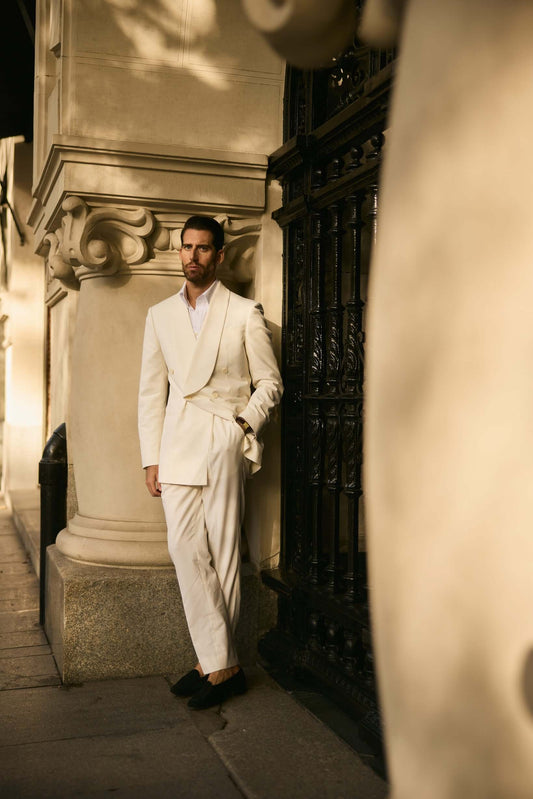
Navy Suit Combinations That Always Look Sharp

Navy Suit Combinations That Always Look Sharp

Last modified:

The key is knowing which navy blue suit combinations work best for each setting. Shirt color, tie texture, shoe choice and accessories can completely change how the same navy suit looks and feels.

This guide covers the best navy suit combinations for business, weddings, formal events and smart-casual occasions, including the shirt colors, tie pairings and shoes that work naturally with navy.

Quick Answer: What Goes Best With a Navy Suit?

A navy suit looks best with white, light blue, pale pink, soft Gray, or subtle striped shirts. Burgundy, navy, dark green, charcoal, and textured Gray ties are the safest choices. Brown shoes create the most versatile modern look, while black shoes work best for formal business, evening events, and darker navy suits.

Best Navy Blue Suit Combinations at a Glance

Best navy blue suit combinations with white and light blue shirts, ties, brown shoes and black shoes for different occasions

A navy suit can work across almost every part of a man's wardrobe. The easiest way to style it is to choose the shirt, tie and shoes according to the level of formality you need.

Navy Suit Combination Best For
White shirt + burgundy tie + dark brown shoes Business, weddings and events
Light blue shirt + navy tie + brown shoes Office and professional wear
White shirt + charcoal or silver tie + black shoes Formal and evening occasions
Pale pink shirt + burgundy or navy tie Weddings and social events
White open-collar shirt + loafers Smart-casual occasions
White shirt + dark tie + black shoes Three-piece and formal looks

Why Navy Is the Most Versatile Suit Color

Navy sits in a sweet spot. It’s formal without being stiff, professional without feeling dull, and flexible enough to dress up or down.

A navy suit:

  • Flatters most skin tones
  • Works year-round
  • Transitions easily from day to night
  • Pairs well with a wide range of colors

If you are comparing navy with other colors, read our guide to best suit colors for men. For office-specific styling, see business professional attire for men and professional suit vs business suit.

If you want to see how navy works across different cuts and styles, browsing a refined men’s wear collection can be helpful:
Explore Men’s Wear

What Colors Go With a Navy Blue Suit?

Navy blue suit styled with white, light blue, pink and green accents with brown and black dress shoes

Navy works with a wide range of colors because it is dark enough to feel formal but softer than black. The safest approach is to keep the shirt relatively light and introduce stronger color through the tie, pocket square, shoes or other small details.

White

White creates the cleanest contrast with a navy suit and works especially well for business, weddings and formal events. It also gives you the widest choice of tie colors.

Light Blue

Light blue creates a softer tonal combination while keeping the outfit professional. Pair it with navy, burgundy, charcoal or another restrained tie color.

Burgundy

Burgundy works particularly well as a tie or accessory color because it adds warmth and contrast without competing with the navy suit.

Gray and Silver

Gray and silver create a more understated combination and work well when the occasion calls for conservative or formal styling.

Pale Pink and Soft Pastels

Pale pink, lavender and other soft pastel shirts can add personality while still working naturally with navy, especially for weddings and social occasions.

Dark Green

Dark green can be used as a restrained accent through a tie or pocket square. Keeping the rest of the outfit simple helps the combination remain refined.

Brown

Brown works particularly well for shoes and leather accessories. Medium and dark brown both complement navy while giving the outfit a warmer appearance.

For a broader comparison of suit colors, see our guide to the best suit colors for men.

Best Navy Blue Suit Combinations by Occasion

Navy suit combination guide by occasion showing recommended shirts, tie colors, and shoe pairings for business meetings, office wear, weddings, black-tie events, and smart casual outfits.

The right navy suit combination depends heavily on the occasion. Business settings usually call for restrained shirts, ties and shoes, while weddings and social events allow more flexibility with color, texture and accessories.

Occasion Best Shirt Best Tie Best Shoes
Business Meeting White or Light Blue Burgundy or Navy Dark Brown
Job Interview White Navy or Burgundy Black or Dark Brown
Wedding White, Pink, or Light Blue Floral, Burgundy, or Textured Navy Brown or Tan
Formal Event White Charcoal, Silver, or Navy Black
Smart Casual Open-Collar White Shirt No Tie Loafers or Minimal Sneakers

Best Shirt Colors for a Navy Suit

Best shirt colors for a navy suit including white, light blue, pale pink, lavender and striped shirts

The shirt creates the foundation of a navy suit combination. White and light blue are the most versatile choices, while pale pink, lavender and subtle patterns can add more personality when the occasion allows it.

Shirt Color Best For Tie Ideas
White Business, weddings, formal events Burgundy, navy, dark green, charcoal
Light Blue Office, business, daytime events Navy, burgundy, textured gray
Pale Pink Weddings and social occasions Navy or burgundy
Lavender Social and modern formal looks Navy or charcoal
Fine Stripe Business and smart casual Solid navy or burgundy

Classic Navy Suit + White Shirt

Classic navy suit with a white dress shirt styled with navy, burgundy, and green ties, showcasing timeless men's business attire, smart casual looks, and formal outfit combinations.

If you only remember one combination, make it this.

Why It Works

  • Clean contrast
  • Always appropriate
  • Sharp in any setting

Pair it with a navy, burgundy, or dark green tie for business, or skip the tie for a modern, relaxed look.

This combination works especially well when the suit fits properly through the shoulders and chest — structure matters here.

Navy Suit + Light Blue Shirt

Men's navy suit with a light blue dress shirt styled with navy ties, showing professional business outfit ideas, formal styling, fabric texture, and matching accessories.

A light blue shirt softens the look of a navy suit while keeping it professional.

Best For

  • Business meetings
  • Office wear
  • Daytime events

Add a patterned tie (small dots, stripes, or texture) to keep the outfit from feeling flat.

This pairing is popular in custom tailoring because subtle color contrast highlights clean lines and fit.

To explore navy suits built for everyday versatility, take a look at the custom suits and tuxedos collection:
Browse Custom Suits

Navy Suit + Pale Pink or Soft Pastel Shirt

Style guide featuring a navy suit paired with pink, lavender, and light peach dress shirts, coordinated with navy, grey, and brown ties, plus brown leather Oxford shoes for polished business and formal outfit combinations.

For men who want something different without going bold, soft pastels work extremely well with navy.

Good Options

  • Pale pink
  • Soft lavender
  • Light peach

These colors add personality while still looking refined. Keep the rest of the outfit simple — neutral tie, brown or oxblood shoes.

Best Navy Blue Suit Combinations for Weddings

Navy blue suit combinations for weddings with white and light blue shirts, burgundy ties, loafers and formal dress shoes

A navy suit is one of the strongest wedding choices because it feels formal without looking severe. It works for grooms, groomsmen, and guests across both daytime and evening ceremonies.

Classic Wedding Combination

Choose a white shirt, burgundy tie, white pocket square, and brown Oxford shoes.

Summer Wedding Combination

Pair a navy suit with a light blue shirt, textured or floral tie, and tan loafers.

Formal Evening Wedding Combination

Wear a crisp white shirt, charcoal or silver tie, and black dress shoes.

Navy Suit Combinations for Grooms, Groomsmen and Guests

The same navy suit can be styled differently depending on your role at the wedding. A groom can add more detail through a waistcoat, textured tie or carefully chosen pocket square, while groomsmen usually look best when the main shirt and tie combination remains consistent across the group.

Wedding guests can keep the look simpler with a navy two-piece suit, white or light blue shirt and brown dress shoes. For daytime or summer weddings, lighter shirts and warmer brown or tan footwear can soften the look. For evening weddings, a white shirt, darker tie and black or dark brown shoes create a more formal appearance.

If you are planning attire for a wedding, explore our wedding suits and groomsmen suit guide.

For more wedding styling ideas, explore wedding suits, wedding suits for men, and wedding outfits for men.

Ready to create a navy suit around your preferred fit and style?

Design Your Custom Suit

Navy Suit + Patterned Shirt (Used Carefully)

Man wearing a tailored navy suit with patterned dress shirts including fine stripes, subtle checks, and micro prints for a refined business and smart casual look.

Patterned shirts can work with navy, but restraint is key.

Best Patterns

  • Fine stripes
  • Subtle checks
  • Micro prints

Avoid bold patterns that compete with the suit. Navy already does a lot of visual work — the shirt should support it, not overpower it.

Best Shirt and Tie Combinations for a Navy Suit

Style guide featuring a navy blue suit paired with burgundy, navy, forest green, and grey ties, showcasing versatile tie combinations and textured fabrics for business, weddings, and formal occasions.

The shirt and tie should work together rather than compete with each other. With a navy suit, the most reliable combinations use a lighter shirt as the base and introduce deeper color or texture through the tie.

Shirt Tie Colors That Work Best Use
White Burgundy, navy, dark green, charcoal Business, weddings, formal events
Light Blue Navy, burgundy, textured gray Office and business
Pale Pink Navy or burgundy Weddings and social occasions
Fine Stripe Solid navy or burgundy Business and smart casual

Navy Suit + Brown Shoes (The Modern Standard)

Tailored navy suit paired with medium brown, dark brown, and suede brown dress shoes, showing the best shoe combinations for business, formal, and smart casual occasions.

Brown shoes are the most versatile pairing with navy.

Best Shades

  • Medium brown for business
  • Dark brown for formal settings
  • Suede brown for relaxed looks

Brown shoes add warmth and make the outfit feel approachable.

Navy Suit + Black Shoes (Still Works, Just Be Intentional)

Well-fitted dark navy suit paired with polished black Oxford shoes, demonstrating a classic formal men's outfit for evening events and professional business settings.

Black shoes create a more formal, conservative look.

Best For

  • Evening events
  • Formal business settings
  • Dark navy suits

Make sure the suit is well-fitted — black shoes are less forgiving when proportions are off.

For dress-code clarity, compare this look with our guides to formal dress code for men, formal vs semi-formal attire, and black tie attire.

Dark Navy and Midnight Blue Suit Combinations

Dark navy and midnight blue suit combinations with white and light blue shirts, burgundy ties and black or brown shoes

Dark navy and midnight blue suits naturally create a slightly more formal appearance than brighter shades of blue. Because the suit itself is already deep in tone, lighter shirts usually create the cleanest contrast.

Dark Navy Suit + White Shirt

A crisp white shirt keeps a dark navy suit sharp and works particularly well for business, weddings and evening events. Burgundy, charcoal, silver or textured navy ties can all complement the combination.

Dark Navy Suit + Light Blue Shirt

A light blue shirt softens the contrast while keeping the outfit professional. Add a navy or burgundy tie for business, or leave the tie off when the dress code allows a more relaxed approach.

Best Shoes With a Dark Navy Suit

Black shoes emphasize the formal character of dark navy, while dark brown shoes create a slightly warmer look. The choice should follow the occasion rather than the suit color alone.

Navy Suit Without a Tie

Man wearing a navy suit without a tie, styled with white, light blue, and light gray open-collar shirts for a polished smart-casual look.

A navy suit worn without a tie can still look sharp when done correctly.

Key Tips

  • Shirt collar should hold its shape
  • Jacket fit should be clean through the chest
  • Keep colors simple

White, light blue, or soft Gray shirts work best here.

This look benefits heavily from custom tailoring, since there’s less structure hiding fit issues.

If you want to see how modern tailoring supports cleaner, no-tie looks, this guide explains the measurement side well:
How AI Measurements Deliver a Perfect Fit

For more relaxed styling, compare this with our guides to smart casual for men, business casual for men, and cocktail attire.

Navy 3-Piece Suit Combinations

Navy three-piece suit combinations styled with white shirts, burgundy and black ties, bow tie, pocket square, and black dress shoes.

A navy three-piece suit adds structure and formality.

Best Styling Approach

  • Keep shirt and tie simple
  • Let the vest do the work
  • Avoid overly bold accessories

This combination is especially strong for weddings and formal events.

If you are unsure which cut works best for your body, compare slim fit vs regular fit suits, men’s suit styles, and types of suits for men.

Accessories That Work with Navy Suits

Men’s accessories for navy suits including pocket squares, leather belts, watches, cufflinks, tie bar, and brown and black dress shoes.

Small details elevate navy suit combinations.

Pocket Squares

  • White linen for classic looks
  • Subtle patterns for personality

Belts

  • Match shoe color
  • Keep hardware simple

Watches

  • Leather straps for formal
  • Metal bracelets for business

The cleaner the base outfit, the more refined the accessories should be.

Common Navy Suit Styling Mistakes to Avoid

Common navy suit styling mistakes including clashing patterns, mismatched accessories, casual shoes and poor fit

Navy is easy to style, but a few common mistakes can make an otherwise strong combination feel less polished.

  • Using too many patterns: If the shirt is patterned, keep the tie and pocket square more restrained.
  • Matching the tie and pocket square exactly: They should coordinate rather than look like a matching set.
  • Ignoring the occasion: A combination that works for a wedding may feel too expressive for a conservative business setting.
  • Choosing overly casual shoes: Match the footwear to the formality of the suit and event.
  • Forgetting belt and shoe coordination: Brown shoes generally work best with a similar brown belt, while black shoes should be paired with black leather.
  • Combining too many strong colors: Navy works best when one or two accent colors are allowed to stand out.
  • Prioritizing accessories over fit: Even the best shirt and tie combination will not compensate for a jacket or trousers that fit poorly.

Fit Makes Every Navy Suit Look Better

Navy suit fit guide showing the ideal shoulder fit, jacket length, sleeve length, trouser break, and overall tailored silhouette.

No color hides poor fit. Navy actually highlights it.

A navy suit looks best when:

  • Shoulders sit cleanly
  • Jacket buttons without pulling
  • Sleeves show a bit of cuff
  • Trousers break cleanly

Even a strong combination of navy suit, white shirt and burgundy tie cannot compensate for pulling across the jacket, sleeves that run too long or trousers that break poorly. Fit should always be established before the smaller styling details are added.

If you are exploring a suit made around your measurements, see our custom suits.

Frequently Asked Questions About Navy Suit Combinations

What is the best navy suit combination?

One of the most versatile combinations is a navy suit with a white shirt, burgundy or navy tie and dark brown shoes. It works across business settings, weddings and many formal or semi-formal events.

What shirt color looks best with a navy blue suit?

White and light blue are the most versatile shirt colors for a navy suit. Pale pink, lavender and subtle striped shirts can also work when you want a little more personality.

What tie color goes with a navy suit?

Burgundy, navy, dark green, charcoal and gray all work well with navy. The best choice also depends on the shirt color and the formality of the occasion.

What colors go with a navy blue suit?

White, light blue, burgundy, gray, silver, pale pink, dark green and brown all pair naturally with navy when used in shirts, ties, shoes or accessories.

What color shoes go with a navy suit?

Brown shoes are a versatile choice with navy, while black shoes create a more formal and conservative appearance. Dark brown works particularly well when you want something between the two.

Can you wear black shoes with a navy suit?

Yes. Black shoes work particularly well with dark navy suits, formal business clothing and evening events. A polished black Oxford is an especially traditional option.

How should I wear a navy suit for a wedding?

A white or light blue shirt is a dependable starting point. Add a burgundy, textured navy or restrained patterned tie, then choose brown shoes for a versatile daytime look or darker footwear for a more formal evening wedding.

Can you wear a navy suit without a tie?

Yes. A navy suit can work well without a tie for smart-casual and less formal events. Choose a white, light blue or soft gray shirt and make sure the collar and overall suit fit remain clean.

How do you style a navy three-piece suit?

Keep the shirt and tie relatively simple so the waistcoat remains part of the visual focus. White shirts, restrained ties and polished dress shoes create a balanced three-piece combination.

Is a navy suit formal?

A navy suit can work for many formal occasions, particularly when paired with a white dress shirt, restrained tie and polished black or dark brown shoes. For events with a specific black-tie dress code, follow the stated dress requirements.

Conclusion

Navy suits work because they’re reliable, adaptable, and timeless. But it’s the right navy suit combinations that make them consistently sharp.

Whether you prefer classic white shirts, soft color accents, brown shoes, or no-tie styling, navy gives you room to express style without risk.

When paired with proper fit and thoughtful details, a navy suit becomes the most versatile piece in a man’s wardrobe.

If you're ready to create a navy suit around your preferred fit, fabric and styling details, explore Bold Italia's custom tailoring options.

Explore Custom Suits

Looking for more styling inspiration? View the Bold Italia Lookbook.

Back to blog

Leave a comment

Please note, comments need to be approved before they are published.

  • What Do Guys Wear to Homecoming? Outfit Ideas for Every Dress Code

    What Do Guys Wear to Homecoming? Outfit Ideas for Every Dress Code

    Last modified:

    Homecoming is one of those events where guys often know they should dress up—but are not always sure how dressed up they need to be. Should you wear a full suit? Are dress pants and a button-down enough? Do you need a tie? And is a tuxedo too formal? The answer depends on your school's dress code, the venue, and how polished you want to look. Quick answer: Most guys wear a suit, dress pants with a dress shirt, or a smart blazer-and-trouser combination to homecoming. A navy, charcoal, gray, or black suit is a safe choice when the event is more formal. For a more relaxed homecoming, dress pants with a well-fitted shirt and optional jacket can work well. A tuxedo is usually unnecessary unless the event specifically calls for formal or black-tie attire. Here is how to choose a homecoming outfit that looks sharp without feeling overdressed. What Do Guys Wear to Homecoming? Most homecoming outfits for guys fall somewhere between smart semi-formal and formal . Common choices include: Homecoming Style Outfit Classic Suit + dress shirt + tie + dress shoes Modern Suit + dress shirt + open collar Semi-formal Blazer + dress pants + dress shirt Relaxed dressy Dress shirt + dress pants Formal event Dark suit or tuxedo if specifically requested The most important thing is to check whether your school provides a dress code. Homecoming traditions can vary significantly from one school to another, so the invitation or event guidelines should always come first. Is Homecoming Formal or Semi-Formal? Homecoming is commonly treated as a semi-formal or dressy event , although some schools make their dances more formal. That means you usually do not need the same level of formality associated with a traditional black-tie event. A well-fitted suit is often the easiest choice because it looks polished without going too far. If the invitation specifically uses terms such as semi-formal , formal , or black tie , our guide to formal vs. semi-formal attire can help you understand the difference. For a broader overview, see our guide to formal dress codes for men . Should Guys Wear a Suit to Homecoming? A suit is one of the safest and most versatile homecoming outfits for guys. It gives you enough formality for the occasion without automatically making the outfit feel overly formal. Good homecoming suit colors include: Navy Charcoal Medium gray Black Dark blue A classic solid suit is particularly useful because you can change the personality of the outfit through the shirt, tie, pocket square, and shoes. You can browse Bold Italia's ReadyWear suits if you want a straightforward suit option, or view custom suits if you want more control over the design and fit. Best Homecoming Suit Colors for Guys Navy Suit A navy suit is one of the easiest homecoming choices. It looks dressed up without appearing excessively formal and pairs easily with white, light blue, and other dress shirts. You can make it traditional with a tie or more relaxed by leaving the collar open. For combination ideas, see our navy suit combinations guide . Charcoal Suit Charcoal gives the outfit a slightly more mature and refined look. It pairs naturally with white and lighter-colored shirts and allows the tie or accessories to introduce more personality. Our charcoal suit combinations guide has more styling ideas. Gray Suit A medium-gray suit can feel lighter and more youthful than charcoal while still looking polished enough for homecoming. It works especially well if you want something formal enough for photos but not overly serious. Black Suit A black suit gives homecoming a sharper, more formal appearance. Pairing it with a white dress shirt creates a simple and clean foundation. You can then introduce color subtly through the tie or pocket square rather than adding too many competing elements. Can You Wear Dress Pants and a Shirt to Homecoming? Yes—particularly when the event is semi-formal rather than strictly formal. A pair of well-fitted dress pants with a clean dress shirt can create a polished homecoming outfit without requiring a full suit. You could wear: White dress shirt + charcoal trousers Light blue shirt + navy trousers White shirt + black trousers Patterned dress shirt + solid dark trousers The key is making the combination look intentional rather than like everyday school clothes. A tucked-in shirt, polished shoes, proper trouser length, and a clean overall fit make a significant difference. Bold Italia offers both dress shirts and dress pants if you want to build the outfit as separates. Can You Wear a Blazer to Homecoming? A blazer or sport coat is another strong option when a full suit feels too formal. Pair one with: Dress pants A dress shirt Dress shoes or polished loafers An optional tie A jacket immediately makes the outfit look more intentional while still giving you more flexibility than a complete matching suit. This works particularly well for homecoming events described as semi-formal . Do You Need a Tie for Homecoming? Not necessarily. A tie makes a suit look more traditional and formal, but an open-collar dress shirt can work if your homecoming is more relaxed. Wear a tie when: The event leans formal, you want a traditional look, or you are wearing a classic suit-and-shirt combination. Skip the tie when: The event is more relaxed and your suit or blazer already creates enough structure. If you do wear one, keep the tie proportional to your shirt collar and jacket lapels. Our guide to how to match a tie with a suit can help with color and pattern coordination. What Shirt Should You Wear to Homecoming? A white dress shirt is the most versatile option. It works with nearly every common suit color and gives you more freedom with ties and accessories. Light blue is another easy choice, especially with navy, charcoal, or gray. You can also introduce subtle patterns or softer colors if they coordinate with the rest of your outfit. What matters most is that the shirt fits properly around the collar, shoulders, chest, and sleeves. If you are comparing collar styles, read our guide to types of shirt collars . For a more personalized option, Bold Italia also offers custom dress shirts . What Shoes Should Guys Wear to Homecoming? Dress shoes are the safest choice with a suit. Depending on the outfit, options can include: Oxfords Derbies Loafers Other polished dress shoes Black shoes work naturally with black and charcoal suits. Brown tones can complement navy and many gray suits, depending on how formal you want the outfit to feel. Whatever style you choose, make sure the shoes are clean and in good condition. A strong suit with neglected shoes can make the entire outfit look unfinished. Should Your Homecoming Outfit Match Your Date? You do not need to wear exactly the same color as your date. Coordination usually looks better than exact matching. For example, if your date is wearing a particular color, you might repeat a subtle version of that color through: Your tie Pocket square Boutonniere Another small accessory Your entire suit does not need to match the dress color. Keeping your main outfit neutral and using accessories for coordination usually creates a cleaner result. Homecoming Outfit Ideas for Guys Here are several easy combinations that work across different levels of formality. Classic Navy Homecoming Outfit Navy suit + white shirt + burgundy tie + dark dress shoes This is difficult to get wrong and works well for a traditional homecoming. Modern Navy Outfit Navy suit + white shirt + open collar + loafers Skipping the tie makes the same suit feel younger and more relaxed. Charcoal Homecoming Outfit Charcoal suit + white shirt + dark tie + black shoes A clean option if you prefer a slightly more formal appearance. Gray Homecoming Outfit Medium-gray suit + light blue shirt + coordinating tie + brown shoes This gives you a lighter alternative to navy or charcoal. Semi-Formal Homecoming Outfit Navy blazer + gray dress pants + white shirt + loafers This works well when the dance does not require a full suit. Simple Homecoming Outfit White dress shirt + dark dress pants + dress shoes If the event is relatively relaxed, keeping the pieces simple and well fitted is often better than adding unnecessary accessories. Can You Wear a Tuxedo to Homecoming? You can, but in many cases it will be more formal than necessary. A tuxedo is traditionally associated with black-tie dressing. Unless your school's homecoming invitation specifically calls for that level of formality, a suit will usually be more versatile and appropriate. If you're unsure about the distinction, see our guide to formal vs. black tie . You can also read our types of tuxedos for men guide if the event does require formal eveningwear. Homecoming vs. Prom: Should You Dress Differently? Homecoming and prom are not necessarily the same level of formality. Homecoming generally gives you more flexibility. A suit, blazer, or even a polished shirt-and-trouser combination may work depending on the event. Prom tends to encourage more formal and statement-making outfits, including formal suits and tuxedos. That distinction is useful because you do not need to treat every school dance as if it has exactly the same dress code. If you are planning ahead for prom as well, see Bold Italia's prom suits and our guide to prom suit and tuxedo trends . How Should a Homecoming Suit Fit? Even the right color and style will struggle if the suit does not fit properly. Pay particular attention to: Shoulders: The jacket should sit cleanly without obvious overhang or pulling. Chest: The jacket should close without excessive strain. Sleeves: They should look proportionate and allow a controlled amount of shirt cuff to show. Jacket length: It should look balanced with your torso and legs. Trousers: They should sit cleanly through the waist and seat without excessive bunching. If you're uncertain, use our complete suit fit checklist before deciding what to wear. Don't Overdo the Accessories Homecoming is a good opportunity to show some personality, but that does not mean every part of the outfit needs to make a statement. You might choose: One interesting tie A pocket square A watch Simple cufflinks A boutonniere A subtle lapel accessory If the suit already has a noticeable pattern or color, keeping the accessories restrained usually produces a more balanced look. The goal is to look put together—not to make every individual piece compete for attention. Common Homecoming Outfit Mistakes Avoiding a few simple mistakes can make dressing for homecoming much easier. Ignoring the dress code: Check the invitation before buying or choosing anything. Wearing an overly formal tuxedo to a casual event: Match the outfit to the actual occasion. Choosing a suit based only on color: Fit and proportion matter just as much. Wearing casual sneakers with a formal outfit without considering the overall look: Footwear should feel intentional. Matching your date from head to toe: Coordinate instead of copying the exact color everywhere. Using too many accessories: One or two thoughtful details are usually enough. Waiting until the day of homecoming to try everything on: Check the complete outfit in advance. What Should Guys Wear to Homecoming? Final Checklist Before the event, make sure: Check What to Look For Dress code Outfit matches the school's expectations Jacket Fits cleanly through shoulders and chest Shirt Clean, pressed and properly fitted Trousers Correct waist and length Tie Optional based on formality Shoes Clean and appropriate for the outfit Accessories Coordinated without overdoing them Date coordination Complementary rather than identical Full outfit Tried on before the event The Bottom Line So, what do guys wear to homecoming? For most homecoming dances, a well-fitted suit with a dress shirt is the safest choice. Navy, charcoal, gray, and black all work well, and you can add or remove a tie depending on how formal the event is. If your homecoming is more relaxed, a blazer with dress pants—or even a well-fitted dress shirt and trousers—can also work. You usually do not need a tuxedo unless the invitation specifically calls for a formal or black-tie dress code. More than anything else, focus on three things: the dress code, the fit, and keeping the outfit balanced. For a polished homecoming look, browse Bold Italia ReadyWear suits or create something more personal with Bold Italia custom suits .

    What Do Guys Wear to Homecoming? Outfit Ideas for Every Dress Code

    Last modified:

    Homecoming is one of those events where guys often know they should dress up—but are not always sure how dressed up they need to be. Should you wear a full suit? Are dress pants and a button-down enough? Do you need a tie? And is a tuxedo too formal? The answer depends on your school's dress code, the venue, and how polished you want to look. Quick answer: Most guys wear a suit, dress pants with a dress shirt, or a smart blazer-and-trouser combination to homecoming. A navy, charcoal, gray, or black suit is a safe choice when the event is more formal. For a more relaxed homecoming, dress pants with a well-fitted shirt and optional jacket can work well. A tuxedo is usually unnecessary unless the event specifically calls for formal or black-tie attire. Here is how to choose a homecoming outfit that looks sharp without feeling overdressed. What Do Guys Wear to Homecoming? Most homecoming outfits for guys fall somewhere between smart semi-formal and formal . Common choices include: Homecoming Style Outfit Classic Suit + dress shirt + tie + dress shoes Modern Suit + dress shirt + open collar Semi-formal Blazer + dress pants + dress shirt Relaxed dressy Dress shirt + dress pants Formal event Dark suit or tuxedo if specifically requested The most important thing is to check whether your school provides a dress code. Homecoming traditions can vary significantly from one school to another, so the invitation or event guidelines should always come first. Is Homecoming Formal or Semi-Formal? Homecoming is commonly treated as a semi-formal or dressy event , although some schools make their dances more formal. That means you usually do not need the same level of formality associated with a traditional black-tie event. A well-fitted suit is often the easiest choice because it looks polished without going too far. If the invitation specifically uses terms such as semi-formal , formal , or black tie , our guide to formal vs. semi-formal attire can help you understand the difference. For a broader overview, see our guide to formal dress codes for men . Should Guys Wear a Suit to Homecoming? A suit is one of the safest and most versatile homecoming outfits for guys. It gives you enough formality for the occasion without automatically making the outfit feel overly formal. Good homecoming suit colors include: Navy Charcoal Medium gray Black Dark blue A classic solid suit is particularly useful because you can change the personality of the outfit through the shirt, tie, pocket square, and shoes. You can browse Bold Italia's ReadyWear suits if you want a straightforward suit option, or view custom suits if you want more control over the design and fit. Best Homecoming Suit Colors for Guys Navy Suit A navy suit is one of the easiest homecoming choices. It looks dressed up without appearing excessively formal and pairs easily with white, light blue, and other dress shirts. You can make it traditional with a tie or more relaxed by leaving the collar open. For combination ideas, see our navy suit combinations guide . Charcoal Suit Charcoal gives the outfit a slightly more mature and refined look. It pairs naturally with white and lighter-colored shirts and allows the tie or accessories to introduce more personality. Our charcoal suit combinations guide has more styling ideas. Gray Suit A medium-gray suit can feel lighter and more youthful than charcoal while still looking polished enough for homecoming. It works especially well if you want something formal enough for photos but not overly serious. Black Suit A black suit gives homecoming a sharper, more formal appearance. Pairing it with a white dress shirt creates a simple and clean foundation. You can then introduce color subtly through the tie or pocket square rather than adding too many competing elements. Can You Wear Dress Pants and a Shirt to Homecoming? Yes—particularly when the event is semi-formal rather than strictly formal. A pair of well-fitted dress pants with a clean dress shirt can create a polished homecoming outfit without requiring a full suit. You could wear: White dress shirt + charcoal trousers Light blue shirt + navy trousers White shirt + black trousers Patterned dress shirt + solid dark trousers The key is making the combination look intentional rather than like everyday school clothes. A tucked-in shirt, polished shoes, proper trouser length, and a clean overall fit make a significant difference. Bold Italia offers both dress shirts and dress pants if you want to build the outfit as separates. Can You Wear a Blazer to Homecoming? A blazer or sport coat is another strong option when a full suit feels too formal. Pair one with: Dress pants A dress shirt Dress shoes or polished loafers An optional tie A jacket immediately makes the outfit look more intentional while still giving you more flexibility than a complete matching suit. This works particularly well for homecoming events described as semi-formal . Do You Need a Tie for Homecoming? Not necessarily. A tie makes a suit look more traditional and formal, but an open-collar dress shirt can work if your homecoming is more relaxed. Wear a tie when: The event leans formal, you want a traditional look, or you are wearing a classic suit-and-shirt combination. Skip the tie when: The event is more relaxed and your suit or blazer already creates enough structure. If you do wear one, keep the tie proportional to your shirt collar and jacket lapels. Our guide to how to match a tie with a suit can help with color and pattern coordination. What Shirt Should You Wear to Homecoming? A white dress shirt is the most versatile option. It works with nearly every common suit color and gives you more freedom with ties and accessories. Light blue is another easy choice, especially with navy, charcoal, or gray. You can also introduce subtle patterns or softer colors if they coordinate with the rest of your outfit. What matters most is that the shirt fits properly around the collar, shoulders, chest, and sleeves. If you are comparing collar styles, read our guide to types of shirt collars . For a more personalized option, Bold Italia also offers custom dress shirts . What Shoes Should Guys Wear to Homecoming? Dress shoes are the safest choice with a suit. Depending on the outfit, options can include: Oxfords Derbies Loafers Other polished dress shoes Black shoes work naturally with black and charcoal suits. Brown tones can complement navy and many gray suits, depending on how formal you want the outfit to feel. Whatever style you choose, make sure the shoes are clean and in good condition. A strong suit with neglected shoes can make the entire outfit look unfinished. Should Your Homecoming Outfit Match Your Date? You do not need to wear exactly the same color as your date. Coordination usually looks better than exact matching. For example, if your date is wearing a particular color, you might repeat a subtle version of that color through: Your tie Pocket square Boutonniere Another small accessory Your entire suit does not need to match the dress color. Keeping your main outfit neutral and using accessories for coordination usually creates a cleaner result. Homecoming Outfit Ideas for Guys Here are several easy combinations that work across different levels of formality. Classic Navy Homecoming Outfit Navy suit + white shirt + burgundy tie + dark dress shoes This is difficult to get wrong and works well for a traditional homecoming. Modern Navy Outfit Navy suit + white shirt + open collar + loafers Skipping the tie makes the same suit feel younger and more relaxed. Charcoal Homecoming Outfit Charcoal suit + white shirt + dark tie + black shoes A clean option if you prefer a slightly more formal appearance. Gray Homecoming Outfit Medium-gray suit + light blue shirt + coordinating tie + brown shoes This gives you a lighter alternative to navy or charcoal. Semi-Formal Homecoming Outfit Navy blazer + gray dress pants + white shirt + loafers This works well when the dance does not require a full suit. Simple Homecoming Outfit White dress shirt + dark dress pants + dress shoes If the event is relatively relaxed, keeping the pieces simple and well fitted is often better than adding unnecessary accessories. Can You Wear a Tuxedo to Homecoming? You can, but in many cases it will be more formal than necessary. A tuxedo is traditionally associated with black-tie dressing. Unless your school's homecoming invitation specifically calls for that level of formality, a suit will usually be more versatile and appropriate. If you're unsure about the distinction, see our guide to formal vs. black tie . You can also read our types of tuxedos for men guide if the event does require formal eveningwear. Homecoming vs. Prom: Should You Dress Differently? Homecoming and prom are not necessarily the same level of formality. Homecoming generally gives you more flexibility. A suit, blazer, or even a polished shirt-and-trouser combination may work depending on the event. Prom tends to encourage more formal and statement-making outfits, including formal suits and tuxedos. That distinction is useful because you do not need to treat every school dance as if it has exactly the same dress code. If you are planning ahead for prom as well, see Bold Italia's prom suits and our guide to prom suit and tuxedo trends . How Should a Homecoming Suit Fit? Even the right color and style will struggle if the suit does not fit properly. Pay particular attention to: Shoulders: The jacket should sit cleanly without obvious overhang or pulling. Chest: The jacket should close without excessive strain. Sleeves: They should look proportionate and allow a controlled amount of shirt cuff to show. Jacket length: It should look balanced with your torso and legs. Trousers: They should sit cleanly through the waist and seat without excessive bunching. If you're uncertain, use our complete suit fit checklist before deciding what to wear. Don't Overdo the Accessories Homecoming is a good opportunity to show some personality, but that does not mean every part of the outfit needs to make a statement. You might choose: One interesting tie A pocket square A watch Simple cufflinks A boutonniere A subtle lapel accessory If the suit already has a noticeable pattern or color, keeping the accessories restrained usually produces a more balanced look. The goal is to look put together—not to make every individual piece compete for attention. Common Homecoming Outfit Mistakes Avoiding a few simple mistakes can make dressing for homecoming much easier. Ignoring the dress code: Check the invitation before buying or choosing anything. Wearing an overly formal tuxedo to a casual event: Match the outfit to the actual occasion. Choosing a suit based only on color: Fit and proportion matter just as much. Wearing casual sneakers with a formal outfit without considering the overall look: Footwear should feel intentional. Matching your date from head to toe: Coordinate instead of copying the exact color everywhere. Using too many accessories: One or two thoughtful details are usually enough. Waiting until the day of homecoming to try everything on: Check the complete outfit in advance. What Should Guys Wear to Homecoming? Final Checklist Before the event, make sure: Check What to Look For Dress code Outfit matches the school's expectations Jacket Fits cleanly through shoulders and chest Shirt Clean, pressed and properly fitted Trousers Correct waist and length Tie Optional based on formality Shoes Clean and appropriate for the outfit Accessories Coordinated without overdoing them Date coordination Complementary rather than identical Full outfit Tried on before the event The Bottom Line So, what do guys wear to homecoming? For most homecoming dances, a well-fitted suit with a dress shirt is the safest choice. Navy, charcoal, gray, and black all work well, and you can add or remove a tie depending on how formal the event is. If your homecoming is more relaxed, a blazer with dress pants—or even a well-fitted dress shirt and trousers—can also work. You usually do not need a tuxedo unless the invitation specifically calls for a formal or black-tie dress code. More than anything else, focus on three things: the dress code, the fit, and keeping the outfit balanced. For a polished homecoming look, browse Bold Italia ReadyWear suits or create something more personal with Bold Italia custom suits .

  • How to Measure for a Suit: Step-by-Step Measurement Guide

    How to Measure for a Suit: Step-by-Step Measurement Guide

    Last modified:

    Getting the right suit starts before you put on the jacket or trousers. It starts with accurate measurements. Whether you are ordering a suit, preparing for alterations, or simply trying to understand your size, knowing how to measure for a suit can help you provide more useful sizing information and avoid common measuring mistakes. You do not need complicated equipment to take basic suit measurements at home. A flexible measuring tape, a mirror, and ideally another person to help are usually enough. Quick answer: To measure for a suit, take measurements around the chest, waist, hips and neck, along with the shoulders, sleeve length, jacket length, trouser waist, inseam and outseam. Stand naturally, keep the measuring tape level, and avoid pulling it too tightly. Measurements should reflect your actual body rather than the dimensions you want the finished suit to have. Below, we'll go through the process step by step. What Measurements Do You Need for a Suit? The exact measurements requested can vary depending on the tailor, retailer, or type of suit, but common suit measurements include: Measurement Where It Is Taken Neck Around the base of the neck Shoulder width Across the back from shoulder to shoulder Chest Around the fullest part of the chest Waist Around the natural waist Hips/seat Around the fullest part of the seat Sleeve length From shoulder toward the wrist Jacket length From upper shoulder down the torso Trouser waist Around where the trousers will sit Outseam From trouser waist toward the desired hem Inseam From crotch to trouser hem Thigh Around the fullest part of the upper leg Some custom suits require additional measurements, but these provide a useful foundation. If you are trying to understand how those measurements translate into the appearance of a finished suit, read our guide to how a suit should fit . What You Need Before Measuring for a Suit Before you start, gather a few basic things: A flexible cloth measuring tape A mirror Something to record your measurements Form-fitting or lightweight clothing Another person to help, if possible Avoid taking measurements over a jacket, sweatshirt, or other bulky clothing. Extra fabric can add unnecessary inches and make your measurements less reliable. Stand naturally throughout the process. Do not deliberately pull in your stomach, puff out your chest, lift your shoulders, or change your normal posture. Your measurements should represent your body as you normally stand. How Tight Should the Measuring Tape Be? This is one of the most important parts of measuring yourself for a suit. The tape should sit comfortably against the body without squeezing it . For circumference measurements such as the chest, waist, and hips, keep the tape level and snug enough that it does not sag. Do not pull it so tightly that it compresses your body. At the other extreme, leaving several inches of slack can produce an inaccurate measurement. Remember: you are measuring the body, not manually adding room for the suit. 1. How to Measure Your Neck for a Suit Wrap the measuring tape around the base of your neck, approximately where a shirt collar naturally sits. Keep the tape level and avoid pulling it tightly against your skin. The neck measurement is particularly relevant when choosing the dress shirt you will wear with your suit. Collar shape also affects how the shirt, tie, and jacket work together. For more detail, see our guide to types of shirt collars . 2. How to Measure Shoulder Width Stand in a relaxed position with your arms resting naturally. Measure across your upper back from the outer edge of one shoulder to the outer edge of the other. The tape should follow the natural line across your shoulders rather than being pulled into an exaggerated straight line. Shoulder measurement deserves particular attention because the shoulders establish much of the structure of a suit jacket. When evaluating a finished jacket, the jacket's shoulder should correspond naturally with your own shoulder rather than extending excessively beyond it or pulling inward. 3. How to Measure Your Chest for a Suit Wrap the tape around the fullest part of your chest. The tape should pass beneath your arms and continue around your back while remaining approximately level with the floor. Let your arms hang naturally. Breathe normally and avoid expanding your chest while the measurement is being taken. Check that the tape has not slipped significantly higher or lower across your back. Record the measurement without adding extra inches yourself. 4. How to Measure Your Waist for a Suit Jacket For a body waist measurement, wrap the tape around your natural waist. This is not necessarily the same location where you wear jeans or casual trousers. Stand normally and keep your stomach relaxed. Make sure the tape remains level around your body. Do not tighten the tape in an attempt to create a smaller waist measurement. Doing so defeats the purpose of taking accurate measurements. 5. How to Measure Your Hips or Seat Stand with your feet naturally positioned. Wrap the measuring tape around the fullest part of your hips and seat. Check your side profile in a mirror, or have another person check that the tape is running around the fullest point. Keep the tape level and comfortably snug. This measurement is particularly important for trousers because the garment needs to sit cleanly around the seat without excessive pulling or unnecessary fabric. 6. How to Measure Sleeve Length for a Suit Sleeve measurements can vary depending on the measuring method being used, so follow the specific instructions supplied by your tailor or retailer whenever possible. For a basic jacket sleeve measurement, identify the outer edge of the shoulder and measure down the arm toward the wrist. Keep your arm in a natural, relaxed position rather than holding it completely rigid. Do not confuse body sleeve measurement with the actual finished sleeve length of a jacket. A tailor may use your body measurements alongside garment construction and fit preferences to determine the appropriate finished length. For a finished suit, a small amount of shirt cuff is commonly visible beneath the jacket sleeve. Our complete suit fit checklist explains how to evaluate the final result. 7. How to Measure Jacket Length Jacket length is another measurement where having someone assist you is particularly useful. Begin near the upper shoulder and measure vertically down the torso toward the point where the jacket is intended to finish. Stand straight without changing your posture. The appropriate finished jacket length depends on your proportions and the style of the suit, so a body measurement should not be treated as an absolute tailoring rule. Different suit styles can also create different visual proportions. If you are comparing your options, see our guide to types of suits every man should know . 8. How to Measure Your Trouser Waist Measure around the position where you intend your suit trousers to sit. This distinction matters because the waistband of suit trousers may sit differently from your everyday jeans or casual pants. Keep the tape level all the way around. Again, do not pull your stomach inward or tighten the tape excessively. Record your actual measurement. If you are considering separate tailored trousers, you can also view Bold Italia dress pants . 9. How to Measure the Inseam The inseam runs from the crotch down the inside of the leg toward the trouser hem. Stand naturally with your legs straight. Measure from the upper inside leg down toward the point where you want the trousers to finish. Because starting at the correct point can be difficult when measuring yourself, another person can make this measurement easier. If you already own a pair of well-fitting trousers, they may also provide a useful reference when discussing your preferred trouser length with a tailor. 10. How to Measure the Trouser Outseam The outseam runs along the outside of the leg. Begin around the position where your trouser waistband will sit and measure down the outside of your leg toward the desired trouser length. Keep your posture natural. Do not bend sideways or look down excessively while someone takes the measurement, as changing your posture can affect the result. 11. How to Measure Your Thigh Wrap the tape around the fullest part of your upper thigh. Keep your leg relaxed. The tape should touch the body without compressing it. This measurement helps describe the proportions of your upper leg and can be useful when determining how trousers should be shaped. Body Measurements vs. Finished Suit Measurements This distinction is extremely important. Your body measurements and your finished suit measurements are not the same thing. When measuring your body, record the actual dimensions of your body. Do not automatically add several inches to your chest, waist, or other measurements because you think the suit needs extra room. A tailor or suit maker determines the appropriate amount of room based on factors such as the garment, construction, desired silhouette, and fit preference. For example, if your chest measures a particular circumference, that does not mean the finished jacket should have exactly the same circumference. A jacket needs enough room for movement and the intended fit. This is one reason accurate body measurements are more useful than trying to compensate for fit while measuring yourself. Can You Measure Yourself for a Suit? You can take many basic measurements yourself, particularly circumferences such as your neck, chest, waist, and hips. However, measurements including shoulders, jacket length, and certain arm or trouser measurements are generally easier to take accurately with another person. If you are measuring yourself, use a mirror to check that the tape remains level. Take each measurement at least twice. If you get substantially different results, take it again rather than averaging measurements that may have been taken incorrectly. Should You Measure Over Clothes? Ideally, take body measurements over lightweight, close-fitting clothing or according to the instructions provided by the company taking your measurements. Avoid: Heavy sweaters Jackets Hoodies Thick trousers Bulky items in your pockets These can change the dimensions being recorded. If you are measuring for trousers, remove your wallet, phone, keys, and other objects from your pockets first. Common Mistakes When Measuring for a Suit Small measuring errors can affect the information you provide, so watch for these common mistakes. Pulling the Tape Too Tight The measuring tape should not compress the body. Leaving the Tape Too Loose Excess slack can make circumference measurements larger than they actually are. Measuring Over Bulky Clothing Measure the body, not layers of clothing. Changing Your Posture Standing unusually straight, pulling in your stomach, or expanding your chest can distort measurements. Confusing Trouser Waist With Natural Waist They may be different points on your body. Measuring Yourself at Difficult Angles Twisting your body to read the tape can change the measurement you are trying to take. Adding Extra Room Yourself Record your actual body measurement unless your tailor or retailer specifically instructs you otherwise. Taking Each Measurement Only Once Measure twice when possible. If the numbers differ considerably, check again. Suit Measurement Checklist Before submitting your measurements, review them one more time. Measurement Final Check Neck Tape sits where shirt collar rests Shoulders Measured across natural shoulder points Chest Taken around fullest part Waist Body remains relaxed Hips/seat Taken around fullest point Sleeve Arm remains naturally positioned Jacket length Posture remains upright Trouser waist Taken where trousers will sit Inseam Correct starting point at upper inner leg Outseam Measured from waistband position Thigh Taken around fullest part Do Suit Measurements Change for Different Body Types? The method of measuring does not need to change simply because someone is tall, short, slim, broad, or has different proportions. The purpose of measuring is to capture those differences accurately. For example, two men may have similar chest measurements but different shoulder widths, torso lengths, sleeve lengths, or waist measurements. That is why relying on one measurement alone cannot describe how an entire suit should fit. If you have a shorter frame, our guide to suits for shorter men explains how jacket, trouser, lapel, and other proportions can affect the overall appearance. Measuring for a Wedding Suit If you are measuring for a wedding suit, accuracy is particularly important because the complete outfit needs to work together. Your jacket, trousers, shirt, and accessories should all be considered well before the event rather than leaving fit decisions until the last minute. If you are still deciding what to wear, our wedding suits for men guide covers different approaches to wedding tailoring. You can also view Bold Italia wedding suits . Measuring for a Custom Suit A custom suit involves more than simply choosing a standard jacket size. Measurements provide information about your body, while your style preferences help determine how the finished suit should look and feel. Details such as fabric, lapel style, jacket configuration, trousers, and other design choices can then be considered alongside fit. If you are considering this route, read our custom suit buying guide or view Bold Italia custom suits . How to Measure for a Suit: The Bottom Line Learning how to measure for a suit comes down to accuracy and consistency. Measure your actual body rather than trying to predict the dimensions of the finished garment. Keep the tape level and comfortably snug, stand in your normal posture, wear lightweight clothing, and ask someone to help with measurements that are difficult to take yourself. The most important measurements commonly include your neck, shoulders, chest, waist, hips, sleeves, jacket length, trouser waist, inseam, outseam, and thigh . And remember: accurate measurements are only the starting point. Measurements describe your body. Proper tailoring determines how those measurements are translated into a suit that sits cleanly through the shoulders, chest, waist, sleeves, jacket length, and trousers. Ready to take the next step? Create your custom suit with Bold Italia and choose the details that make the finished suit your own.

    How to Measure for a Suit: Step-by-Step Measurement Guide

    Last modified:

    Getting the right suit starts before you put on the jacket or trousers. It starts with accurate measurements. Whether you are ordering a suit, preparing for alterations, or simply trying to understand your size, knowing how to measure for a suit can help you provide more useful sizing information and avoid common measuring mistakes. You do not need complicated equipment to take basic suit measurements at home. A flexible measuring tape, a mirror, and ideally another person to help are usually enough. Quick answer: To measure for a suit, take measurements around the chest, waist, hips and neck, along with the shoulders, sleeve length, jacket length, trouser waist, inseam and outseam. Stand naturally, keep the measuring tape level, and avoid pulling it too tightly. Measurements should reflect your actual body rather than the dimensions you want the finished suit to have. Below, we'll go through the process step by step. What Measurements Do You Need for a Suit? The exact measurements requested can vary depending on the tailor, retailer, or type of suit, but common suit measurements include: Measurement Where It Is Taken Neck Around the base of the neck Shoulder width Across the back from shoulder to shoulder Chest Around the fullest part of the chest Waist Around the natural waist Hips/seat Around the fullest part of the seat Sleeve length From shoulder toward the wrist Jacket length From upper shoulder down the torso Trouser waist Around where the trousers will sit Outseam From trouser waist toward the desired hem Inseam From crotch to trouser hem Thigh Around the fullest part of the upper leg Some custom suits require additional measurements, but these provide a useful foundation. If you are trying to understand how those measurements translate into the appearance of a finished suit, read our guide to how a suit should fit . What You Need Before Measuring for a Suit Before you start, gather a few basic things: A flexible cloth measuring tape A mirror Something to record your measurements Form-fitting or lightweight clothing Another person to help, if possible Avoid taking measurements over a jacket, sweatshirt, or other bulky clothing. Extra fabric can add unnecessary inches and make your measurements less reliable. Stand naturally throughout the process. Do not deliberately pull in your stomach, puff out your chest, lift your shoulders, or change your normal posture. Your measurements should represent your body as you normally stand. How Tight Should the Measuring Tape Be? This is one of the most important parts of measuring yourself for a suit. The tape should sit comfortably against the body without squeezing it . For circumference measurements such as the chest, waist, and hips, keep the tape level and snug enough that it does not sag. Do not pull it so tightly that it compresses your body. At the other extreme, leaving several inches of slack can produce an inaccurate measurement. Remember: you are measuring the body, not manually adding room for the suit. 1. How to Measure Your Neck for a Suit Wrap the measuring tape around the base of your neck, approximately where a shirt collar naturally sits. Keep the tape level and avoid pulling it tightly against your skin. The neck measurement is particularly relevant when choosing the dress shirt you will wear with your suit. Collar shape also affects how the shirt, tie, and jacket work together. For more detail, see our guide to types of shirt collars . 2. How to Measure Shoulder Width Stand in a relaxed position with your arms resting naturally. Measure across your upper back from the outer edge of one shoulder to the outer edge of the other. The tape should follow the natural line across your shoulders rather than being pulled into an exaggerated straight line. Shoulder measurement deserves particular attention because the shoulders establish much of the structure of a suit jacket. When evaluating a finished jacket, the jacket's shoulder should correspond naturally with your own shoulder rather than extending excessively beyond it or pulling inward. 3. How to Measure Your Chest for a Suit Wrap the tape around the fullest part of your chest. The tape should pass beneath your arms and continue around your back while remaining approximately level with the floor. Let your arms hang naturally. Breathe normally and avoid expanding your chest while the measurement is being taken. Check that the tape has not slipped significantly higher or lower across your back. Record the measurement without adding extra inches yourself. 4. How to Measure Your Waist for a Suit Jacket For a body waist measurement, wrap the tape around your natural waist. This is not necessarily the same location where you wear jeans or casual trousers. Stand normally and keep your stomach relaxed. Make sure the tape remains level around your body. Do not tighten the tape in an attempt to create a smaller waist measurement. Doing so defeats the purpose of taking accurate measurements. 5. How to Measure Your Hips or Seat Stand with your feet naturally positioned. Wrap the measuring tape around the fullest part of your hips and seat. Check your side profile in a mirror, or have another person check that the tape is running around the fullest point. Keep the tape level and comfortably snug. This measurement is particularly important for trousers because the garment needs to sit cleanly around the seat without excessive pulling or unnecessary fabric. 6. How to Measure Sleeve Length for a Suit Sleeve measurements can vary depending on the measuring method being used, so follow the specific instructions supplied by your tailor or retailer whenever possible. For a basic jacket sleeve measurement, identify the outer edge of the shoulder and measure down the arm toward the wrist. Keep your arm in a natural, relaxed position rather than holding it completely rigid. Do not confuse body sleeve measurement with the actual finished sleeve length of a jacket. A tailor may use your body measurements alongside garment construction and fit preferences to determine the appropriate finished length. For a finished suit, a small amount of shirt cuff is commonly visible beneath the jacket sleeve. Our complete suit fit checklist explains how to evaluate the final result. 7. How to Measure Jacket Length Jacket length is another measurement where having someone assist you is particularly useful. Begin near the upper shoulder and measure vertically down the torso toward the point where the jacket is intended to finish. Stand straight without changing your posture. The appropriate finished jacket length depends on your proportions and the style of the suit, so a body measurement should not be treated as an absolute tailoring rule. Different suit styles can also create different visual proportions. If you are comparing your options, see our guide to types of suits every man should know . 8. How to Measure Your Trouser Waist Measure around the position where you intend your suit trousers to sit. This distinction matters because the waistband of suit trousers may sit differently from your everyday jeans or casual pants. Keep the tape level all the way around. Again, do not pull your stomach inward or tighten the tape excessively. Record your actual measurement. If you are considering separate tailored trousers, you can also view Bold Italia dress pants . 9. How to Measure the Inseam The inseam runs from the crotch down the inside of the leg toward the trouser hem. Stand naturally with your legs straight. Measure from the upper inside leg down toward the point where you want the trousers to finish. Because starting at the correct point can be difficult when measuring yourself, another person can make this measurement easier. If you already own a pair of well-fitting trousers, they may also provide a useful reference when discussing your preferred trouser length with a tailor. 10. How to Measure the Trouser Outseam The outseam runs along the outside of the leg. Begin around the position where your trouser waistband will sit and measure down the outside of your leg toward the desired trouser length. Keep your posture natural. Do not bend sideways or look down excessively while someone takes the measurement, as changing your posture can affect the result. 11. How to Measure Your Thigh Wrap the tape around the fullest part of your upper thigh. Keep your leg relaxed. The tape should touch the body without compressing it. This measurement helps describe the proportions of your upper leg and can be useful when determining how trousers should be shaped. Body Measurements vs. Finished Suit Measurements This distinction is extremely important. Your body measurements and your finished suit measurements are not the same thing. When measuring your body, record the actual dimensions of your body. Do not automatically add several inches to your chest, waist, or other measurements because you think the suit needs extra room. A tailor or suit maker determines the appropriate amount of room based on factors such as the garment, construction, desired silhouette, and fit preference. For example, if your chest measures a particular circumference, that does not mean the finished jacket should have exactly the same circumference. A jacket needs enough room for movement and the intended fit. This is one reason accurate body measurements are more useful than trying to compensate for fit while measuring yourself. Can You Measure Yourself for a Suit? You can take many basic measurements yourself, particularly circumferences such as your neck, chest, waist, and hips. However, measurements including shoulders, jacket length, and certain arm or trouser measurements are generally easier to take accurately with another person. If you are measuring yourself, use a mirror to check that the tape remains level. Take each measurement at least twice. If you get substantially different results, take it again rather than averaging measurements that may have been taken incorrectly. Should You Measure Over Clothes? Ideally, take body measurements over lightweight, close-fitting clothing or according to the instructions provided by the company taking your measurements. Avoid: Heavy sweaters Jackets Hoodies Thick trousers Bulky items in your pockets These can change the dimensions being recorded. If you are measuring for trousers, remove your wallet, phone, keys, and other objects from your pockets first. Common Mistakes When Measuring for a Suit Small measuring errors can affect the information you provide, so watch for these common mistakes. Pulling the Tape Too Tight The measuring tape should not compress the body. Leaving the Tape Too Loose Excess slack can make circumference measurements larger than they actually are. Measuring Over Bulky Clothing Measure the body, not layers of clothing. Changing Your Posture Standing unusually straight, pulling in your stomach, or expanding your chest can distort measurements. Confusing Trouser Waist With Natural Waist They may be different points on your body. Measuring Yourself at Difficult Angles Twisting your body to read the tape can change the measurement you are trying to take. Adding Extra Room Yourself Record your actual body measurement unless your tailor or retailer specifically instructs you otherwise. Taking Each Measurement Only Once Measure twice when possible. If the numbers differ considerably, check again. Suit Measurement Checklist Before submitting your measurements, review them one more time. Measurement Final Check Neck Tape sits where shirt collar rests Shoulders Measured across natural shoulder points Chest Taken around fullest part Waist Body remains relaxed Hips/seat Taken around fullest point Sleeve Arm remains naturally positioned Jacket length Posture remains upright Trouser waist Taken where trousers will sit Inseam Correct starting point at upper inner leg Outseam Measured from waistband position Thigh Taken around fullest part Do Suit Measurements Change for Different Body Types? The method of measuring does not need to change simply because someone is tall, short, slim, broad, or has different proportions. The purpose of measuring is to capture those differences accurately. For example, two men may have similar chest measurements but different shoulder widths, torso lengths, sleeve lengths, or waist measurements. That is why relying on one measurement alone cannot describe how an entire suit should fit. If you have a shorter frame, our guide to suits for shorter men explains how jacket, trouser, lapel, and other proportions can affect the overall appearance. Measuring for a Wedding Suit If you are measuring for a wedding suit, accuracy is particularly important because the complete outfit needs to work together. Your jacket, trousers, shirt, and accessories should all be considered well before the event rather than leaving fit decisions until the last minute. If you are still deciding what to wear, our wedding suits for men guide covers different approaches to wedding tailoring. You can also view Bold Italia wedding suits . Measuring for a Custom Suit A custom suit involves more than simply choosing a standard jacket size. Measurements provide information about your body, while your style preferences help determine how the finished suit should look and feel. Details such as fabric, lapel style, jacket configuration, trousers, and other design choices can then be considered alongside fit. If you are considering this route, read our custom suit buying guide or view Bold Italia custom suits . How to Measure for a Suit: The Bottom Line Learning how to measure for a suit comes down to accuracy and consistency. Measure your actual body rather than trying to predict the dimensions of the finished garment. Keep the tape level and comfortably snug, stand in your normal posture, wear lightweight clothing, and ask someone to help with measurements that are difficult to take yourself. The most important measurements commonly include your neck, shoulders, chest, waist, hips, sleeves, jacket length, trouser waist, inseam, outseam, and thigh . And remember: accurate measurements are only the starting point. Measurements describe your body. Proper tailoring determines how those measurements are translated into a suit that sits cleanly through the shoulders, chest, waist, sleeves, jacket length, and trousers. Ready to take the next step? Create your custom suit with Bold Italia and choose the details that make the finished suit your own.

  • How Long Should a Tie Be? The Right Tie Length Explained

    How Long Should a Tie Be? The Right Tie Length Explained

    Last modified:

    A tie can have the right color, pattern and knot and still look slightly off if the length is wrong. So, how long should a tie be? Quick answer: A properly tied necktie should end at your waistband, typically around the middle of your belt buckle when you are wearing a belt. It should not stop several inches above the waist or hang noticeably below it. That rule works for most men, but height, torso length, neck size, knot choice, trouser rise and the physical length of the tie can all influence where the tip finally lands. The good news is that you do not need to measure tie length down to a fraction of an inch. What matters most is achieving the right visual balance between your shirt, trousers, tie and jacket. Where Should a Tie End? If you are wondering how far down a tie should go, the easiest reference point is your waistband. The pointed tip of the wider blade should normally finish around the waistband or near the middle of the belt buckle. If the tip finishes several inches above your trousers, the tie will usually look too short. If it extends clearly below the waistband, it is generally too long. Tie Length at a Glance Tie Position How It Usually Looks Several inches above the waistband Too short Just above the waistband Slightly short Around the middle of the belt buckle Ideal At the lower part of the buckle Slightly long Clearly below the waistband Too long A small amount of variation is perfectly normal. Different tie knots use different amounts of fabric, and no two men's proportions are exactly alike. The goal is not mathematical precision. The goal is a tie that finishes naturally where your shirt meets your trousers. Why the Right Tie Length Matters Tie length affects the proportions of your entire outfit because the tie creates a strong vertical line from the collar toward the waist. When that line finishes in the correct place, your shirt, trousers and jacket appear visually connected. When the tie is noticeably too short, it can interrupt the torso. When it hangs too low, it can extend beyond the natural transition between the shirt and trousers. The same principle applies throughout tailored clothing: proportion matters just as much as individual measurements. For a complete fit breakdown, read our guide on how a suit should fit . Where Should a Tie End When Wearing a Belt? A belt provides the easiest visual reference for correct tie length. Aim for the pointed tip of the tie to finish approximately around the middle of the belt buckle. It does not have to land on the exact center every time, but it should appear naturally connected to the waistline. A tie that stops well above the buckle will usually look too short, while one that extends significantly past it can look overly long. Where Should a Tie End Without a Belt? The same rule applies when you are wearing trousers without a belt. Instead of using the buckle as your reference point, use the waistband of your trousers. The tip of the wide blade should finish approximately where the waistband begins. This is especially useful when wearing tailored trousers with side adjusters or other beltless styles. The belt itself is not what determines correct tie length. The important reference point is the transition between the shirt and trousers. Should a Tie Touch the Belt Buckle? Yes. A properly tied necktie can lightly reach the belt buckle. It does not need to cover the entire buckle, and it should not extend several inches underneath it. Think of the buckle area as the natural finishing point rather than an exact target that must be hit perfectly. How to Tie a Tie to the Correct Length Getting the right tie length often depends on how you position the wide and narrow blades before you begin forming the knot. 1. Start With the Wide Blade Lower Place the tie around your neck with the wide blade hanging lower than the narrow blade. The exact starting position depends on your body proportions, the overall length of the tie and the type of knot you plan to use. 2. Tie Your Preferred Knot Form your knot normally but avoid tightening everything completely until you have checked the final length. 3. Check Where the Wide Blade Ends Look at the pointed tip of the wide blade. Ideally, it should finish around your waistband or belt buckle. 4. Adjust and Retie if Necessary If the tie is too short, begin again with the wide blade positioned slightly lower. If the tie is too long, begin with the wide blade positioned slightly higher. After wearing the same tie and knot combination several times, you will usually become familiar with the starting position that produces the correct length. Does the Tie Knot Affect Tie Length? Yes. Different tie knots consume different amounts of fabric. Tie Knot Fabric Used Effect on Finished Length Four-in-hand Less Leaves more tie length below the knot Half-Windsor Moderate Uses a moderate amount of tie length Full Windsor More Leaves less tie length below the knot A smaller, simpler knot usually uses less fabric, leaving more of the tie available to hang vertically. A larger knot generally consumes more material. That means the same tie can finish at a different point depending on the knot you choose. Your shirt collar also affects which knot looks proportionate. Our guide to types of shirt collars explains how collar shapes influence the overall appearance of a shirt-and-tie combination. Does Your Height Affect Tie Length? Height matters, but it should not be used as the only factor when choosing tie length. Two men of the same height can have very different torso lengths. One may carry more of his height through the legs, while another may have a longer upper body. Neck size can also influence the result because more fabric may be required around the collar and through the knot. That is why the best test is not simply how tall you are. The best test is where the wide blade finishes after the tie has been knotted correctly. Standard vs. Extra-Long Ties: Which Do You Need? Most men can wear a standard-length tie successfully, but some body proportions or knot preferences require more fabric. Tie Type Best Starting Point Consider It If Standard Tie Works for many common body proportions Your tied necktie comfortably reaches the waistband Extra-Long Tie Provides additional fabric for tying A standard tie repeatedly finishes too short even after adjusting the knot Tie dimensions vary between makers, so the label alone should not determine your choice. Someone with a longer torso or larger neck may need additional tie length. Men who prefer larger knots can also use more fabric when tying the knot. The finished position remains the most useful test: the wide blade should still reach the waistband without forcing you to compromise the knot or leave the narrow blade in an awkward position. What If a Standard Tie Is Too Short? If your tie repeatedly finishes well above your waistband, first check your knot and starting position. Try beginning with the wide blade lower. If you are using a large knot, experiment with a more compact knot that requires less fabric. If the tie still cannot reach your waistband comfortably, the tie itself may simply be too short for your proportions. In that case, an extra-long option may provide better balance. What If Your Tie Is Too Long? If the wide blade extends below your waistband, begin with it positioned slightly higher before tying the knot. You can also experiment with a knot that uses slightly more fabric, provided that the knot still suits the shirt collar and jacket. Avoid deliberately forming an oversized knot simply to consume excess tie length. The knot should remain proportionate to the rest of your outfit. Should the Narrow End of the Tie Be Longer Than the Wide End? Ideally, no. Once your tie is finished, the narrow blade should remain behind the wider blade and should not extend visibly below it. Many neckties include a keeper loop on the reverse of the wide blade to help keep the narrow end discreetly in position. If the narrow blade consistently hangs below the wide blade, adjusting your starting position or tie choice may help. Does Trouser Rise Change Where a Tie Should End? Yes, visually. The basic rule is still to finish the tie around the waistband, but waistbands do not always sit at exactly the same height. Higher-rise trousers sit closer to the natural waist, while lower-rise trousers sit farther down the torso. Therefore, the amount of visible tie required between your collar and waistband can change depending on the trousers you are actually wearing. This is another reason proportion is more useful than memorizing one fixed tie measurement. How Long Should a Tie Be With a Suit? When wearing a suit, the same tie-length rule applies: the wide blade should finish around the waistband or belt buckle. The tie should also remain centered between the jacket lapels. Tie width, lapel width, knot size and collar shape should work together rather than appearing as unrelated elements. For more guidance on jacket proportions, see our guide to suit lapel styles. How Long Should a Tie Be With a Dress Shirt? Without a jacket, tie length becomes even more noticeable because the entire tie remains visible. The rule does not change. The pointed end should still finish around your waistband or belt buckle. Shirt fit and collar fit also become more noticeable when the jacket is removed. A well-proportioned shirt creates a cleaner backdrop for the tie. If you are building a complete tailored wardrobe, explore Bold Italia custom dress shirts. How Should Tie Width Work With Your Suit? Length gets most of the attention, but tie width also contributes to visual balance. A tie should generally look proportionate to your jacket lapels and overall frame. An extremely narrow tie can feel disconnected from very broad lapels, while an unusually wide tie may overpower a slimmer jacket. You do not need to match the measurements exactly. The tie, collar and lapels should simply look visually compatible. Once you have the correct length and proportion, our guide to matching a tie with a suit explains how to coordinate colors and patterns. Does Tie Length Change for Formal Events? When a traditional necktie is appropriate, the normal waistband rule still applies. What can change is whether a necktie is the right accessory for the dress code at all. For example, traditional black-tie attire generally centers on a tuxedo and bow tie rather than a conventional necktie. If you are unsure what an event requires, read our guide to formal vs. black tie . 7 Common Tie-Length Mistakes to Avoid Stopping several inches above the waistband: A visibly short tie interrupts the vertical line of the outfit. Letting the tie hang well below the belt: The tie extends beyond its natural endpoint and can make the proportions look unbalanced. Ignoring knot size: Larger knots use more fabric and can leave less tie length below the knot. Choosing tie length based only on height: Torso length and neck size matter as well. Letting the narrow blade hang below the wide blade: The narrow end should normally remain concealed behind the front blade. Ignoring trouser rise: Your waistband is the real visual endpoint, and its position can change depending on the trousers. Using an oversized knot only to shorten the tie: The knot should remain proportional to your shirt collar and jacket. How Long Should a Tie Be? Quick Checklist Before leaving the house, use this quick check: Tie Detail What to Look For Wide blade Ends around the waistband or belt buckle Narrow blade Remains behind the wide blade Knot Centered and proportionate to the collar Tie position Runs straight down the center of the shirt Overall length Neither several inches short nor hanging below the waistband Width Looks balanced with the jacket lapels Frequently Asked Questions About Tie Length How long should a men's tie be? A men's tie should generally finish at the waistband. When wearing a belt, the pointed tip of the wide blade should normally land around the belt-buckle area. Should a tie touch your belt? Yes. A tie can lightly reach the belt buckle. It should not stop several inches above it or extend noticeably beneath the waistband. Is a tie supposed to cover the belt buckle? It does not need to cover the entire buckle. The important point is that the wide blade ends naturally around the waistband and buckle area. Why is my tie always too short? Your tie may finish too short because of your starting position, knot size, torso length, neck size or the overall length of the tie itself. Try lowering the wide blade before tying the knot or using a smaller knot before moving to a longer tie. Do tall men need longer ties? Sometimes, but height alone does not determine the correct tie length. Torso length, neck size and the amount of fabric used in the knot also affect the final position. Can a tie be slightly above the belt buckle? A small variation is usually fine. A tie that finishes just above the center of the buckle can still look balanced. The problem occurs when the tie stops noticeably above the waistband. Conclusion: Getting Your Tie Length Right So, how long should a tie be? For most men, the pointed end of the wide blade should finish around the waistband, typically near the middle of the belt buckle when a belt is worn. If your tie consistently finishes too high or too low, adjust the starting position, consider how much fabric your preferred knot uses and make sure the tie itself works with your body proportions. Once the length is right, focus on the remaining details: a properly fitted shirt, a centered knot, balanced lapels and a tie that complements rather than competes with your suit. Explore Custom Suits

    How Long Should a Tie Be? The Right Tie Length Explained

    Last modified:

    A tie can have the right color, pattern and knot and still look slightly off if the length is wrong. So, how long should a tie be? Quick answer: A properly tied necktie should end at your waistband, typically around the middle of your belt buckle when you are wearing a belt. It should not stop several inches above the waist or hang noticeably below it. That rule works for most men, but height, torso length, neck size, knot choice, trouser rise and the physical length of the tie can all influence where the tip finally lands. The good news is that you do not need to measure tie length down to a fraction of an inch. What matters most is achieving the right visual balance between your shirt, trousers, tie and jacket. Where Should a Tie End? If you are wondering how far down a tie should go, the easiest reference point is your waistband. The pointed tip of the wider blade should normally finish around the waistband or near the middle of the belt buckle. If the tip finishes several inches above your trousers, the tie will usually look too short. If it extends clearly below the waistband, it is generally too long. Tie Length at a Glance Tie Position How It Usually Looks Several inches above the waistband Too short Just above the waistband Slightly short Around the middle of the belt buckle Ideal At the lower part of the buckle Slightly long Clearly below the waistband Too long A small amount of variation is perfectly normal. Different tie knots use different amounts of fabric, and no two men's proportions are exactly alike. The goal is not mathematical precision. The goal is a tie that finishes naturally where your shirt meets your trousers. Why the Right Tie Length Matters Tie length affects the proportions of your entire outfit because the tie creates a strong vertical line from the collar toward the waist. When that line finishes in the correct place, your shirt, trousers and jacket appear visually connected. When the tie is noticeably too short, it can interrupt the torso. When it hangs too low, it can extend beyond the natural transition between the shirt and trousers. The same principle applies throughout tailored clothing: proportion matters just as much as individual measurements. For a complete fit breakdown, read our guide on how a suit should fit . Where Should a Tie End When Wearing a Belt? A belt provides the easiest visual reference for correct tie length. Aim for the pointed tip of the tie to finish approximately around the middle of the belt buckle. It does not have to land on the exact center every time, but it should appear naturally connected to the waistline. A tie that stops well above the buckle will usually look too short, while one that extends significantly past it can look overly long. Where Should a Tie End Without a Belt? The same rule applies when you are wearing trousers without a belt. Instead of using the buckle as your reference point, use the waistband of your trousers. The tip of the wide blade should finish approximately where the waistband begins. This is especially useful when wearing tailored trousers with side adjusters or other beltless styles. The belt itself is not what determines correct tie length. The important reference point is the transition between the shirt and trousers. Should a Tie Touch the Belt Buckle? Yes. A properly tied necktie can lightly reach the belt buckle. It does not need to cover the entire buckle, and it should not extend several inches underneath it. Think of the buckle area as the natural finishing point rather than an exact target that must be hit perfectly. How to Tie a Tie to the Correct Length Getting the right tie length often depends on how you position the wide and narrow blades before you begin forming the knot. 1. Start With the Wide Blade Lower Place the tie around your neck with the wide blade hanging lower than the narrow blade. The exact starting position depends on your body proportions, the overall length of the tie and the type of knot you plan to use. 2. Tie Your Preferred Knot Form your knot normally but avoid tightening everything completely until you have checked the final length. 3. Check Where the Wide Blade Ends Look at the pointed tip of the wide blade. Ideally, it should finish around your waistband or belt buckle. 4. Adjust and Retie if Necessary If the tie is too short, begin again with the wide blade positioned slightly lower. If the tie is too long, begin with the wide blade positioned slightly higher. After wearing the same tie and knot combination several times, you will usually become familiar with the starting position that produces the correct length. Does the Tie Knot Affect Tie Length? Yes. Different tie knots consume different amounts of fabric. Tie Knot Fabric Used Effect on Finished Length Four-in-hand Less Leaves more tie length below the knot Half-Windsor Moderate Uses a moderate amount of tie length Full Windsor More Leaves less tie length below the knot A smaller, simpler knot usually uses less fabric, leaving more of the tie available to hang vertically. A larger knot generally consumes more material. That means the same tie can finish at a different point depending on the knot you choose. Your shirt collar also affects which knot looks proportionate. Our guide to types of shirt collars explains how collar shapes influence the overall appearance of a shirt-and-tie combination. Does Your Height Affect Tie Length? Height matters, but it should not be used as the only factor when choosing tie length. Two men of the same height can have very different torso lengths. One may carry more of his height through the legs, while another may have a longer upper body. Neck size can also influence the result because more fabric may be required around the collar and through the knot. That is why the best test is not simply how tall you are. The best test is where the wide blade finishes after the tie has been knotted correctly. Standard vs. Extra-Long Ties: Which Do You Need? Most men can wear a standard-length tie successfully, but some body proportions or knot preferences require more fabric. Tie Type Best Starting Point Consider It If Standard Tie Works for many common body proportions Your tied necktie comfortably reaches the waistband Extra-Long Tie Provides additional fabric for tying A standard tie repeatedly finishes too short even after adjusting the knot Tie dimensions vary between makers, so the label alone should not determine your choice. Someone with a longer torso or larger neck may need additional tie length. Men who prefer larger knots can also use more fabric when tying the knot. The finished position remains the most useful test: the wide blade should still reach the waistband without forcing you to compromise the knot or leave the narrow blade in an awkward position. What If a Standard Tie Is Too Short? If your tie repeatedly finishes well above your waistband, first check your knot and starting position. Try beginning with the wide blade lower. If you are using a large knot, experiment with a more compact knot that requires less fabric. If the tie still cannot reach your waistband comfortably, the tie itself may simply be too short for your proportions. In that case, an extra-long option may provide better balance. What If Your Tie Is Too Long? If the wide blade extends below your waistband, begin with it positioned slightly higher before tying the knot. You can also experiment with a knot that uses slightly more fabric, provided that the knot still suits the shirt collar and jacket. Avoid deliberately forming an oversized knot simply to consume excess tie length. The knot should remain proportionate to the rest of your outfit. Should the Narrow End of the Tie Be Longer Than the Wide End? Ideally, no. Once your tie is finished, the narrow blade should remain behind the wider blade and should not extend visibly below it. Many neckties include a keeper loop on the reverse of the wide blade to help keep the narrow end discreetly in position. If the narrow blade consistently hangs below the wide blade, adjusting your starting position or tie choice may help. Does Trouser Rise Change Where a Tie Should End? Yes, visually. The basic rule is still to finish the tie around the waistband, but waistbands do not always sit at exactly the same height. Higher-rise trousers sit closer to the natural waist, while lower-rise trousers sit farther down the torso. Therefore, the amount of visible tie required between your collar and waistband can change depending on the trousers you are actually wearing. This is another reason proportion is more useful than memorizing one fixed tie measurement. How Long Should a Tie Be With a Suit? When wearing a suit, the same tie-length rule applies: the wide blade should finish around the waistband or belt buckle. The tie should also remain centered between the jacket lapels. Tie width, lapel width, knot size and collar shape should work together rather than appearing as unrelated elements. For more guidance on jacket proportions, see our guide to suit lapel styles. How Long Should a Tie Be With a Dress Shirt? Without a jacket, tie length becomes even more noticeable because the entire tie remains visible. The rule does not change. The pointed end should still finish around your waistband or belt buckle. Shirt fit and collar fit also become more noticeable when the jacket is removed. A well-proportioned shirt creates a cleaner backdrop for the tie. If you are building a complete tailored wardrobe, explore Bold Italia custom dress shirts. How Should Tie Width Work With Your Suit? Length gets most of the attention, but tie width also contributes to visual balance. A tie should generally look proportionate to your jacket lapels and overall frame. An extremely narrow tie can feel disconnected from very broad lapels, while an unusually wide tie may overpower a slimmer jacket. You do not need to match the measurements exactly. The tie, collar and lapels should simply look visually compatible. Once you have the correct length and proportion, our guide to matching a tie with a suit explains how to coordinate colors and patterns. Does Tie Length Change for Formal Events? When a traditional necktie is appropriate, the normal waistband rule still applies. What can change is whether a necktie is the right accessory for the dress code at all. For example, traditional black-tie attire generally centers on a tuxedo and bow tie rather than a conventional necktie. If you are unsure what an event requires, read our guide to formal vs. black tie . 7 Common Tie-Length Mistakes to Avoid Stopping several inches above the waistband: A visibly short tie interrupts the vertical line of the outfit. Letting the tie hang well below the belt: The tie extends beyond its natural endpoint and can make the proportions look unbalanced. Ignoring knot size: Larger knots use more fabric and can leave less tie length below the knot. Choosing tie length based only on height: Torso length and neck size matter as well. Letting the narrow blade hang below the wide blade: The narrow end should normally remain concealed behind the front blade. Ignoring trouser rise: Your waistband is the real visual endpoint, and its position can change depending on the trousers. Using an oversized knot only to shorten the tie: The knot should remain proportional to your shirt collar and jacket. How Long Should a Tie Be? Quick Checklist Before leaving the house, use this quick check: Tie Detail What to Look For Wide blade Ends around the waistband or belt buckle Narrow blade Remains behind the wide blade Knot Centered and proportionate to the collar Tie position Runs straight down the center of the shirt Overall length Neither several inches short nor hanging below the waistband Width Looks balanced with the jacket lapels Frequently Asked Questions About Tie Length How long should a men's tie be? A men's tie should generally finish at the waistband. When wearing a belt, the pointed tip of the wide blade should normally land around the belt-buckle area. Should a tie touch your belt? Yes. A tie can lightly reach the belt buckle. It should not stop several inches above it or extend noticeably beneath the waistband. Is a tie supposed to cover the belt buckle? It does not need to cover the entire buckle. The important point is that the wide blade ends naturally around the waistband and buckle area. Why is my tie always too short? Your tie may finish too short because of your starting position, knot size, torso length, neck size or the overall length of the tie itself. Try lowering the wide blade before tying the knot or using a smaller knot before moving to a longer tie. Do tall men need longer ties? Sometimes, but height alone does not determine the correct tie length. Torso length, neck size and the amount of fabric used in the knot also affect the final position. Can a tie be slightly above the belt buckle? A small variation is usually fine. A tie that finishes just above the center of the buckle can still look balanced. The problem occurs when the tie stops noticeably above the waistband. Conclusion: Getting Your Tie Length Right So, how long should a tie be? For most men, the pointed end of the wide blade should finish around the waistband, typically near the middle of the belt buckle when a belt is worn. If your tie consistently finishes too high or too low, adjust the starting position, consider how much fabric your preferred knot uses and make sure the tie itself works with your body proportions. Once the length is right, focus on the remaining details: a properly fitted shirt, a centered knot, balanced lapels and a tie that complements rather than competes with your suit. Explore Custom Suits

1 of 3

Custom-Made Suits

Designs Start at $399
Order Now
Full-body view of a man wearing a tailored dark blue plain suit with a burgundy silk tie, crisp white dress shirt, white pocket square, and brown leather Oxford shoes, showcasing luxury custom tailoring and timeless executive business style. Full-body view of a man wearing a tailored light blue plain suit with a crisp white dress shirt, navy silk tie, white pocket square, and black Oxford shoes, showcasing premium custom tailoring and luxury men's formalwear. Full-body front view of a man wearing a tailored brown plain suit with a matching brown silk tie, crisp white dress shirt, white pocket square, and brown leather Oxford shoes, showcasing luxury custom tailoring and timeless executive business style.