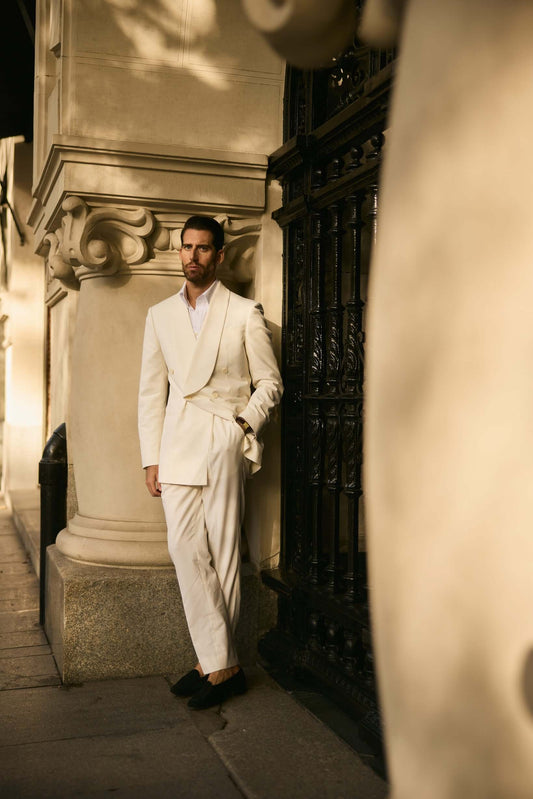

Old Money Style for Men: Timeless Wardrobe Essentials That Never Go Out of Fashion
Last modified:Quick answer: Old money style for men is a timeless approach to dressing built around precise tailoring, premium natural fabrics, understated colors, and classic wardrobe staples such as navy suits, Oxford shirts, camel overcoats, loafers, and cashmere knitwear. Instead of chasing trends, it prioritizes quality, fit, versatility, and long-term elegance.
Old money style is one of the most discussed aesthetics in modern menswear—and for good reason. It represents an approach to dressing that transcends trend cycles, seasonal collections, and the constant churn of fast fashion. Old money style is built on quality, restraint, and the confidence to dress simply and well.
This guide explains the principles, colors, fabrics, outfits, and wardrobe essentials behind old money style for men, along with practical advice for building the look without appearing overly styled or costume-like.
What Is Old Money Style?
Old money style is a classic menswear aesthetic associated with understated elegance, heritage tailoring, premium materials, and clothing designed to remain relevant for years. The look avoids excessive branding and temporary trends in favor of refined colors, balanced proportions, and versatile wardrobe staples.
- Understated elegance: Minimal logos, restrained accessories, and clothing that communicates quality through fabric, construction, and fit.
- Enduring silhouettes: Garments that have remained appropriate for decades rather than styles tied to a single season.
- Premium materials: Fine wool, merino, cashmere, linen, Oxford cotton, silk, suede, and quality leather.
- A refined color palette: Navy, charcoal, camel, cream, white, forest green, burgundy, and warm brown.
- Precise fit: Clothing that follows the body cleanly without appearing excessively tight or oversized.
The Origins of Old Money Style
Old Money style traces its roots to British tailoring, Ivy League campuses, European aristocracy, and traditional Italian craftsmanship. Rather than following seasonal fashion trends, wealthy families invested in timeless garments designed to last for decades.
The aesthetic became synonymous with understated elegance—navy blazers, tailored suits, Oxford shirts, loafers, camel overcoats, and premium knitwear. Today, the Old Money look remains relevant because it prioritizes quality, craftsmanship, and impeccable fit over conspicuous branding.
Many of these principles are also reflected in custom Italian suits, where timeless tailoring takes precedence over short-lived trends.
Old Money Style vs Quiet Luxury

| Old Money Style | Quiet Luxury |
|---|---|
| Heritage-inspired | Modern minimalist luxury |
| Traditional tailoring | Contemporary silhouettes |
| Classic fabrics | Luxury basics |
| Timeless wardrobe | Minimal branding |
| Focus on longevity | Focus on refined simplicity |
Although the two aesthetics overlap, Old Money style is deeply rooted in heritage and tradition, whereas Quiet Luxury emphasizes subtle sophistication through modern luxury essentials.
Old Money Style vs Preppy Style

Old money and preppy style share several influences, including Ivy League clothing, loafers, Oxford shirts, knitwear, and navy blazers. However, the two aesthetics are not identical.
| Old Money Style | Preppy Style |
|---|---|
| More restrained and formal | More youthful and collegiate |
| Built around tailoring and heritage pieces | Built around campus and leisurewear |
| Muted, sophisticated color combinations | Often includes brighter colors and patterns |
| Emphasizes longevity and refinement | Emphasizes polished casual dressing |
A preppy outfit may include chinos, a polo shirt, boat shoes, and a cable-knit sweater. An old money outfit generally feels quieter and more mature, with finer fabrics, restrained accessories, and greater emphasis on tailoring.
The Old Money Color Palette

The old money palette is built on restraint and sophistication:
- Navy — the foundational blue. Works in every category.
- Charcoal and gray — authoritative and refined.
- Camel and tan — warm, classic, luxurious.
- Cream and ivory — off-white tones that feel richer than pure white.
- Forest and hunter green — understated richness.
- Burgundy and deep wine — elegant accent tones.
- Warm brown — leather, tweed, and suede tones.
Avoid building the wardrobe around neon shades, oversized graphics, heavy branding, or highly trend-specific colors. Accent colors can still be used, but the foundation should remain versatile enough to look refined beyond a single season.
How to Dress Old Money in 7 Simple Steps
- Choose timeless tailoring instead of trend-driven clothing.
- Build your wardrobe around navy, gray, camel, cream, and white.
- Prioritize premium natural fabrics such as wool, linen, cashmere, and cotton.
- Invest in quality leather shoes and matching belts.
- Avoid oversized logos and flashy graphics.
- Tailor every garment for a precise fit.
- Buy fewer, better pieces that will last for years.
Mastering Old Money style is less about spending more money and more about making better wardrobe decisions.
10 Old Money Wardrobe Essentials for Men
1. The Navy Suit

The cornerstone of a refined wardrobe is a well-fitted navy suit in fine wool or a wool-silk blend. Choose a single-breasted, two-button jacket with balanced proportions and clean lines. For more combinations, see our guide to styling a navy suit.
You can also explore our custom suits for a garment created around your individual measurements and preferences.
2. The Camel Overcoat

Few garments express understated refinement as effectively as a well-fitted camel overcoat. Choose wool, cashmere, or a quality blend in a single-breasted silhouette that reaches approximately the knee. It can be worn over a navy suit, tailored separates, or a restrained trouser-and-roll-neck combination.
Compare the major silhouettes in our guide to the different types of overcoats, or explore a custom overcoat designed for your preferred length, fabric, and fit.
3. The White Oxford Shirt

A crisp, well-fitted white Oxford cloth button-down is one of the most enduring pieces in men's fashion. Always appropriate, always polished. Own several.
When selecting the collar, consider how it will work with your jackets and ties. Our guide to men's shirt collar types explains the most versatile options.
4. The Merino or Cashmere Sweater

A fine-gauge crewneck or V-neck in navy, gray, or camel is an old money staple. Worn over a collared shirt or alone, it communicates effortless luxury without any branding.
5. Classic Gray Flannel Trousers

Gray flannel trousers are the trouser equivalent of the navy blazer — endlessly versatile and deeply classic. In heavy flannel for winter, lighter wool for spring and summer.
6. The Navy Blazer

A structured navy blazer is one of the most versatile old money wardrobe pieces. Traditional gold buttons create a distinctly Ivy League or club-inspired appearance, while dark horn or mother-of-pearl buttons offer a quieter and more adaptable alternative. Pair it with gray flannel trousers, tan chinos, or dark, clean-cut denim.
A blazer is not the same as a suit jacket or sport coat. See our blazer, sport coat, and suit jacket comparison for the differences.
7. Oxford or Derby Shoes in Brown Leather

Classic brown leather shoes — in clean, good-condition leather — are the old money footwear standard. Black for formal occasions; tan or cognac for everyday. Well-maintained leather communicates attention to quality.
8. The Leather Belt

Choose a simple, high-quality leather belt in dark brown or black, with a discreet buckle and minimal branding. The belt does not need to match the shoes perfectly, but both should belong to the same general color family and level of formality.
9. Repp Stripe or Solid Tie

When a tie is appropriate, old money opts for repp stripe, solid, or subtle small-pattern ties. Club ties, school stripe ties, and ancient madder silk ties are classic choices.
10. The Classic Dress Watch

Old money accessories should feel considered rather than conspicuous. Choose a slim dress watch with a simple dial, restrained proportions, and a leather strap or understated metal bracelet. Avoid excessively large cases, jeweled bezels, and prominently branded designs.
Old Money Capsule Wardrobe

A capsule wardrobe should contain pieces that work together across business, smart-casual, travel, and social settings. The following selection provides a practical starting point.
| Wardrobe Item | Recommended Quantity | Best Colors |
|---|---|---|
| Tailored suit | 1–2 | Navy and charcoal |
| Oxford or dress shirts | 4–6 | White and light blue |
| Wool trousers | 2 | Mid-gray and charcoal |
| Chinos | 2 | Tan and navy |
| Navy blazer | 1 | Navy |
| Fine-gauge sweaters | 2–3 | Cream, gray, and navy |
| Overcoat | 1 | Camel, navy, or charcoal |
| Leather dress shoes | 1–2 pairs | Dark brown and black |
| Loafers | 1 pair | Brown or burgundy |
Because the colors and fabrics coordinate easily, this capsule can produce dozens of outfits suitable for work, travel, dinners, weddings, and everyday wear.
Old Money Style Principles
- Invest in fewer, better pieces: One well-made cashmere sweater can offer greater comfort, versatility, and longevity than several inexpensive synthetic alternatives.
- Avoid conspicuous logos: Old money style communicates quality through fabric, construction, and fit rather than large logos or visible branding.
- Prioritize fit above all: Clothing should follow the body cleanly without appearing excessively tight or oversized. Even off-the-rack garments may benefit from thoughtful alterations.
- Care for what you own: Well-maintained clothing communicates discipline and respect for craftsmanship. Polish leather shoes, brush wool garments, steam jackets carefully, and store suits on supportive hangers.
- Dress for longevity rather than trends: Choose garments that suit your body, lifestyle, and personal taste instead of rebuilding your wardrobe around every new fashion cycle.
Best Fabrics for the Old Money Aesthetic
- Merino wool: Soft, breathable, and suitable for fine-gauge sweaters and lightweight tailoring.
- Cashmere: Luxurious and insulating without unnecessary bulk.
- Flannel: A classic choice for winter suits and tailored trousers.
- Tweed: Textured, durable, and especially appropriate for sport coats and country-inspired outfits.
- Linen: Breathable and naturally elegant for warm-weather tailoring.
- Oxford cotton: Durable, versatile, and ideal for button-down shirts.
- Silk: Best used selectively in ties, pocket squares, and blended formalwear fabrics.
- Suede: Adds soft texture to loafers, belts, and casual outerwear.
Natural fibers generally breathe better, develop character over time, and create a richer appearance than inexpensive synthetic alternatives. However, fabric quality, construction, care requirements, and climate should all influence the final choice.
For a detailed comparison of seasonal tailoring materials, read our guide to linen versus wool suits.
Old Money Outfit Ideas for Different Occasions
Old Money Business Outfit

Wear a navy or charcoal suit with a white dress shirt, burgundy or navy tie, and dark brown Oxford shoes. Keep accessories limited to a restrained watch, simple cufflinks, or a discreet tie bar.
For more workplace guidance, see our business professional attire guide.
Old Money Smart-Casual Outfit

Combine a navy blazer with gray flannel trousers, a white or light-blue Oxford shirt, and brown loafers. In colder weather, add a camel overcoat or fine-gauge sweater.
Learn how to balance polished and relaxed clothing in our guide to smart-casual style for men.
Old Money Weekend Outfit

Pair tan or navy chinos with a cream merino sweater, pale-blue Oxford shirt, and suede loafers. A quilted jacket, Harrington jacket, or unstructured sport coat can complete the look.
Old Money Date-Night Outfit

Wear a black or charcoal roll-neck with tailored gray trousers, a camel overcoat, and polished Chelsea boots. Keep the palette restrained and allow texture and fit to provide visual interest.
Old Money Summer Outfit

Choose tailored linen trousers, a breathable polo or open-collar shirt, and leather loafers. A lightweight linen suit in cream, tan, navy, or tobacco works well for weddings and more formal summer occasions.
Explore our linen suits and summer suits for warm-weather inspiration.
Old Money Wedding Outfit

For a formal wedding, choose a navy, charcoal, or mid-gray suit with a white shirt, silk tie, and polished leather shoes. For a destination or daytime wedding, lighter shades and breathable fabrics may be appropriate.
See our complete guide to wedding suits for men for more options.
Common Old Money Style Mistakes

- Using logos as a substitute for quality: Large branding makes the outfit feel more conspicuous and less timeless.
- Choosing an extreme fit: Very skinny or excessively oversized clothing can quickly date the outfit. Aim for balanced proportions.
- Ignoring alterations: Expensive fabric cannot compensate for sleeves, shoulders, or trousers that fit poorly.
- Wearing too many statement pieces: A bold watch, patterned tie, bright pocket square, and decorative loafers worn together can make the outfit feel forced.
- Buying solely by fabric name: Not every garment labeled wool, cashmere, or linen is high quality. Construction, fiber grade, and finishing also matter.
- Neglecting garment care: Scuffed shoes, wrinkled shirts, and poorly stored jackets undermine an otherwise refined outfit.
- Treating the aesthetic like a costume: Old money style should feel natural and appropriate for the setting, not like an imitation of a fictional aristocrat.
How to Build an Old Money Wardrobe on Any Budget
Begin with the pieces you will wear most frequently rather than attempting to purchase an entire wardrobe at once. Fit, versatility, and condition matter more than visible labels or price alone.
- Start with neutral foundations: Buy a navy blazer, white and light-blue shirts, gray trousers, tan chinos, and dark brown leather shoes.
- Improve the fit: Budget for alterations to sleeve length, trouser length, waist suppression, and other small adjustments.
- Add tailoring: Invest in a navy or charcoal suit suitable for work, weddings, dinners, and formal occasions.
- Introduce seasonal pieces: Add linen for summer and flannel, cashmere, tweed, or an overcoat for colder weather.
- Upgrade gradually: Replace heavily worn or low-quality pieces only when you understand which fabrics, fits, and colors work best for you.
Custom clothing can be particularly valuable when standard sizing does not provide balanced shoulders, sleeve length, jacket length, or trouser proportions. Explore our custom suits or browse the Bold Italia lookbook for inspiration.
Frequently Asked Questions
Can you dress Old Money on a budget?
Yes. Focus on timeless essentials and buy fewer, higher-quality garments over time.
Can you wear sneakers with Old Money style?
Minimal leather sneakers in neutral colors can work for smart-casual outfits, but classic loafers and Oxfords remain the preferred choice.
What colors define the Old Money aesthetic?
Navy, charcoal, gray, camel, cream, white, forest green, burgundy, and warm brown form the traditional old money color palette. These shades coordinate easily and remain versatile across tailoring, knitwear, outerwear, and footwear.
Is Ralph Lauren considered Old Money style?
Ralph Lauren has significantly influenced the modern interpretation of the Old Money aesthetic through its focus on timeless tailoring, equestrian inspiration, and Ivy League style.
What is the difference between Old Money style and Quiet Luxury?
Old Money style emphasizes heritage, classic tailoring, and timeless traditions, while Quiet Luxury focuses on understated modern luxury with minimal branding.
Can jeans be part of an Old Money outfit?
Yes, provided they are dark, clean, properly fitted, and free from distressing or oversized branding. Pair them with loafers, an Oxford shirt, fine knitwear, or a structured blazer.
What shoes are best for Old Money style?
Penny loafers, tassel loafers, Oxford shoes, Derby shoes, Chelsea boots, and restrained leather sneakers are the most versatile choices. Prioritize quality leather, classic shapes, and proper maintenance.
What haircut suits the Old Money aesthetic?
Classic side parts, neatly brushed-back styles, and short, softly tapered cuts complement the aesthetic. The hairstyle should look well maintained without appearing heavily sculpted or excessively glossy.
Is Old Money style suitable for younger men?
Yes. Younger men can adapt the aesthetic through chinos, polos, Oxford shirts, knitwear, loafers, and relaxed tailoring without dressing too formally for their age or setting.
Do you need expensive brands to dress Old Money?
No. The aesthetic depends more on fit, fabric, coordination, condition, and restraint than on brand names. Well-chosen vintage, secondhand, made-to-measure, and mid-priced pieces can all work effectively.
Final Thoughts on Old Money Style for Men
Old money style is not about pretending to belong to a particular social class or spending the greatest amount of money. It is about choosing clothing thoughtfully, prioritizing quality over quantity, maintaining what you own, and understanding that genuine elegance rarely needs to demand attention.
Build the wardrobe gradually around enduring colors, natural fabrics, versatile tailoring, and shoes that improve with care. Most importantly, select clothing that fits your proportions and suits your actual lifestyle rather than copying an aesthetic without context.
Explore the Bold Italia lookbook, discover our custom suits, or browse our complete menswear collection to begin creating a wardrobe centered on timeless personal style.