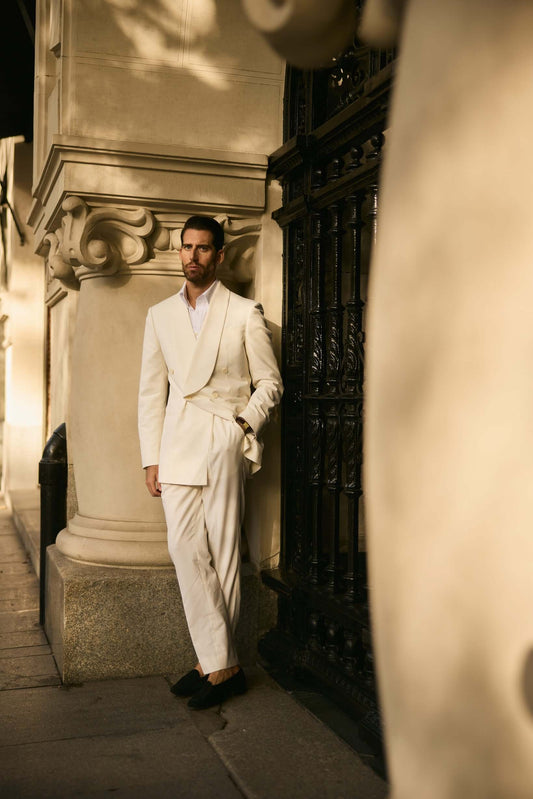

Semi-Formal Attire for Men: What to Wear & Dress Code Rules
Last modified:Quick answer: In modern dress codes, semi-formal attire for men usually means a well-fitted suit or, for some less strict events, a structured blazer with tailored trousers, paired with a dress shirt and polished leather shoes. A tie is optional for many daytime occasions but is a smart choice for weddings and more formal evening events. Navy, charcoal, and medium gray are among the safest suit colors. Avoid jeans, T-shirts, sneakers, and tuxedos unless the invitation specifically calls for black tie.
Semi-formal is one of the most misunderstood men's dress codes because it sits between formal eveningwear and more relaxed styles such as business casual or smart casual. The goal is to look polished and intentional without dressing at black-tie level.
This guide explains exactly what semi-formal attire for men means, what to wear, which colors and shoes work best, how daytime and evening outfits differ, and what to avoid.
Semi-Formal Attire for Men at a Glance

| Element | Safest Choice | Where You Have Flexibility |
|---|---|---|
| Jacket | Matching two-piece suit | Structured blazer with tailored trousers for less strict events |
| Shirt | White or light blue dress shirt | Subtle patterns or seasonal colors |
| Trousers | Matching suit trousers | Tailored dress trousers when wearing separates |
| Tie | Recommended for weddings and evening events | Often optional for daytime or more relaxed semi-formal events |
| Shoes | Oxfords or Derbies | Polished leather loafers for less formal settings |
| Suit Colors | Navy, charcoal, medium gray | Lighter neutrals and seasonal colors for daytime events |
| Avoid | Jeans, T-shirts, athletic sneakers, overly casual clothing, and black-tie pieces unless specifically requested | |
What Is Semi-Formal Attire for Men?

Semi-formal attire for men is a polished dress code that generally calls for tailored clothing without requiring the full formality of a tuxedo or black-tie outfit.
A matching suit is the safest choice for most semi-formal occasions. It creates a clean, coordinated appearance and works particularly well for weddings, dinners, celebrations, and evening social events. Depending on the venue and invitation, a structured blazer with tailored trousers may also be appropriate.
The shirt should remain dressy, the footwear should be polished, and accessories should complement rather than dominate the outfit.
The easiest way to think about semi-formal dressing is this: more polished than business casual, but less ceremonial than black tie.
If you are comparing multiple dress codes, see our complete guide to formal vs semi-formal attire.
How to Build a Semi-Formal Outfit for Men
A successful semi-formal outfit depends less on one individual garment and more on how the suit, shirt, trousers, shoes, colors, and accessories work together.
1. Start With the Suit or Jacket

For most men, a two-piece suit is the easiest and most versatile starting point. Navy, charcoal, and medium gray work across a wide range of venues, seasons, and times of day.
If the event is clearly on the more relaxed end of semi-formal, a tailored blazer paired with dress trousers may also work. The important distinction is that the outfit should still look intentionally dressed rather than like everyday office clothing.
If you want an outfit built around your preferred fabric, fit, lapel, and styling details, you can design a custom two-piece suit or browse our custom suits.
2. Choose a Proper Dress Shirt

A dress shirt keeps the outfit grounded in semi-formal territory. White is the most versatile choice, while light blue also works exceptionally well with navy and gray suits.
For events that allow slightly more personality, subtle stripes, restrained patterns, or seasonal colors can work as long as they do not overpower the rest of the outfit.
Pay attention to the collar, sleeve length, and overall fit. A beautifully tailored suit can still look unfinished when paired with a shirt that bunches, pulls, or fits poorly around the neck and shoulders.
For a more personalized option, consider a custom dress shirt designed to complement your suit.
3. Wear Tailored Trousers

If you are wearing a suit, stick with the matching trousers. They create the cleanest and most straightforward semi-formal look.
When wearing a blazer instead, choose tailored dress trousers that clearly differ from the jacket while still coordinating with it. Navy, charcoal, medium gray, beige, and other understated colors are easier to combine than highly contrasting shades.
The trousers should sit cleanly at the waist and fall neatly through the leg without excessive fabric pooling around the shoes.
Browse dress pants if you are building a semi-formal outfit with separates.
4. Finish With Dress Shoes

Footwear has a major effect on how formal the final outfit appears.
For most semi-formal occasions, good options include:
- Black Oxfords: A strong choice for evening events and darker suits.
- Dark brown Oxfords: Versatile with navy, gray, and many daytime outfits.
- Derbies: Slightly less formal than Oxfords but still appropriate for many semi-formal settings.
- Leather loafers: Best suited to warmer weather, daytime events, or occasions with a more relaxed interpretation of semi-formal.
Whatever style you choose, the shoes should be clean, polished, and coordinated with the rest of the outfit.
5. Add a Tie and Accessories

A tie is not mandatory for every modern semi-formal event, but it can quickly make an outfit feel more appropriate when the occasion is important or the dress code is unclear.
For weddings, evening dinners, ceremonies, and more traditional venues, wearing a tie is usually the safer choice. At daytime celebrations or more relaxed social events, you may be able to leave it off while keeping the rest of the outfit polished.
Accessories should remain understated. A pocket square, watch, subtle cufflinks, and leather belt can complete the outfit without making it feel overdone.
Daytime vs Evening Semi-Formal Attire

The time of day can influence how you interpret a semi-formal dress code.
Daytime Semi-Formal Attire
Daytime events generally allow slightly lighter colors and softer styling. Depending on the season and venue, consider:
- Medium gray or lighter blue suits
- Light blue or white dress shirts
- Brown leather shoes
- Lighter-weight fabrics during warm weather
- A tie when the occasion calls for additional formality
Summer weddings and outdoor celebrations may also allow beige, tan, or other restrained light neutrals when they suit the setting.
Evening Semi-Formal Attire
Evening events usually benefit from darker colors and a slightly more formal approach.
Navy and charcoal suits are particularly reliable choices. Pair them with a crisp dress shirt, polished black or dark brown shoes, and a tie if you are attending a wedding, dinner, ceremony, or upscale event.
The result should feel refined without crossing into tuxedo or black-tie territory.
Best Suit Colors for Semi-Formal Events

You do not need an unusual suit color to create a memorable semi-formal outfit. Versatile colors usually work better because they allow the fit, fabric, shirt, shoes, and accessories to create the overall impression.
Navy
Navy is one of the most versatile choices because it works for both daytime and evening events. It pairs easily with white and light blue shirts and can be worn with black or brown leather shoes.
Charcoal
Charcoal creates a slightly more serious and formal appearance. It is particularly effective for evening events, dinners, weddings, and occasions where you want a traditional tailored look.
Medium Gray
Medium gray offers a softer alternative to charcoal and transitions well between daytime and evening events.
Seasonal Colors
Brown, deep green, lighter neutrals, and other seasonal shades can also work when the venue, time of day, and event support them. These colors are better treated as alternatives rather than the default choice when the dress code is unclear.
For a broader comparison, see our guide to the best suit colors for men.
What to Wear to Different Semi-Formal Events

The words "semi-formal" may appear on many different invitations, but the right outfit can change depending on the occasion.
Semi-Formal Wedding
For a semi-formal wedding, a navy, charcoal, or medium gray suit is an excellent starting point. Add a dress shirt, leather shoes, and a tie when you are unsure how formal the ceremony or reception will be.
For daytime or destination weddings, lighter colors and breathable fabrics may be appropriate, while evening weddings generally favor darker tones.
See our wedding suits for options designed around different wedding styles and settings.
Cocktail Event
Cocktail events often allow slightly more personality than a traditional ceremony. A darker suit remains a safe choice, while a refined blazer-and-trouser combination may work depending on the venue.
You can introduce personality through texture, shirt color, a pocket square, or another restrained accessory without turning the outfit into statement dressing.
For more specific guidance, read our guide to cocktail attire for men.
Business Dinner
A business dinner calls for restraint. A navy or charcoal suit, white or light blue dress shirt, leather shoes, and understated accessories create an outfit that feels polished without becoming overly formal.
If the dinner involves clients, senior colleagues, or an upscale venue, wearing a tie is generally the safer option.
Daytime Celebration
For graduations, anniversaries, engagement parties, and other daytime celebrations, medium gray, blue, and seasonally appropriate lighter colors can work well.
The outfit can feel lighter than eveningwear, but the clothing should still remain tailored and coordinated.
Summer vs Winter Semi-Formal Attire

Summer
Warm-weather semi-formal dressing should balance appearance with comfort. Lightweight wool and linen-based options can help create a more breathable outfit, while lighter colors often suit daytime and outdoor events.
If you are deciding between warm-weather fabrics, read our linen vs wool suit guide.
Fall and Winter
Cooler weather allows heavier fabrics, deeper colors, and additional texture. Navy, charcoal, brown, and other dark tones work particularly well during fall and winter.
Seasonality should influence your fabric and color choices, but the basic semi-formal formula remains the same: tailored clothing, a dress shirt, polished footwear, and restrained accessories.
2-Piece vs 3-Piece Suit for Semi-Formal Events

A two-piece suit is appropriate for the majority of semi-formal events and is generally the most versatile option.
A three-piece suit adds a waistcoat and creates a more dressed-up appearance. It can work especially well for weddings, evening occasions, and events where you want a stronger tailored presence.
However, a three-piece suit is not required simply because an invitation says semi-formal.
For a detailed comparison, see 2-piece vs 3-piece suits.
Semi-Formal vs Formal: What's the Difference?
The easiest distinction is the level of formality required.
Modern semi-formal attire gives men more flexibility in suit colors, accessories, and whether a tie is necessary. Formal dress codes generally call for a more conservative and structured interpretation of tailored clothing, while black-tie events move into tuxedo territory.
Because invitations do not always use dress-code terminology consistently, consider the venue, time of day, type of event, and any instructions provided by the host.
For a full side-by-side breakdown, read Formal vs Semi-Formal: A Simple Guide to Dressing for Any Event.
What Not to Wear to a Semi-Formal Event

Avoid clothing that makes the outfit look clearly casual or unnecessarily formal for the occasion.
- Jeans: Even dark jeans generally sit below a traditional semi-formal dress code.
- T-shirts: Choose a proper dress shirt instead.
- Athletic sneakers: Polished leather footwear is the safer choice.
- Shorts: These are too casual for conventional semi-formal dressing.
- Tuxedos: Save them for black-tie events unless specifically requested.
- Highly flashy combinations: Semi-formal dressing usually looks strongest when colors and accessories complement one another rather than compete for attention.
How Should a Semi-Formal Suit Fit?

Semi-formal attire still needs to look intentional and properly fitted. The quality of the fit often matters more than whether the suit is described as slim, modern, classic, or another fit category.
Check these areas:
- The jacket shoulders should sit cleanly without visible pulling or excess fabric.
- The jacket should close comfortably without strain across the chest or waist.
- The sleeves should finish at a balanced length and allow a small amount of shirt cuff to show.
- The trousers should sit comfortably at the waist.
- The trouser legs should fall cleanly without excessive pooling around the shoes.
- The overall silhouette should allow comfortable movement while still looking tailored.
For a more detailed fit check, see how a suit should fit.
Frequently Asked Questions About Semi-Formal Attire for Men
What does semi-formal mean for men?
Semi-formal attire for men generally means a suit or polished tailored separates worn with a dress shirt and leather dress shoes. It is more refined than business casual but does not normally require a tuxedo. A tie may be optional depending on the occasion, venue, and time of day.
Do men have to wear a suit for semi-formal attire?
A matching suit is the safest option, especially for weddings and evening events. For less strict semi-formal occasions, a structured blazer with tailored dress trousers may also be appropriate. When the invitation or venue appears more traditional, choose the suit.
Does semi-formal attire require a tie?
Not always. A tie is a smart choice for weddings, ceremonies, business dinners, and dressier evening events. It may be optional for daytime celebrations or occasions with a more relaxed interpretation of semi-formal attire.
Can men wear jeans to a semi-formal event?
Generally, no. Jeans are normally too casual for a semi-formal dress code. Choose matching suit trousers or tailored dress pants instead.
What shoes should men wear for semi-formal attire?
Oxfords and Derbies are dependable choices. Polished leather loafers can also work for daytime, warm-weather, or slightly more relaxed events. Black and dark brown are among the most versatile shoe colors.
Is a three-piece suit too formal for a semi-formal event?
No. A three-piece suit can work for a semi-formal wedding or dressier evening event, although it sits toward the more formal end of the spectrum. A two-piece suit remains the more versatile choice for most occasions.
Final Semi-Formal Attire Checklist

If an invitation says semi-formal and you are unsure what to wear, use this simple checklist:
- Choose a well-fitted two-piece suit when in doubt.
- Start with navy, charcoal, or medium gray.
- Wear a proper dress shirt.
- Choose polished leather shoes.
- Add a tie for weddings and more formal evening events.
- Coordinate your belt and footwear.
- Keep accessories understated.
- Avoid jeans, T-shirts, athletic sneakers, and overly casual pieces.
- Consider the season, venue, and time of day.
- Prioritize fit over trends.
Semi-formal attire for men does not need to be complicated. Start with tailored clothing, keep the colors and accessories balanced, and adjust the level of formality according to the event.
If you want greater control over the fabric, fit, styling, and details of your outfit, design your custom suit with BoldItalia.