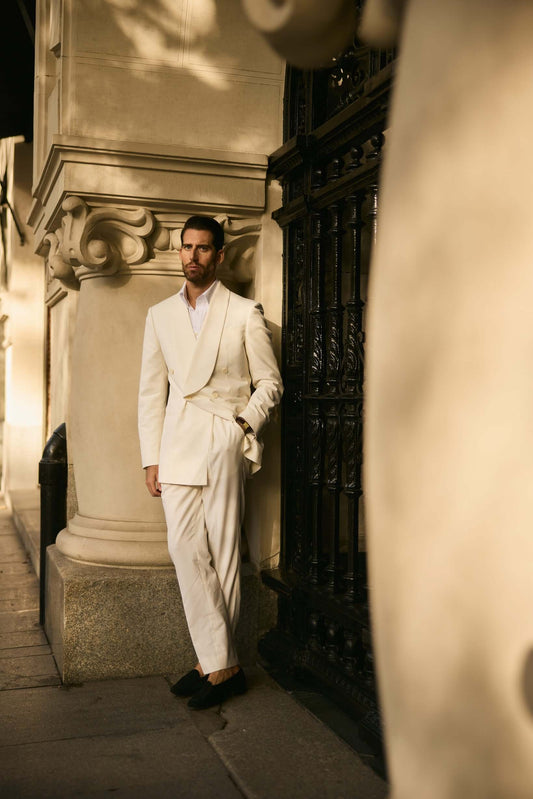

Slacks vs Dress Pants: What's the Difference and When Should You Wear Each?
Last modified:Ask ten men to define the difference between slacks and dress pants and you may get ten different answers. The terms are often used interchangeably in casual conversation, but in modern menswear they can suggest different levels of formality, construction and intended use. Understanding those differences helps you build a more versatile wardrobe and choose the right trousers for each occasion.
Quick answer: Slacks and dress pants are closely related terms, and they are sometimes used interchangeably. In modern American menswear, slacks generally refer to versatile standalone trousers worn for business casual or smart casual occasions, while dress pants usually describe more refined trousers intended for business professional, wedding, formal and suit-based outfits. The difference is primarily found in the fabric, construction, styling and level of formality rather than in one universal rule.
Slacks vs Dress Pants at a Glance

Although the terms overlap, this table explains how slacks and dress pants are commonly distinguished in modern menswear.
| Feature | Slacks | Dress Pants |
|---|---|---|
| Typical formality | Smart casual to business casual | Business casual to formal |
| Common fabrics | Wool blends, cotton blends, flannel and performance fabrics | Worsted wool, tropical wool, flannel and refined wool blends |
| Front crease | Optional | Common, but not universal |
| Construction | Often softer or more relaxed | Usually cleaner and more tailored |
| Care | Depends on the fabric; some are machine washable | Often requires careful washing or dry cleaning |
| Best suited to | Everyday office wear, travel and smart casual outfits | Professional settings, weddings, formal occasions and tailored separates |
What Are Slacks?

Slacks are standalone trousers that are generally more polished than jeans but less formal than the trousers belonging to a matching suit. In American English, the term is often used broadly for office-ready or smart casual trousers, and some brands use it interchangeably with “dress pants.”
Slacks commonly feature:
- Fabrics: Wool blends, cotton blends, flannel, polyester blends or performance materials.
- Construction: Softer and less structured than many formal trousers.
- Fit: Slim, straight, tapered, relaxed or pleated, depending on the design.
- Crease: Either a pressed front crease or a flat, uncreased front.
- Best occasions: Business casual offices, smart casual events, travel and everyday professional wear.
For trousers designed around your preferred fit and styling details, explore custom slacks from Bold Italia.
Why Are They Called Slacks?
The word slack has long been associated with looseness, ease and a lack of restriction. The plural term “slacks” later became a common American expression for trousers that were less rigid or formal than traditional suit trousers.
Today, the distinction is less about looseness and more about formality. Modern slacks can have a tailored silhouette, but they generally use more casual fabrics and construction methods than traditional dress pants.
In British English, the word trousers is used much more frequently, while "slacks" is considered primarily an American expression.
What Are Dress Pants?

Dress pants are refined trousers designed for polished professional, semi-formal and formal outfits. They may be sold as standalone trousers or form the lower half of a matching suit. In British English, they would usually be described simply as trousers, while “dress pants” is more common in American English.
Dress pants commonly feature:
- Fabrics: Worsted wool, tropical wool, flannel, wool blends or other refined suiting materials.
- Construction: Clean finishing, tailored waistbands, finished seams and partial lining where required.
- Fit: Slim, tailored, straight or pleated, with a clean drape through the leg.
- Crease: A pressed front crease is common but not compulsory in every contemporary design.
- Best occasions: Business professional settings, interviews, weddings, formal dinners and tailored separates.
For refined standalone trousers made to complement tailored outfits, explore Bold Italia dress pants.
Key Differences Between Slacks and Dress Pants

Formality
Slacks are most closely associated with business casual and smart casual dressing. Dress pants can also work in business casual outfits, but their cleaner finish makes them more suitable for professional, wedding and formal settings.
Fabric and Texture
Slacks may use softer, more casual or performance-oriented fabrics. Dress pants are more commonly made from refined wool or suiting fabrics that create a smoother drape and sharper appearance.
Construction and Finish
Dress pants often include a more structured waistband, carefully finished seams, tailored pockets and a defined front crease. Slacks may use simpler construction, although premium slacks can be every bit as well made.
How They Are Worn
Slacks are normally styled as standalone trousers with shirts, knitwear, blazers or sport coats. Dress pants can also be worn separately, but they are more likely to appear in polished tailored outfits or as part of a matching suit.
Care Requirements
Care depends more on the fabric than on the name of the trousers. Some performance slacks are machine washable, while wool slacks and dress pants may require gentle cleaning, steaming or professional dry cleaning.
Slacks vs Chinos vs Dress Pants

Chinos, slacks and dress pants can all appear in a modern wardrobe, but they differ in their typical fabric, finish and styling. The boundaries are flexible, particularly because brands do not always use these terms consistently.
| Feature | Chinos | Slacks | Dress Pants |
|---|---|---|---|
| Typical fabric | Cotton twill, sometimes with stretch | Wool blends, cotton blends, flannel or performance fabrics | Worsted wool, tropical wool, flannel or refined blends |
| Typical formality | Casual to business casual | Smart casual to business casual | Business casual to formal |
| Surface and finish | Usually matte with visible twill texture | Varies from relaxed to refined | Usually smoother and more tailored |
| Front crease | Usually absent, but possible | Optional | Common, but not required |
| Best suited to | Weekends, casual offices and travel | Office wear, dinners and smart casual events | Professional settings, weddings and formal occasions |
For complete outfit guidance, read our guides to business casual attire and smart casual attire for men.
When to Wear Slacks

- Business casual offices: Pair slacks with a dress shirt, polo, knitwear, blazer or sport coat.
- Smart casual events: Slacks work well for dinners, networking events, date nights and informal celebrations.
- Business travel: Wrinkle-resistant slacks provide comfort without looking overly casual.
- Everyday professional wear: Choose slacks when a full suit feels unnecessary but jeans or casual chinos feel too relaxed.
For more outfit combinations, read our complete guide to business casual for men.
When to Wear Dress Pants

- Business professional settings: Wear dress pants with a coordinated blazer or matching suit jacket.
- Weddings: Dress pants may work with a blazer for some semi-formal weddings, while more formal weddings generally require a complete suit.
- Interviews: Dress pants are appropriate when the workplace or role calls for business professional attire.
- Cocktail and formal events: Refined dress pants can work with a tailored jacket when the invitation does not require black tie.
Black tie requires proper tuxedo trousers rather than ordinary dress pants. Our black-tie attire guide explains the complete dress code.
How to Choose Between Slacks and Dress Pants
Choosing the right trousers depends on the occasion, workplace expectations, and the rest of your outfit. If you're unsure which option is appropriate, use this simple guide.
| Situation | Best Choice |
|---|---|
| Business casual office | Slacks or refined chinos |
| Business professional office | Dress pants |
| Traditional job interview | Dress pants or a complete suit |
| Casual wedding | Tailored slacks may be appropriate |
| Semi-formal or formal wedding | Dress pants or a complete suit |
| Date night | Slacks |
| Important client meeting | Dress pants or a business suit |
| Business travel | Wrinkle-resistant slacks |
| Cocktail event | Dress pants with a tailored jacket |
If the event requires a complete tailored outfit rather than separate trousers, explore our guide to different types of suits or browse our custom business suits.
Can You Wear Slacks With a Suit Jacket?
You can wear slacks with some suit jackets, but the result must look intentional. A suit jacket does not technically become a blazer when worn with different trousers, and highly formal suit jackets may look incomplete when separated from their matching pants.
- Choose a jacket with visible texture, casual detailing or softer construction. These features help it function more naturally as a separate.
- Avoid pairing slacks with a highly polished jacket that clearly belongs to a matching business suit.
- Create deliberate contrast between the jacket and trousers rather than choosing two shades that almost match.
- Coordinate fabric weight. A lightweight worsted jacket may look unbalanced with heavy flannel trousers.
- Use versatile trouser colors such as mid-gray, charcoal, navy, taupe or brown.
For a clearer explanation of jacket categories, read our comparison of blazers, sport coats and suit jackets.
Best Fabrics for Slacks and Dress Pants
Best Fabrics for Slacks
Wool blends are a versatile option for year-round office wear, while cotton blends provide a more relaxed appearance for warmer weather. Flannel offers warmth and texture in winter, and performance fabrics can provide stretch, wrinkle resistance and easier care for travel.
Best Fabrics for Dress Pants
Worsted wool is the most versatile choice for professional and formal dress pants because it drapes cleanly and holds its shape. Tropical wool works well in warm weather, while wool flannel provides greater warmth and visual depth during autumn and winter.
For a deeper comparison of seasonal tailoring fabrics, read our guide to linen vs wool.
How Should Slacks and Dress Pants Fit?

Both slacks and dress pants should sit securely at the waist without requiring an overly tight belt. The fabric should drape cleanly through the seat and thighs without pulling across the pockets, creating horizontal wrinkles or restricting movement.
- Waist: Comfortable enough to sit and move naturally without sagging or pinching.
- Seat and thighs: Clean and smooth, with enough room for normal movement.
- Leg shape: Straight, tapered or relaxed according to your body type and preferred silhouette.
- Length: A slight break is the most versatile option, while no-break trousers create a sharper contemporary appearance.
- Hem: The trouser opening should complement the shoe without excessive stacking around the ankle.
The goal is a clean drape rather than an excessively tight fit. Proper alterations can improve the waistband, hem and overall line of both slacks and dress pants.
Best Colors for Slacks and Dress Pants

Color plays an important role in versatility. Neutral shades pair easily with shirts, jackets and shoes, making them the smartest investment for most wardrobes.
| Color | Best For |
|---|---|
| Navy | Business casual and formal business settings |
| Charcoal | Interviews, offices and evening wear |
| Light Gray | Spring, summer and smart casual outfits |
| Black | Evening outfits, monochromatic styling and selected formal settings |
| Olive | Business casual and relaxed tailoring |
| Khaki | Travel and weekend smart casual outfits |
For more inspiration, read our guide to the best suit colors for men.
Common Mistakes When Buying Slacks or Dress Pants

- Relying on the product name alone: Brands may use “slacks,” “dress pants” and “trousers” differently, so inspect the fabric, construction and intended use.
- Choosing the wrong level of formality: Casual cotton slacks may look out of place at a formal wedding or conservative business meeting.
- Ignoring the rise: A rise that is too low or too high can disrupt the proportions of the entire outfit.
- Wearing the wrong length: Excess fabric around the ankle creates bunching, while trousers that are too short may look accidental.
- Choosing an extreme fit: Trousers should follow the body without pulling across the seat, thighs or pockets.
- Mismatching fabric weights: Heavy trousers and a lightweight jacket can make an outfit appear visually unbalanced.
- Skipping alterations: Hemming and waistband adjustments can significantly improve even premium ready-made trousers.
Fit matters just as much as fabric and styling. Our guide to why custom-tailored clothing fits better explains how proportion and precise measurements improve the finished silhouette.
Frequently Asked Questions
Are slacks and dress pants the same?
The terms sometimes overlap, and retailers may use them interchangeably. In general, slacks are associated with versatile standalone trousers for business casual or smart casual wear, while dress pants tend to have a more refined finish and greater formality.
Are slacks more formal than chinos?
Slacks are usually more formal than traditional cotton chinos, although a tailored pair of dark chinos can work in many business casual environments.
Can you wear slacks to a wedding?
Tailored slacks may be suitable for a casual or some semi-formal weddings when paired with a dress shirt and blazer. Formal weddings usually call for dress pants or a complete suit.
Are chinos considered slacks?
Chinos and slacks are separate categories, although their use can overlap. Chinos are traditionally made from cotton twill, while slacks may use wool, wool blends, cotton blends or performance fabrics.
Can dress pants be worn without a suit jacket?
Yes. Dress pants can be paired with a blazer, sport coat, dress shirt or fine knitwear. Make sure the outfit looks coordinated rather than as though the matching suit jacket is missing.
Which is better for business casual?
Slacks are often the easiest business casual choice because they combine a polished appearance with greater styling flexibility. Refined chinos and less formal dress pants may also be appropriate.
Do dress pants always have a crease?
No. A pressed front crease is traditional and remains common, but some contemporary dress pants use a cleaner, uncreased design.
Can you wear sneakers with slacks?
Minimal leather sneakers can work with slim or tapered slacks in smart casual settings. Athletic or heavily branded sneakers usually make the outfit appear too casual for a professional environment.
What shoes should you wear with dress pants?
Oxford shoes, Derbies, loafers and refined monk straps are reliable choices. The correct shoe depends on the formality of the occasion and the color of the trousers.
Should dress pants match the jacket?
They must match when they are part of a suit. When worn as tailored separates, the jacket and pants should contrast intentionally while remaining compatible in fabric weight, color and formality.
Final Thoughts: Should You Choose Slacks or Dress Pants?
The difference between slacks and dress pants is not governed by one universal definition. Slacks generally provide greater flexibility for business casual, travel and smart casual outfits, while dress pants offer a cleaner and more refined option for professional settings, weddings and formal occasions.
Rather than relying only on the label, evaluate the fabric, construction, crease, drape and intended occasion. A versatile wardrobe should include both: well-fitted slacks for everyday use and refined dress pants for situations that require a sharper level of presentation.
Ready to improve the fit of your trouser wardrobe? Explore custom slacks or browse custom dress pants from Bold Italia.