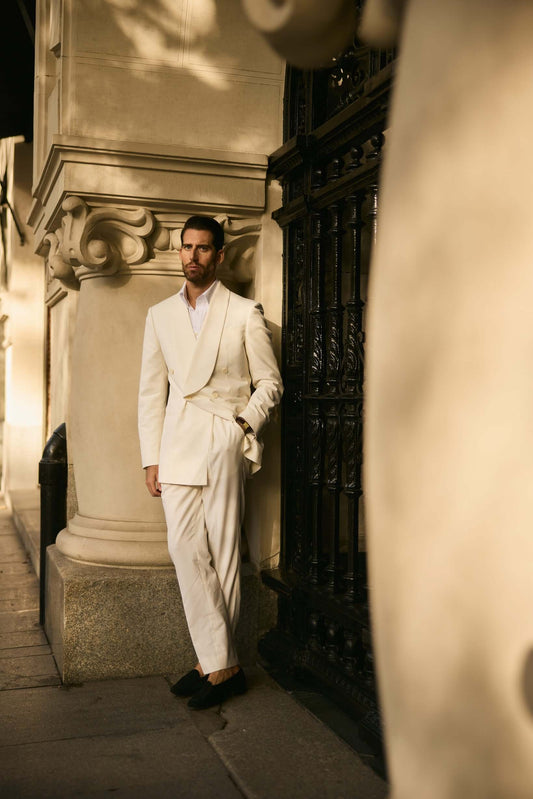

Slim Fit vs Classic Fit Suit: What’s the Real Difference?
Last modified:One of the most common questions men ask when shopping for a suit is: slim fit or classic fit? The answer depends on your body type, the occasion, and your personal aesthetic. In this guide, we'll break down exactly what distinguishes these two silhouettes and help you decide which one belongs in your wardrobe.
Quick Answer
The main difference between a slim fit suit and a classic fit suit is the cut. Slim fit suits are tailored closer to the body with narrower jackets and tapered trousers for a modern appearance, while classic fit suits offer a roomier silhouette that prioritizes comfort, timeless style, and freedom of movement. Slim fit works best for lean or athletic builds, whereas classic fit suits suit a wider range of body types and formal occasions.
What Is a Slim Fit Suit?
A slim fit suit is cut closer to the body throughout. The jacket has a more pronounced waist suppression, narrower lapels, and higher armholes. The trousers are tapered from the thigh down to the ankle, with minimal excess fabric.
Slim fit suits project a modern, sharp, fashion-forward aesthetic. They're particularly flattering on lean or athletic builds. However, they can feel restrictive for broader-shouldered or full-chested men if not properly tailored.
Our custom suits allows you to specify exact measurements and choose between slim, modern, and classic silhouettes — ensuring the fit works for your actual body, not a size chart.
Not sure how slim fit compares with other tailoring styles? Explore our guide to men's suit styles to understand the differences between slim, modern, classic, and other popular suit fits.
What Is a Classic Fit Suit?
A classic fit suit — also called a traditional or regular fit — offers more room throughout the jacket and trousers. The chest has extra ease, the jacket hangs lower on the torso, and the trousers have a fuller cut through the thigh and knee.
Classic fit suits are comfortable, dignified, and ideal for extended wear. They tend to read as more formal and authoritative, making them a popular choice for professionals following business professional attire.
Who Should Choose Each Suit Fit?
- Choose a slim fit suit if: You prefer a modern silhouette, have a lean or athletic build, and want a sharper, fashion-forward appearance.
- Choose a classic fit suit if: You prioritize comfort, spend long hours in your suit, or want a timeless style suitable for business and formal occasions.
- Choose a custom suit if: You want the balance of comfort and a tailored silhouette without compromising on fit.
Key Differences at a Glance

Here's how the two fits compare across the most important dimensions:
|
Feature |
Slim Fit |
Classic Fit |
|
Jacket Silhouette |
Tapered waist, close to body |
Straight, relaxed through torso |
|
Lapel Width |
Narrower (2.5–3 inches) |
Wider (3–3.75 inches) |
|
Trouser Cut |
Tapered, slim through ankle |
Fuller through thigh and knee |
|
Best Body Type |
Lean, athletic, slim builds |
Athletic, muscular, fuller builds |
|
Occasion |
Fashion events, modern settings |
Business, formal, traditional |
|
Comfort |
Fitted but may restrict movement |
More room, comfortable all day |
Which Fit Is Right for Your Body Type?

Body type plays a huge role in fit selection. Our guide on slim fit vs regular fit by body type goes into full detail, but here's a quick overview:
If you're also deciding between different suit styles beyond fit alone, our guide to types of suits explains when each style works best.
Slim Fit Works Best For:
- Men with a 34–38 inch chest and lean frame
- Younger professionals seeking a modern aesthetic
- Fashion-forward occasions, events, and prom
- Men who want to emphasize a V-shaped torso
Classic Fit Works Best For:
- Men with broader shoulders or a fuller chest
- Those who need all-day wearability and comfort
- Formal business and professional environments
- Men over 40 seeking a dignified, authoritative look
The Fit That Beats Both: Custom
The truth is, neither slim fit nor classic fit works perfectly for every man straight off the rack. Most men fall somewhere in between — benefiting from a tailored middle ground that accounts for their unique proportions.
That's where custom tailoring becomes the obvious answer. Our custom suit design tool lets you specify your exact measurements and choose a silhouette that's uniquely yours — with no compromises.
For a detailed look at why custom always outperforms off-the-rack, read our piece on custom tailored suits vs off-the-rack .
How Should a Suit Fit Regardless of Style?
Whether you choose a slim fit or classic fit suit, proper tailoring matters more than the label. A well-fitting suit should sit naturally on the shoulders, allow comfortable movement through the chest, show about a quarter-inch of shirt cuff, and have trousers that break cleanly over your shoes. Even the best fabric cannot compensate for poor fit.
Modern AI technology can also improve sizing accuracy before tailoring begins. Learn how AI suit measurements help create better-fitting custom suits.
Pros and Cons of Slim Fit Suits

Pros
- Modern appearance
- Creates a sharper silhouette
- Excellent for lean body types
- Ideal for fashion-forward events
Cons
- Can restrict movement
- Less forgiving for weight fluctuations
- Requires more accurate sizing
Best Suit Fit by Occasion

| Occasion | Recommended Fit |
|---|---|
| Business Meeting | Classic Fit |
| Wedding | Slim or Custom Fit |
| Interview | Classic Fit |
| Cocktail Party | Slim Fit |
| Formal Gala | Classic or Custom |
Wedding dress codes often allow both slim and classic silhouettes depending on the venue. Browse our custom wedding suits for inspiration across modern and timeless styles.
Can a Classic Fit Suit Be Tailored Into a Slim Fit?
Yes, in many cases a skilled tailor can reduce excess fabric through the waist, chest, sleeves, and trousers to create a slimmer silhouette. However, there are limits. Jackets cannot usually be enlarged, and heavily structured garments have less room for alteration. Starting with a quality custom-made suit remains the best long-term solution.
Which Suit Fit Should You Buy?
If you're buying your first suit, prioritize versatility over trends. A slightly tailored classic fit or a modern custom fit provides the greatest flexibility for work, weddings, interviews, and formal events. Men who already own classic business suits often add a slim fit suit later for social occasions and evening events.
If you're preparing for an important interview, our guide to interview suits for men explains what hiring managers typically expect.
Final Verdict
Slim fit and classic fit suits each serve different purposes rather than competing against one another. Slim fit emphasizes a contemporary, close-fitting silhouette, while classic fit prioritizes comfort, timeless elegance, and versatility. The best choice depends on your body shape, lifestyle, and how you plan to wear the suit. If you're looking for the ideal balance of style, comfort, and precision, a custom-made suit built specifically for your measurements offers the best of both worlds.
Frequently Asked Questions
Is slim fit more formal than classic fit?
No. Both are equally formal when tailored correctly. The difference is purely in silhouette.
Is classic fit outdated?
No. Classic fit remains the preferred choice for business professionals, executives, and formal occasions because of its timeless appearance.
Can larger men wear slim fit suits?
Yes, provided the suit is properly tailored. Many men benefit from a custom modern fit that combines structure with comfort.
Which fit is better for weddings?
Both work well. Slim fit creates a contemporary look, while classic fit offers timeless elegance. Custom tailoring provides the best overall result.
What's the difference between slim fit and modern fit?
Modern fit sits between slim and classic fit, offering a slightly tapered silhouette without feeling restrictive.