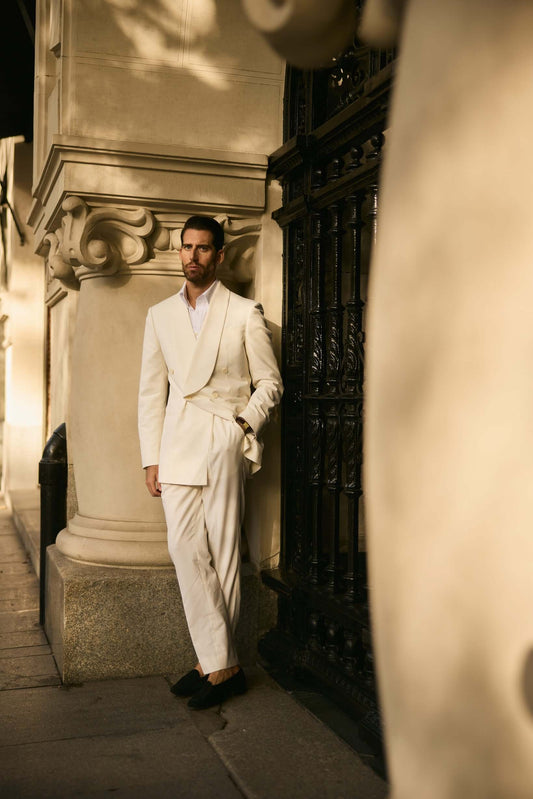

What Is a Bespoke Suit? Everything You Need to Know Before Investing
Last modified:Share
The word "bespoke" is one of the most used — and most misused — terms in men's fashion. Luxury brands apply it to everything from mass-produced suits to marginally customized off-the-rack garments. But true bespoke tailoring is something entirely different: a process, a craft, and ultimately a garment that represents the highest standard of men's dress.
So, what is a bespoke suit exactly? And is it the right investment for you? This guide covers everything you need to know before you commit.
Quick Answer
A bespoke suit is a suit made entirely from scratch using an individual paper pattern created specifically for one wearer. Unlike made-to-measure suits, which modify an existing template, bespoke tailoring involves drafting a completely new pattern, multiple fittings, extensive hand craftsmanship, and a very high level of customization. It represents the highest level of traditional tailoring and produces a garment designed exclusively for your body and preferences.
Key Takeaways
- A bespoke suit is built from a completely unique paper pattern.
- Traditional bespoke tailoring usually involves three to five fittings.
- Every aspect—from fabric and lapels to lining and buttons—is customizable.
- True bespoke suits typically take 8–16 weeks to complete.
- Prices generally start around $3,000 and can exceed $10,000.
- Bespoke offers the highest level of fit, craftsmanship, and personalization available.
What Is a Bespoke Suit? The True Definition
A bespoke suit is a made-to-order garment constructed entirely from scratch to the specific measurements, specifications, and preferences of a single individual. The word "bespoke" comes from the English verb "to bespeak," meaning to speak for something — in this context, to claim a bolt of cloth that is cut and sewn specifically for you.
Unlike made-to-measure (where a pre-existing pattern is adjusted) or off-the-rack (where a standard-sized garment is purchased), bespoke tailoring creates an entirely new pattern based on your body's unique proportions.
For a comparison of bespoke vs. tailored suits, see our guide on bespoke vs. tailored suits .
What Makes a Suit Truly Bespoke?
Not every made-to-order suit qualifies as bespoke. A genuine bespoke suit includes several defining characteristics that separate it from made-to-measure and standard custom tailoring.
- A unique paper pattern drafted specifically for your body.
- Fabric cut individually by hand rather than from standardized templates.
- Multiple basted fittings to refine balance, posture, and silhouette.
- Extensive hand construction, including hand-padded lapels and canvassing.
- Extensive personalization covering fabrics, lapels, pockets, linings, buttons, vents, cuffs, monograms, and many other design details.
- Personal pattern retention, with the tailoring house normally storing and refining your individual pattern for future garments.
The History of Bespoke Tailoring
The word bespoke comes from the verb bespeak, meaning to arrange, reserve, or speak for something in advance. In British tailoring, cloth selected and reserved for a particular customer was traditionally described as having been spoken for or bespoken.
The term later became closely associated with London's Savile Row and the tradition of garments individually patterned, cut, fitted, and constructed for one client. Today, bespoke tailoring remains widely regarded as the highest expression of traditional men's suiting, although the word is sometimes used more loosely in modern marketing.
The Bespoke Process: What to Expect
Step 1: The Consultation
The process begins with a detailed consultation between you and your tailor. You discuss your needs, preferred silhouette, fabrics, lining, buttons, and any specific styling requests. A skilled bespoke tailor will also advise based on your lifestyle, occupation, and how you intend to wear the suit.
Step 2: Measurements
Comprehensive measurements are taken — typically 20–40 measurements across the body, including not just the obvious dimensions (chest, waist, inseam) but subtler ones: posture, shoulder slope, one-side-larger-than-the-other asymmetries, and how you naturally carry yourself.
Step 3: Pattern Drafting
A unique paper pattern is drafted from your measurements, posture, balance, and physical proportions. The tailoring house will normally retain this personal pattern so it can be refined and reused for future garments. Policies differ between tailors, so clients should not assume that the physical pattern automatically becomes their property.
Step 4: Basting (First Fitting)
A temporary version of the garment is assembled using loose basting stitches and the selected cloth. During this basted fitting, the tailor assesses balance, length, drape, posture, shoulder position, sleeve angle, and overall silhouette before permanent construction is completed. Some tailoring houses use terms such as forward fitting for a later stage in which the garment is more developed.
Step 5: Refinements and Final Fittings
The number of fittings varies by tailoring house, garment complexity, and the corrections required. Following the initial basted fitting, one or more refinement fittings may be used to adjust shape, comfort, balance, sleeve position, trouser line, and finishing details before completion.
Step 6: Completion
The finished suit is delivered. Traditional bespoke production typically takes 8–16 weeks, although the exact timeline varies depending on the tailor, fabric availability, complexity of the garment, and number of fittings.
Bespoke vs. Made-to-Measure vs. Off-the-Rack
| Feature | Bespoke | Made-to-Measure | Off-the-Rack |
|---|---|---|---|
| Pattern | Created from scratch | Existing pattern altered | Standard factory sizing |
| Measurements | 20–40+ | 10–20 | None |
| Fittings | 3–5 | 1–2 | None |
| Customization | Extensive | Moderate | Very limited |
| Construction | Predominantly handmade | Combination | Factory produced |
| Typical Time | 8–16 weeks | 3–8 weeks | Immediate |
| Typical Price | $3,000–$10,000+ | $700–$2,500 | $200–$1,000+ |
If you're deciding between factory-made clothing and individually fitted garments, you may also find our guide to tailored suits vs. off-the-rack suits helpful.
Is a Bespoke Suit the Same as a Custom Suit?
Not necessarily. Custom suit is a broad commercial term that may refer to made-to-measure, semi-custom, or fully bespoke clothing. A suit can therefore be described as custom without being genuinely bespoke.
The defining distinction is pattern creation. A true bespoke suit begins with a new pattern drafted specifically for the wearer and is refined through a series of fittings. A made-to-measure custom suit normally begins with an existing base pattern that is adjusted according to the customer's measurements and preferences.
Neither option is automatically right for every buyer. Bespoke provides the greatest control over fit and construction, while made-to-measure custom suits can deliver an excellent balance of personalization, convenience, and price. For a broader explanation of the available options, read our complete custom suit buying guide .
What Makes a Bespoke Suit Worth the Investment?
Fit
A bespoke suit is designed to achieve the closest possible fit for your individual body rather than conforming you to a standardized size or adjusted factory pattern. Shoulder slope, posture, balance, asymmetry, and proportion can all be considered during pattern drafting and fittings. The result should feel natural, balanced, and comfortable while creating a silhouette tailored specifically to you.
Construction Quality
True bespoke suits are constructed using traditional hand-tailoring techniques. The canvas—the internal structure that gives the jacket its shape—is hand-padded and basted rather than fused. A hand-padded canvas develops a gentle lapel roll and gradually conforms to the wearer's chest over time in a way that fused construction cannot replicate.
Fabric Selection
Bespoke allows access to the full range of fabric houses—from Loro Piana and Ermenegildo Zegna to the finest English and Italian mills. You select the fabric, weight, weave, texture, and finish yourself to suit your lifestyle, climate, and intended occasions.
If you're deciding between seasonal fabrics, our guide to linen vs. wool suits explains which materials perform best in different climates.
Longevity
A well-made bespoke suit can provide many years—and in some cases decades—of wear when it is constructed from quality fabric, rotated appropriately, stored correctly, and properly maintained. Its lifespan also depends on changes in weight, posture, and how frequently the garment is worn.
How Much Does a Bespoke Suit Cost?
True bespoke suits from established tailoring houses typically range from $3,000 to $10,000+ depending on the tailor, fabric, and level of detail involved. Custom and made-to-measure options offer many of the fitting and personalization benefits at a significantly lower price point.
What Determines the Price of a Bespoke Suit?
The final cost can vary significantly based on several factors:
- Tailoring house and location: Established tailors in major luxury markets generally charge more because of reputation, labor costs, and demand.
- Fabric: Durable business wool may be less expensive than cashmere, vicuña, rare blends, or highly exclusive cloth.
- Amount of handwork: Hand-cutting, hand-padded canvassing, hand-finished buttonholes, and other labor-intensive details increase the price.
- Garment type: A three-piece suit, dinner suit, overcoat, or complex design normally costs more than a standard two-piece suit. If you're considering a more formal wardrobe, explore our custom three-piece suit .
- Number of fittings: Difficult postures, major asymmetries, or complex styling requests may require additional appointments and adjustments.
- Customization: Special linings, rare buttons, unusual pockets, embroidery, and other individual details may affect the final price.
When comparing prices, evaluate what is actually included. Two tailors may both use the word bespoke while offering different levels of pattern work, fittings, hand construction, fabric quality, alterations, and aftercare.
For a more accessible route to personalized craftsmanship, explore Bold Italia's custom Italian suits . They provide extensive personalization and individual fit at a more accessible price point than traditional bespoke tailoring.
Pros and Cons of a Bespoke Suit
Pros
- Exceptional fit tailored specifically to your body.
- Extensive design customization covering fabrics, construction, styling, and finishing details.
- Superior craftsmanship and construction.
- Excellent longevity when properly maintained.
- A unique garment unlike any ready-made suit.
Cons
- Significantly more expensive than made-to-measure.
- Long production time.
- Requires several in-person fittings.
- May be unnecessary for occasional suit wearers.
How to Tell Whether a Suit Is Genuinely Bespoke
Because the word bespoke is sometimes used loosely, ask the tailor how the garment will actually be produced before paying a deposit. A reputable tailoring house should be able to explain its process clearly and without relying only on luxury terminology.
Questions to Ask a Bespoke Tailor
- Will a completely new pattern be drafted for me? This is one of the clearest distinctions between bespoke and made-to-measure.
- How many fittings are included? The answer should reflect the tailor's process rather than a guaranteed universal number.
- Will there be a basted fitting? A temporary basted garment allows major corrections before permanent construction.
- Who will cut and construct the suit? Ask whether the work is performed in-house, by an external workshop, or through a combination of both.
- What type of canvas and internal construction will be used? The tailor should explain whether the jacket is fully canvassed, partially canvassed, or fused.
- Which alterations are included after delivery? Clarify the adjustment policy before ordering.
- Will my pattern be retained for future orders? Also ask how subsequent changes in weight or posture will be handled.
- What happens if the final fit requires further correction? A clear aftercare policy is an important sign of professionalism.
Be cautious when a retailer markets a garment as bespoke but offers no original pattern, no basted fitting, very limited design choices, or only a short measurement appointment followed by factory production. That service may still provide a good garment, but it is more accurately described as made-to-measure or custom rather than traditional bespoke.
Is a Bespoke Suit Right for You?
A bespoke suit is an excellent investment if:
- You wear suits regularly: Daily or near-daily wear justifies the investment in quality, comfort, and long-term value.
- You have a challenging fit: Very tall, very broad, very slim, muscular, or physically asymmetrical individuals often benefit enormously from the bespoke process.
- You value quality over quantity: A carefully chosen bespoke suit can provide many years of wear when it is made from durable fabric, constructed well, rotated appropriately, and properly maintained.
- You appreciate craftsmanship: Traditional tailoring is as much about artistry and process as it is about the finished garment.
- You have a significant occasion: Weddings, major career milestones, and formal events can justify investing in a garment designed for repeated use. If you're shopping for your wedding, browse our custom wedding suits .
Who Should Consider Made-to-Measure Instead?
While bespoke represents the pinnacle of tailoring, it is not always the most practical option. Made-to-measure suits are often a better choice for first-time buyers, professionals who wear suits occasionally, or those seeking a balance between customization and affordability.
They provide a significantly improved fit over off-the-rack garments while requiring fewer fittings, shorter production times, and a lower overall investment.
How to Choose Your First Bespoke Suit
Your first bespoke commission should usually be versatile rather than highly experimental. A well-planned first suit gives you more opportunities to wear it and helps you evaluate the tailor's fit and construction before ordering additional garments.
Start With a Versatile Color
Navy and charcoal are the safest first choices because they work for business, weddings, dinners, interviews, and many formal occasions. Mid-gray is another adaptable option for professionals who already own navy.
If you're unsure which suit style best matches your needs, read our guide to the different types of suits .
Choose a Practical Fabric
A medium-weight worsted wool is generally more useful for a first commission than an extremely lightweight, delicate, or seasonal cloth. It drapes cleanly, resists wrinkles reasonably well, and can be worn during much of the year.
Keep the Styling Timeless
A single-breasted, two-button jacket with moderate notch lapels, double vents, and classic proportions will normally remain useful longer than an aggressively narrow, oversized, or trend-driven design.
Review the differences between classic, modern, and slim silhouettes in our guide to men's suit styles .
Be Honest During the Fittings
Tell the tailor how the garment feels when you sit, walk, reach, and move naturally. Do not focus only on achieving an extremely close fit while standing still.
A successful bespoke suit should combine a flattering silhouette with enough comfort and mobility for its intended use.
How to Care for a Bespoke Suit
Bespoke construction does not make a suit indestructible. Its lifespan depends on the fabric, frequency of wear, storage, maintenance, and whether the garment continues to fit properly.
- Allow the suit to rest between wears so moisture can evaporate and the fabric can recover.
- Use a broad, supportive hanger that preserves the jacket's shoulder shape.
- Brush the fabric gently after wear to remove dust and surface debris.
- Steam minor wrinkles rather than pressing the garment repeatedly with excessive heat.
- Dry-clean only when necessary because frequent chemical cleaning can shorten fabric life.
- Return to the tailor when weight, posture, or fit changes rather than continuing to strain the garment.
For more detailed maintenance advice, read our complete suit care guide .
Frequently Asked Questions About Bespoke Suits
How many fittings does a bespoke suit require?
A bespoke suit commonly involves several fittings, often including an initial basted fitting followed by one or more refinement fittings. The exact number varies according to the tailor's process, the client's body, and the complexity of the garment, so three to five fittings should be treated as a common range rather than a universal rule.
How long does it take to make a bespoke suit?
Traditional bespoke suits often take approximately 8–16 weeks, although timelines vary considerably. Tailor availability, fabric sourcing, the number of fittings, international travel, and the complexity of the commission can all affect delivery time.
How much does a bespoke suit cost?
Bespoke suits from established tailoring houses commonly begin around $3,000 and can exceed $10,000. The fabric, location, tailor's reputation, amount of handwork, number of garments, and level of customization influence the final price.
Is bespoke the same as made-to-measure?
No. A bespoke suit begins with a new pattern drafted specifically for one wearer. A made-to-measure suit normally modifies an existing base pattern according to the customer's measurements and selected design options.
Is a bespoke suit the same as a custom suit?
Bespoke suits are custom-made, but not every custom suit is bespoke. Custom is a broad term that may describe made-to-measure, semi-custom, or bespoke garments. Buyers should examine the actual pattern, fitting, and construction process rather than relying on the label alone.
Does bespoke always mean completely handmade?
Traditional bespoke tailoring involves extensive handwork, particularly in pattern drafting, cutting, fitting, canvassing, shaping, and finishing. However, some machine stitching may still be used for selected structural seams. The presence of appropriate machine work does not by itself mean that a garment is not bespoke.
Can a bespoke suit be altered after completion?
Yes, within the allowances permitted by the garment's construction and available seam fabric. Minor changes are usually easier than major alterations. Significant weight or posture changes may require extensive recutting or an entirely new garment.
Who benefits most from bespoke tailoring?
Bespoke can be especially valuable for people with pronounced asymmetry, unusual proportions, posture considerations, highly specific design preferences, or a lifestyle that requires frequent suit wear. It can also appeal to buyers who appreciate traditional craftsmanship and are willing to invest the necessary time.
Is a bespoke suit worth the money?
It can be worth the investment for someone who prioritizes individual fit, craftsmanship, personalization, and long-term use. A buyer who wears suits infrequently, has a limited budget, or needs a garment quickly may receive better value from made-to-measure or a well-altered ready-to-wear suit.
What color should a first bespoke suit be?
Navy or charcoal is usually the most versatile choice for a first commission. Both colors work across professional, wedding, dinner, and formal settings and are less likely to date than unusual colors or highly distinctive patterns.
Final Thoughts
A true bespoke suit is defined by more than premium fabric, body measurements, or the ability to choose buttons and linings. Its defining qualities are an individually drafted pattern, a structured fitting process, and construction decisions made specifically for one wearer's proportions, posture, and preferences.
Bespoke tailoring is not automatically the best choice for every buyer. It requires a substantial budget, patience, and active participation in several fittings. For the right wearer, however, it offers a level of individuality, craftsmanship, and creative control that standardized clothing cannot easily reproduce.
Before investing, compare the actual services offered rather than relying solely on terms such as bespoke, custom, or tailored. Understanding how the pattern is created, how many fittings are included, where the garment is constructed, and what aftercare is provided will help you make a more informed decision.
Whether you ultimately choose true bespoke or a high-quality custom alternative, the goal remains the same: a suit that fits your body, reflects your personal style, and serves you well for years to come.
Ready to begin your custom tailoring journey? Explore Bold Italia's custom suits and discover how personalized tailoring can elevate your wardrobe.