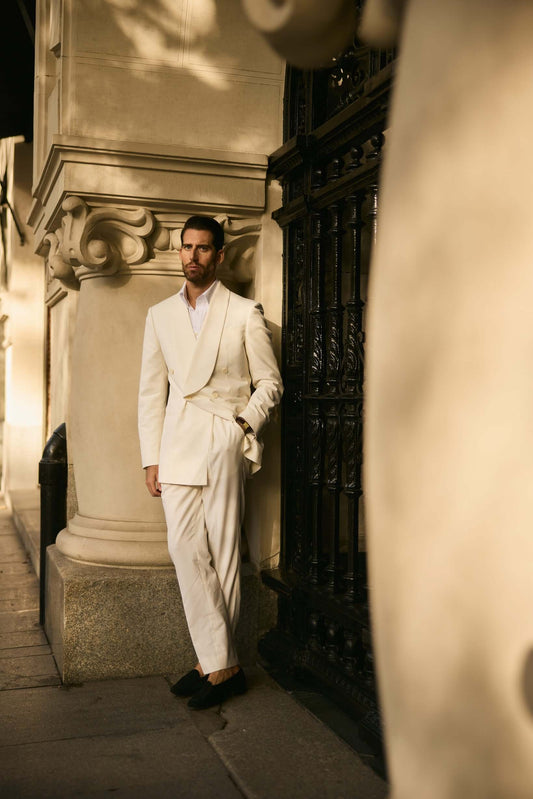

Single-Breasted vs. Double-Breasted Suits: How to Choose
Last modified:Choosing between a single-breasted vs. double-breasted suit comes down to more than the number of buttons. The two jacket styles differ in construction, silhouette, formality, versatility, and the impression they create.
Single-breasted suits remain the most versatile choice for everyday tailoring, while double-breasted suits create a more structured and distinctive look. Neither style is automatically better—the right choice depends on your body proportions, occasion, wardrobe, and personal style.
Quick answer: A single-breasted jacket has one column of buttons and a relatively narrow front overlap. A double-breasted jacket has two parallel button columns and a wider overlapping front. Single-breasted suits generally offer greater versatility for business, weddings, and everyday formalwear, while double-breasted suits create a stronger, more structured silhouette and can make an especially distinctive choice for dressier occasions.
Key Takeaways
- Single-breasted suits have one button column and a narrower front overlap.
- Double-breasted suits have two parallel button columns and a wider overlapping front.
- Single-breasted suits are usually the most versatile choice for work, weddings, interviews, and a first suit.
- Double-breasted suits generally create a more structured, commanding appearance.
- Body proportions matter, but good tailoring is more important than rigid body-type rules.
- Single-breasted jackets commonly feature notch or peak lapels, while double-breasted jackets are strongly associated with peak lapels.
- Both styles can work for modern wardrobes when the fit, fabric, proportions, and occasion are appropriate.
What Is a Single-Breasted Suit?

A single-breasted suit features a jacket with one row of front buttons and a relatively narrow overlap where the two sides of the jacket meet. Two-button jackets are especially common, although one-button and three-button designs are also established options.
The cleaner front gives the single-breasted jacket a streamlined appearance that works across a wide range of settings. It can look conservative with a white dress shirt and tie, relaxed with an open-collar shirt, or more expressive through fabric, color, lapel choice, and accessories.
That versatility helps explain why single-breasted construction is the standard choice for many business suits, wedding suits, and everyday tailored outfits. If you are still comparing different jacket constructions and silhouettes, our guide to types of suits every man should know provides a broader overview.
What Is a Double-Breasted Suit?

A double-breasted suit uses a wider front overlap and two parallel rows of buttons. Not every visible button is necessarily functional; some are part of the jacket's visual balance and traditional configuration.
Because more fabric crosses the front of the torso, double-breasted construction creates a stronger horizontal and architectural effect than a typical single-breasted jacket. Peak lapels are also commonly used, helping emphasize the shoulders and upper body.
The result is a suit that tends to feel more intentional and visually assertive. Double-breasted tailoring can work for business, weddings, formal occasions, and stylish everyday dressing, but it normally attracts more attention than a comparable single-breasted suit.
Single-Breasted vs. Double-Breasted Suit: Key Differences

| Feature | Single-Breasted Suit | Double-Breasted Suit |
|---|---|---|
| Button layout | One vertical button column | Two parallel button columns |
| Front overlap | Narrower | Wider |
| Common button styles | 1, 2, or 3 buttons | Often 4 or 6 visible buttons |
| Common lapels | Notch or peak | Usually peak |
| Silhouette | Clean and streamlined | Structured and commanding |
| Formality | Highly versatile | Generally reads dressier or more deliberate |
| Business wear | Excellent everyday option | Polished and distinctive when styled appropriately |
| Weddings | Versatile for groom or guest | Strong statement option |
| First suit | Usually the safer choice | Better when greater visual presence is desired |
| Styling flexibility | Very high | More intentional and proportion-sensitive |
The Construction Difference

The fundamental difference between single- and double-breasted suits is structural.
A single-breasted jacket closes with one vertical row of buttons and only a modest overlap between the two jacket fronts. A double-breasted jacket brings one side farther across the torso before fastening, creating a noticeably wider overlap and two visible button columns.
This affects much more than appearance. The wider overlap changes the balance of the jacket, the placement of the buttons, the shape of the lapels, and the amount of visual weight across the chest and waist.
That is why two suits made from the same navy wool can still communicate very different personalities simply because one is single-breasted and the other double-breasted.
Buttons and Lapels: What Changes Between the Two Styles?

Single-Breasted Button Configurations
Single-breasted jackets commonly use one, two, or three front buttons. The two-button configuration is particularly versatile because it creates a balanced opening through the chest while working across business, wedding, and semi-formal tailoring.
A one-button jacket can create a cleaner, more minimalist effect, while a three-button jacket gives the front a slightly more closed appearance.
Double-Breasted Button Configurations
Double-breasted jackets commonly show four or six buttons. You may also see configurations described with terms such as 6×2 or 4×2. These numbers refer to the visible button arrangement and the number of buttons designed to fasten.
The precise configuration affects where the jacket closes and how the torso is visually divided, which makes proportion especially important when choosing a double-breasted design.
Notch vs. Peak Lapels
Single-breasted suits most commonly use notch lapels, although peak lapels can create a sharper and more formal appearance. Double-breasted suits are closely associated with peak lapels because the upward angle complements the jacket's broader, more structured front.
Lapel width, shoulder width, chest proportions, button placement, and jacket length should all work together rather than being chosen independently. If you are comparing lapel designs, see our complete guide to men's tailoring details and style choices.
Which Suit Is More Formal?
All else being equal, a double-breasted suit generally creates a more formal and deliberate impression than a comparable single-breasted suit. The wider overlap, additional buttons, and frequent use of peak lapels give it greater visual structure.
That does not mean a single-breasted suit is casual. A dark single-breasted wool suit with polished dress shoes, a crisp shirt, and a conservative tie can be highly formal and entirely appropriate for professional or ceremonial settings.
Likewise, a double-breasted jacket can be made less formal through softer fabrics, relaxed shirts, knitwear, loafers, or more casual accessories.
Think of construction as one part of the overall formality equation. Fabric, color, fit, shirt, shoes, accessories, and dress code all matter. For a broader breakdown, see our formal dress code for men.
Single vs. Double-Breasted Suits by Body Type

Body type matters, but it should be treated as a guide rather than a strict rule. A well-proportioned custom jacket can often achieve a flattering result across a much wider range of builds than generic sizing advice suggests.
Tall and Lean Builds
Tall, lean men can usually wear either silhouette comfortably. A double-breasted jacket can be especially effective because the broader front and stronger lapels add visual presence without overwhelming the frame.
A single-breasted suit remains an excellent choice when a cleaner, less imposing silhouette is preferred.
Athletic Builds
Men with broader shoulders and a defined waist can wear both constructions successfully. A properly cut double-breasted jacket can emphasize the upper body, while a single-breasted jacket creates a cleaner vertical line.
The key is avoiding excessive tightness through the chest or waist. Structure should enhance the silhouette rather than restrict movement.
Shorter Builds
Single-breasted suits are often easier to proportion on shorter men because the more open front and simpler button arrangement can create a longer visual line.
A double-breasted suit is still possible, but jacket length, lapel width, button placement, and overall scale become especially important. Oversized lapels or a low buttoning point can disrupt proportions.
Broader or Larger Builds
A single-breasted jacket is often the easiest starting point for broader builds because the narrower overlap creates less visual weight through the center of the torso.
However, the idea that larger men should never wear double-breasted suits is too rigid. Correct shoulder width, button placement, jacket length, and waist shaping can make a significant difference.
If overall fit is your primary concern, our guide to slim fit vs. regular fit suits explains how silhouette should relate to body proportions rather than trends alone.
Single vs. Double-Breasted Suits by Occasion

Business and Office
A single-breasted suit is the safest and most adaptable choice for most professional environments. Navy, charcoal, and medium gray versions transition easily between meetings, presentations, interviews, and everyday office wear.
A double-breasted business suit creates greater presence and can work especially well when the rest of the outfit remains restrained. Conservative wool, subtle patterns, polished shoes, and a clean dress shirt prevent the stronger jacket construction from becoming overly theatrical.
For additional workplace styling guidance, see our business professional attire guide or browse our custom business suits.
Weddings
Both styles are excellent wedding options.
A single-breasted suit gives a groom maximum flexibility and works particularly well when the wedding wardrobe needs to remain classic, understated, or reusable after the event.
A double-breasted suit creates more visual presence and can distinguish the groom from the rest of the wedding party without requiring an unusual color or exaggerated styling.
Explore wedding suits or read our guide to wedding suits for men for more ideas by venue, season, and formality.
Job Interviews
For most job interviews, a single-breasted suit is the more dependable choice. It communicates professionalism without drawing unnecessary attention to the clothing itself.
A navy or charcoal two-button suit paired with a conservative shirt and polished shoes works across a broad range of industries.
See our guide to interview suits for men for more specific recommendations.
Cocktail and Evening Events
Both silhouettes can work for cocktail parties, dinners, receptions, and other evening occasions.
A single-breasted suit is easy to adapt through shirts, ties, pocket squares, and footwear. A double-breasted suit offers a more distinctive alternative, particularly in navy, charcoal, deep brown, or textured fabrics.
When the invitation specifies cocktail attire, the overall dress code should guide the styling. Our cocktail attire for men guide explains the distinction in more detail.
Semi-Formal Events
Single-breasted suits are especially useful for semi-formal occasions because they can move easily between more conservative and more relaxed styling.
A double-breasted suit can also work, particularly for evening events where a stronger tailored look feels appropriate. Keep the fabric and accessories aligned with the actual dress code rather than relying on jacket construction alone.
For help distinguishing nearby dress codes, see our guide to formal vs. semi-formal attire.
Single-Breasted Suit: Pros and Cons

Advantages of a Single-Breasted Suit
- Works across business, weddings, interviews, and semi-formal events.
- Generally easy to style with different shirts, ties, and footwear.
- Available in a wide range of fits, fabrics, colors, and lapel styles.
- Creates a clean, streamlined silhouette.
- Usually the safest option for a first or only suit.
- Transitions easily from conservative to modern styling.
Potential Drawbacks
- Can appear less distinctive than double-breasted tailoring.
- A very basic configuration may feel conventional if you want a stronger style statement.
- Poor fit can still make even a versatile design look unbalanced.
Double-Breasted Suit: Pros and Cons

Advantages of a Double-Breasted Suit
- Creates a strong, structured silhouette.
- Offers greater visual presence than most single-breasted jackets.
- Works especially well when you want tailoring to become a focal point of the outfit.
- Peak lapels and a broader front can emphasize the shoulders.
- Can be an excellent choice for weddings, formal events, and distinctive business dressing.
Potential Drawbacks
- Requires more careful attention to proportion and fit.
- Generally feels more deliberate and less neutral than single-breasted tailoring.
- The wider front overlap can add unnecessary visual weight if the jacket is poorly proportioned.
- It may not be the most versatile option if you are buying only one suit.
Are Double-Breasted Suits in Style in 2026?
Yes. Double-breasted suits remain firmly part of contemporary menswear in 2026, but the way they are worn is less rigid than the traditional business and formalwear associations of earlier decades.
Modern double-breasted tailoring can appear in classic navy and charcoal, but also in lighter neutrals, brown, green, subtle stripes, seasonal fabrics, and softer constructions. Styling has also become more flexible, with open-collar shirts, knitwear, loafers, and less formal accessories appearing alongside traditional shirt-and-tie combinations.
The jacket's intended silhouette is generally strongest when properly fastened, but contemporary styling no longer requires every double-breasted outfit to feel ceremonial or old-fashioned.
The important distinction is that double-breasted should be chosen because its proportions and visual character suit the wearer—not simply because it happens to be trending.
Single-Breasted or Double-Breasted: Which Should You Choose?
Choose a single-breasted suit if:
- You are buying your first suit.
- You need one suit to cover the widest range of occasions.
- You dress regularly for business or professional environments.
- You prefer a cleaner, more understated silhouette.
- You want maximum flexibility with shirts, ties, shoes, and accessories.
- You want a suit that can be dressed up or down easily.
Choose a double-breasted suit if:
- You want a stronger and more distinctive silhouette.
- You already own versatile single-breasted tailoring.
- You like prominent peak lapels and structured jacket proportions.
- You are dressing for a wedding or occasion where greater visual presence is appropriate.
- You want your tailoring to feel intentional rather than purely functional.
If standard sizing makes either silhouette difficult to balance through the shoulders, chest, waist, sleeves, or jacket length, custom tailoring provides greater control over the proportions. Browse our custom suits to compare styling possibilities.
Frequently Asked Questions
What is the main difference between a single-breasted and double-breasted suit?
The main difference is the jacket closure. A single-breasted jacket has one vertical row of buttons and a narrow overlap, while a double-breasted jacket has two parallel button columns and a wider overlap across the front. This gives double-breasted jackets a more structured appearance.
Which is more formal: single-breasted or double-breasted?
A double-breasted suit generally reads as more formal and deliberate because of its wider front overlap, additional buttons, and frequent use of peak lapels. However, fabric, color, shirt, footwear, and accessories also determine the overall level of formality.
Which is better for a first suit?
For most men, a single-breasted two-button suit is the better first choice because it works across business, weddings, interviews, dinners, and many semi-formal events. Double-breasted tailoring is an excellent addition once the core wardrobe is established.
Which is better for a wedding?
Both can work. Single-breasted is versatile and easy to reuse after the wedding, while double-breasted offers greater visual presence and can be particularly effective for a groom who wants a more distinctive tailored look.
Can shorter men wear double-breasted suits?
Yes. Height alone does not determine whether a double-breasted suit will work. Shorter men should pay particular attention to jacket length, lapel width, button placement, and overall proportions so the jacket does not visually overwhelm the frame.
Can bigger men wear double-breasted suits?
Yes. Larger men are not automatically limited to single-breasted suits. A well-proportioned double-breasted jacket can work successfully, although the wider overlap means fit through the chest, waist, shoulders, and jacket length needs to be carefully controlled.
Can you wear a double-breasted suit to work?
Yes. A double-breasted suit can be appropriate for business, particularly in classic navy, charcoal, gray, or subtle patterns. For conservative workplaces, keeping the shirt, tie, footwear, and accessories restrained helps maintain a professional appearance.
Should a double-breasted jacket be worn open?
A double-breasted jacket is designed to create its strongest intended silhouette when fastened. Modern styling sometimes shows double-breasted jackets worn open in more relaxed settings, but proper fit should always be judged with the jacket buttoned.
Are double-breasted suits still in style?
Yes. Double-breasted tailoring remains relevant in 2026 and is worn in both traditional and contemporary ways. Modern versions often combine classic construction with softer fabrics, updated proportions, relaxed shirts, or less formal footwear.
The Bottom Line
When comparing a single-breasted vs. double-breasted suit, the most important difference is not simply the number of buttons—it is how the jacket's construction changes proportion, versatility, formality, and visual impact.
A single-breasted suit remains the most adaptable choice for most wardrobes. It works across professional settings, weddings, interviews, dinners, and semi-formal events while giving you substantial freedom with fabric, color, lapel style, and accessories.
A double-breasted suit creates more structure and presence. When its shoulders, button placement, lapels, jacket length, and waist are correctly proportioned, it can be an exceptionally strong choice for business, weddings, formal occasions, or simply a more distinctive personal style.
Neither construction is universally superior. Choose the silhouette that suits your proportions, your wardrobe, and where you intend to wear it.
Ready to create yours? Build a personalized look with our custom 2-piece suit configurator.