
Suit Lapel Styles Explained: Notch, Peak, and Shawl
Last modified:Most people can tell when two suit jackets look different without immediately knowing why. In many cases, the difference comes down to the lapel style.
Lapels help shape the visual width of the chest, influence how formal a jacket feels, and can make a suit appear understated, sharp, traditional, or distinctly formal. Understanding the main types of suit lapels also makes it easier to choose the right details when buying or designing a suit.
Quick Answer: The three main suit lapel styles are notch, peak, and shawl. A notch lapel is the versatile everyday standard commonly found on business suits. A peak lapel has upward-pointing edges that create a sharper and more pronounced appearance. A shawl lapel has a smooth, continuous curve with no notch and is primarily associated with tuxedos and formal eveningwear.
Key Takeaways
- Notch lapel: The most versatile lapel and the standard choice for business, professional, and everyday suits.
- Peak lapel: A sharper, more pronounced style with points extending upward toward the shoulders.
- Shawl lapel: A smooth, rounded lapel most strongly associated with tuxedos and eveningwear.
- Peak lapels can be worn on both single-breasted and double-breasted jackets.
- Lapel style and lapel width are separate design choices, and both influence the overall proportions of a jacket.
- Medium-width lapels are generally the easiest to keep versatile over time.
- The best lapel depends on the jacket, occasion, body proportions, and the overall impression you want your suit to create.
The Three Main Types of Suit Lapels

Although tailors can adjust width, gorge position, shape, and proportions, most traditional tailored jackets use one of three fundamental lapel styles.
| Lapel Style | How to Identify It | Typical Formality | Best For | Overall Effect |
|---|---|---|---|---|
| Notch Lapel | V-shaped notch where the collar and lapel meet | Business to semi-formal | Business suits, interviews, weddings, everyday tailoring | Classic and versatile |
| Peak Lapel | Lapel points extend upward toward the shoulders | Business-formal to formal | Double-breasted suits, weddings, formal suits, statement tailoring | Sharper and more assertive |
| Shawl Lapel | Smooth, continuous rounded edge without a notch | Formal eveningwear | Tuxedos, dinner jackets, black-tie events | Elegant and fluid |
The physical differences between these lapels may look relatively small, but changing the lapel can noticeably change the character of the same jacket.
Parts of a Suit Lapel You Should Know

You do not need to know every tailoring term to choose a suit, but understanding a few basic parts makes lapel comparisons much easier.
Lapel
The lapel is the folded section of fabric running from the front of the jacket upward toward the collar. Its shape determines whether the jacket has a notch, peak, or shawl configuration.
Gorge
The gorge is the point where the jacket collar meets the lapel. Tailors can position the gorge higher or lower, which can subtly change how the upper portion of the jacket looks.
Lapel Edge
The outside edge creates much of the visual shape and width of the lapel. Changing this proportion can make the same lapel style look more traditional, contemporary, or dramatic.
Lapel Buttonhole
Many tailored jackets have a buttonhole on the left lapel. It can be used for a boutonniere, particularly for weddings and formal events.
These details should work with the jacket as a whole rather than being chosen independently.
What Is a Notch Lapel?

A notch lapel is identified by the visible V-shaped indentation where the jacket collar meets the lapel.
It is the most familiar lapel configuration in modern menswear and remains a standard choice for business professional attire.
Because its shape is relatively understated, a notch lapel allows the fabric, color, fit, shirt, tie, and accessories to determine much of the overall character of the outfit.
When Should You Wear a Notch Lapel?
Notch lapels work particularly well for:
- Business and professional settings
- Office suits
- Job interviews
- Business-casual tailoring
- Weddings
- Semi-formal events
- Cocktail events
- Everyday suits
For an interview, the restraint of a notch lapel can be particularly useful because the suit looks polished without making the jacket itself the focal point. See our guide to interview suits for men for more guidance on professional suit choices.
Why Is the Notch Lapel So Common?
Its greatest strength is versatility.
A notch lapel does not automatically make a jacket noticeably more formal or dramatic. That allows other elements of the outfit to establish the tone.
It can work on a navy business suit, a textured sport coat, a wedding suit, or a more relaxed tailored jacket without feeling out of place.
If you are buying your first quality suit, a medium-width notch lapel is generally one of the most versatile places to start.
What Is a Peak Lapel?

A peak lapel has edges that extend upward and outward toward the shoulders.
These upward-pointing lines create a stronger visual direction across the upper torso, which can make a jacket appear sharper and more pronounced than an otherwise comparable notch-lapel jacket.
Peak lapels are particularly common on double-breasted suits but are also widely used on single-breasted jackets.
What Does a Peak Lapel Suit Mean?
A peak lapel suit generally communicates greater formality and visual presence than a comparable notch-lapel suit.
Peak lapels have long been associated with formal tailoring and double-breasted jackets. Today, however, a single-breasted peak lapel suit is also an established option.
That makes the peak lapel useful when you want a suit to feel more distinctive without moving completely into formal eveningwear.
When Should You Wear Peak Lapels?
Peak lapels can work particularly well for:
- Double-breasted suits
- Business-formal settings
- Weddings
- Important presentations
- Formal occasions
- Statement tailoring
- Certain tuxedo styles
- Single-breasted suits that need more visual presence
For a broader look at how different jacket configurations change a suit, see our guide to the types of suits every man should know.
Peak Lapel on Single-Breasted vs. Double-Breasted Suits
A peak lapel works on both jacket configurations, but the effect is different.
Single-breasted peak lapel: This combines a familiar jacket front with a more distinctive lapel. It can work particularly well for weddings, formal professional settings, and suits designed to have more personality.
Double-breasted peak lapel: This is the more traditional pairing. The upward lapel points complement the broader overlapping front of the jacket and reinforce the strong upper-body structure associated with double-breasted tailoring.
Notch Lapel vs. Peak Lapel: What's the Difference?
The notch lapel vs. peak lapel decision is one of the most common choices when designing a suit.
The main difference is not simply the physical shape. It is the overall effect each lapel creates.
| Consideration | Notch Lapel | Peak Lapel |
|---|---|---|
| Shape | V-shaped notch | Upward-pointing peaks |
| Overall appearance | Understated and traditional | Sharper and more pronounced |
| Versatility | Very high | High, but more distinctive |
| Business wear | Excellent | Excellent when greater presence is appropriate |
| Weddings | Excellent | Excellent |
| Double-breasted jackets | Uncommon | Traditional choice |
| Single-breasted jackets | Standard | Established alternative |
| Visual effect | Neutral and balanced | Emphasizes the shoulders and upper chest |
| First-suit suitability | Excellent | Better when a stronger look is desired |
Neither style is inherently better.
Choose a notch lapel when versatility, restraint, and everyday wearability are your priorities.
Choose a peak lapel when you want stronger visual lines, additional formality, or a more distinctive jacket.
Can a Single-Breasted Suit Have Peak Lapels?
Yes.
Although peak lapels have strong historical associations with double-breasted tailoring, a single-breasted peak lapel suit is now an established option.
The combination creates a useful middle ground. You retain the familiar structure and wearability of a single-breasted jacket while introducing the stronger visual lines of peak lapels.
For weddings, evening occasions, or professional situations where a more distinctive suit is appropriate, it can be an effective alternative to a conventional notch lapel.
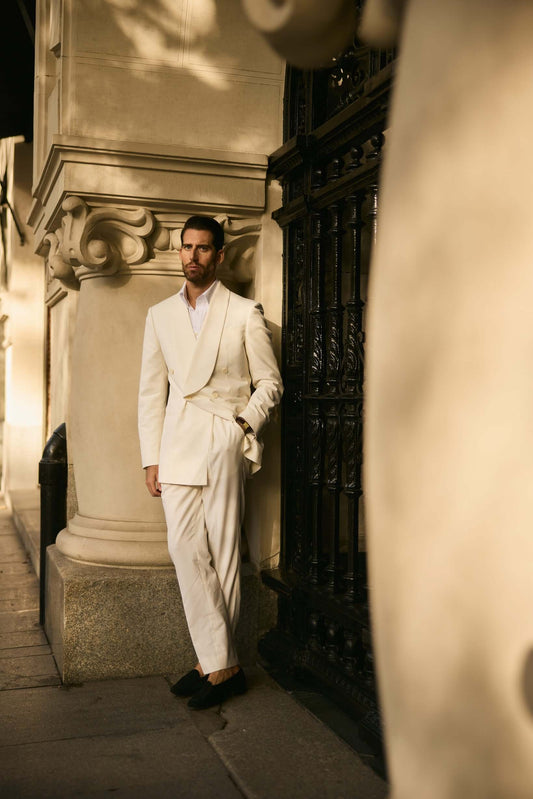
What Is a Shawl Lapel?

A shawl lapel, sometimes called a shawl collar, removes the notch or peak entirely.
Instead, the collar and lapel form a smooth, continuous curve extending from the back of the neck toward the jacket's buttoning point.
That uninterrupted line gives shawl lapels their distinctive, elegant appearance.
Unlike notch and peak lapels, however, shawl lapels have a much narrower range of traditional uses.
They are primarily associated with tuxedos, dinner jackets, smoking jackets, and other forms of formal eveningwear.
Shawl Collar vs. Notch Lapel

When comparing a shawl collar vs. notch lapel, the most important distinction is their typical use.
A notch lapel is an everyday tailoring option that works across business, weddings, professional events, and many semi-formal settings.
A shawl lapel is predominantly an eveningwear detail.
Shawl lapels are commonly found on:
- Tuxedos
- Dinner jackets
- Velvet dinner jackets
- Smoking jackets
- Formal eveningwear
They are rarely used on conventional business suits.
If you are choosing among different types of tuxedos for men, a shawl lapel offers a softer visual alternative to the sharper angles of a peak-lapel tuxedo.
Shawl Lapel vs. Peak Lapel Tuxedo

Both peak and shawl lapels are established options for tuxedos, but they create noticeably different impressions.
A peak-lapel tuxedo produces stronger angles and tends to look sharper and more structured.
A shawl-lapel tuxedo creates a smoother, continuous line and has a classic eveningwear character.
Neither is universally better.
A peak lapel may appeal to someone who wants stronger structure and presence, while a shawl lapel works particularly well when the goal is a clean, elegant evening silhouette.
For a deeper comparison of formal jackets, see our guide to tuxedos vs. suits.
Are Suit Lapels and Tuxedo Lapels Different?
The fundamental lapel shapes can overlap between suits and tuxedos, but they are not always used in the same way.
Conventional business and everyday suits most commonly use notch or peak lapels.
Tuxedos traditionally favor peak or shawl lapels and may feature contrasting lapel facings that distinguish the jacket from an ordinary suit.
A notch lapel can appear on some tuxedo designs, but peak and shawl lapels are more strongly associated with traditional formal eveningwear.
If you are dressing for a formal evening event, understanding the complete black-tie dress code for men can help you choose the appropriate jacket, shirt, footwear, and accessories together.
Lapel Style vs. Lapel Width: What's the Difference?

Lapel style and lapel width are two separate design decisions.
Lapel style refers to the shape:
- Notch
- Peak
- Shawl
Lapel width refers to how broad or narrow the lapel appears across the chest.
That means a notch lapel can be narrow, medium, or wide. The same is true of a peak lapel.
Two jackets can therefore use the same lapel style but still look very different because of their proportions.
This distinction is important when choosing a custom suit because the lapel should be considered alongside the shoulders, chest, button position, jacket length, and overall silhouette.
Does Suit Lapel Width Matter?
Yes.
Lapel width has a noticeable influence on the proportions of a jacket.
Rather than selecting a width purely because it is currently fashionable, consider whether it works with the rest of the suit and with your overall proportions.
Narrow Lapels
Narrow lapels create a leaner, more streamlined appearance.
They may work particularly well with:
- Slimmer jacket proportions
- Smaller-scale patterns
- Minimalist styling
- More contemporary silhouettes
Extremely narrow lapels can make a jacket look more trend-driven, particularly when combined with very narrow ties or aggressively slim tailoring.
Medium Lapels
Medium-width lapels occupy the middle ground and generally offer the greatest versatility.
They work comfortably with a wide range of:
- Suit cuts
- Body proportions
- Shirt collars
- Tie widths
- Business settings
- Wedding styles
If you want a suit that can remain useful for years rather than following a short-lived trend, moderate lapel proportions are usually the safest option.
Wide Lapels
Wider lapels create greater visual presence across the chest.
They can work especially well with:
- Broader jacket proportions
- Double-breasted suits
- Stronger tailoring
- Larger-scale patterns
- Classic or vintage-inspired designs
A wider peak lapel can create a particularly assertive upper-body silhouette, while a wider notch lapel can give a traditional suit more visual weight.
Extremely wide lapels, however, can become as trend-dependent as extremely narrow ones.
Should Lapel Width Match Your Body Type?
Body proportions should be considered, but there is no universal formula saying that one body type must wear one particular lapel width.
A better principle is proportional balance.
The lapel should relate naturally to:
- Shoulder width
- Chest proportions
- Jacket length
- Jacket cut
- Button position
- Shirt collar
- Tie width
A very narrow lapel on a broad, heavily structured jacket can look visually disconnected. An extremely wide lapel on a small jacket may have the opposite effect.
The goal is not to make your body conform to a lapel rule. It is to choose proportions that make the entire jacket look cohesive.
This is also why lapel selection should be considered during the design stage. Unlike certain trouser or waist adjustments, lapel width generally cannot be significantly changed after the jacket has been constructed.
Should Lapel Width Match Tie Width?
The lapel and tie do not need to be exactly the same width.
However, they should usually feel proportionally compatible.
A very narrow tie paired with an extremely wide lapel can make the upper half of the outfit feel disconnected, just as an unusually broad tie can overwhelm a very narrow lapel.
Think in terms of visual balance rather than exact measurements.
What Lapel Style Should I Wear?
If you are deciding what lapel style to wear, start with the intended purpose of the jacket.
Best Lapel for Business and Everyday Professional Wear
Choose a notch lapel.
It provides the broadest versatility and fits naturally into most professional environments.
If you are building a suit primarily for work, you can also compare the options available for custom business suits.
Best Lapel for a More Assertive Business Suit
Consider a peak lapel.
Its upward lines create greater visual presence without requiring you to choose a double-breasted jacket.
For high-level meetings, presentations, or occasions where you want a stronger silhouette, a restrained single-breasted peak-lapel suit can work particularly well.
Best Lapel for a Wedding Suit
Both notch and peak lapels are excellent choices.
A notch lapel produces a versatile, understated wedding suit that can easily be worn again.
A peak lapel creates a sharper and somewhat more formal effect, making it attractive when the groom wants the jacket to feel more distinctive.
For more options, see our complete guide to wedding suits for men.
Best Lapel for Cocktail Attire
A notch or peak lapel can both work for cocktail attire.
A notch lapel keeps the suit understated and versatile, while a peak lapel can add more presence for an evening event.
The venue and level of formality still matter, so use the invitation and event setting as your guide. Our cocktail attire for men guide explains how the complete outfit should come together.
Best Lapel for a Double-Breasted Suit
Choose a peak lapel.
Peak lapels are the traditional and most natural pairing with double-breasted jackets.
Their stronger proportions complement the overlapping front and help reinforce the broader upper-body silhouette created by the jacket.
Best Lapel for a Tuxedo
Choose either a peak or shawl lapel.
Peak lapels provide sharper structure and stronger visual angles.
Shawl lapels provide a smoother, classic eveningwear silhouette.
Both can work beautifully for black-tie occasions.
If you are building formal eveningwear from the ground up, explore the custom tuxedo options available through Bold Italia.
Best Lapel for Your First Suit
For most men, a medium-width notch lapel is the safest starting point.
It can move naturally between:
- Work
- Interviews
- Weddings
- Dinners
- Semi-formal occasions
- Everyday professional wear
A peak lapel is still a valid first-suit option if you specifically prefer a stronger look, but the notch lapel generally gives you maximum versatility.
Best Suit Lapel by Occasion
| Occasion | Recommended Lapel | Why |
|---|---|---|
| Everyday business | Notch | Versatile, professional, and understated |
| Job interview | Notch | Polished without drawing excessive attention to the jacket |
| Important business event | Notch or Peak | Peak creates more presence; notch remains more neutral |
| Wedding | Notch or Peak | Both work; peak creates a more distinctive look |
| Cocktail event | Notch or Peak | Depends on the venue and desired level of formality |
| Double-breasted suit | Peak | Traditional pairing with stronger visual proportions |
| Black tie | Peak or Shawl | Both are established tuxedo choices |
| First suit | Notch | Offers the greatest everyday versatility |
Common Suit Lapel Mistakes to Avoid

Choosing Lapels Based Only on Trends
Extremely narrow and extremely wide lapels periodically move in and out of fashion.
If longevity matters, moderate proportions tend to be easier to wear over time.
Assuming Peak Lapels Are Only for Double-Breasted Suits
Peak lapels remain strongly associated with double-breasted tailoring, but that does not mean they are restricted to it.
A single-breasted peak-lapel jacket is an established option and can work especially well for weddings, formal business settings, and more distinctive tailoring.
Wearing Shawl Lapels as Everyday Businesswear
A shawl collar communicates eveningwear strongly.
For a conventional office or business suit, notch or peak lapels are usually more appropriate.
Choosing Lapel Width Without Considering the Rest of the Jacket
Lapel width should not be selected independently of:
- Shoulder width
- Chest proportions
- Jacket length
- Button placement
- Shirt collar
- Tie width
The strongest jackets look cohesive because these details work together.
Choosing the Lapel Before Considering the Jacket
A lapel may look appealing in isolation but still be wrong for the jacket around it.
The lapel should support the overall design rather than competing with it.
Matching Lapel and Tie Width Too Literally
Your tie and lapel do not need to measure exactly the same.
The objective is visual harmony, not mathematical precision.
A balanced relationship between the two usually looks more natural than forcing an exact match.
Tailoring Note: Lapels should never be treated as an isolated decorative feature. Their shape and width work together with the jacket's shoulders, chest, button stance, fabric, and overall proportions.
Frequently Asked Questions About Suit Lapels
What are the three types of suit lapels?
The three primary types of suit lapels are notch, peak, and shawl. Notch lapels are the versatile everyday standard. Peak lapels create stronger lines and generally appear more formal or pronounced. Shawl lapels have a smooth, rounded edge and are primarily associated with tuxedos and formal eveningwear.
Which is better: notch lapel or peak lapel?
Neither is universally better. A notch lapel offers greater neutrality and everyday versatility, while a peak lapel creates stronger visual presence and usually feels more formal. The better choice depends on the jacket and the occasion.
What is the most versatile suit lapel?
A medium-width notch lapel is generally the most versatile option. It works naturally with business suits, interviews, weddings, semi-formal events, and everyday professional tailoring.
Are peak lapels more formal than notch lapels?
Generally, yes. Peak lapels traditionally carry a stronger and more formal character than notch lapels, although fabric, color, construction, and styling also affect how formal the finished suit appears.
Can I wear a peak lapel suit to work?
Yes. Peak lapels can work in professional environments, particularly where traditional tailoring or more formal business dress is appropriate. They simply create a more noticeable upper-body silhouette than a conventional notch lapel.
Can a notch lapel be worn to a wedding?
Absolutely. A notch lapel is an excellent choice for wedding suits, particularly when you want a versatile jacket that can continue to be worn for work, dinners, and other occasions afterward. A peak lapel is a stronger alternative when you want the wedding suit itself to appear more distinctive.
Can you wear a shawl lapel on a regular suit?
A jacket can technically be designed in many ways, but shawl lapels are strongly associated with tuxedos, dinner jackets, and eveningwear. For a conventional business or everyday suit, notch or peak lapels are normally more appropriate.
Which lapel is best for a double-breasted suit?
A peak lapel is the traditional choice for a double-breasted suit. Its upward-pointing shape complements the wider overlapping front of the jacket and contributes to the strong, structured appearance associated with double-breasted tailoring.
Which lapel is best for a tuxedo?
Both peak and shawl lapels are excellent tuxedo choices. Peak lapels create a sharper, more structured effect. Shawl lapels create a smoother and more classic eveningwear silhouette. The better choice comes down largely to the overall aesthetic you want.
Should lapel width match tie width?
They do not need to match exactly. The lapel and tie should simply look proportionally balanced with one another and with the rest of the jacket.
The Bottom Line: Choosing the Right Suit Lapel
The difference between notch, peak, and shawl lapels comes down to much more than the shape of the jacket opening.
Notch lapels are the versatile default and remain an excellent choice for business suits, interviews, weddings, and multipurpose tailoring.
Peak lapels introduce stronger angles, greater presence, and additional formality while working on both single-breasted and double-breasted jackets.
Shawl lapels occupy a different category, belonging primarily to tuxedos and formal eveningwear.
Once you have chosen the basic lapel style, consider width and proportion.
A well-chosen lapel should complement the jacket, the wearer's proportions, and the occasion rather than simply following whichever style happens to be fashionable.
If you are building your jacket from the ground up, use our custom 2-piece suit configurator to choose the details that suit your intended look. For a more complete tailored ensemble, you can also design a custom 3-piece suit.