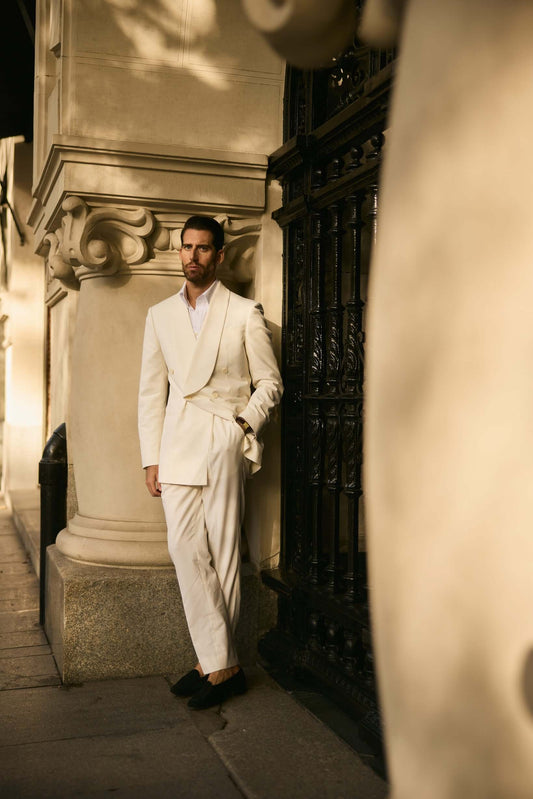

Formal Wear for Men: Complete Guide From Work to Weddings
Last modified:Formal wear for men can mean very different things depending on the occasion. A professional setting may call for a navy or charcoal business suit, while a formal wedding may require a darker suit or tuxedo depending on the invitation. Black tie has its own established rules, and white tie sits above it as the highest traditional level of evening dress.
The important point is that formal wear is not one universal outfit. The right choice depends on the dress code, setting, time of day, season, and level of formality expected.
This guide explains the major levels of men's formal wear, what belongs in a formal outfit, what to wear for work, weddings and evening events, and how to choose the right suit, shirt, shoes, fabrics, fit, and accessories.
Quick Answer: What Is Formal Wear for Men?
Formal wear for men ranges from dark business suits to tuxedos depending on the occasion and stated dress code. Business formal generally calls for a navy or charcoal suit, dress shirt, tie, and leather dress shoes. A formal wedding may call for a dark suit, while black tie requires a tuxedo, white formal shirt, black bow tie, and formal black shoes. White tie is even more formal and follows its own traditional dress rules.
If an invitation gives you a specific dress code, follow that wording rather than assuming that every formal event requires the same outfit.
What Does Formal Wear Mean Today?

Formal wear is best understood as a range of dress codes rather than a single category. The more formal the occasion, the more structured and specific the clothing generally becomes.
A dark business suit may be completely appropriate for an executive meeting, interview, or professional presentation but may not satisfy a black-tie invitation. Likewise, a tuxedo that is appropriate for an evening gala would usually be unnecessarily formal in a normal business setting.
For a deeper explanation of how the individual levels work, see our formal dress code for men guide.
Men's Formal Wear Dress Codes at a Glance

| Dress Code | What Men Should Wear | Common Occasions |
|---|---|---|
| Business Formal | Dark suit, dress shirt, conservative tie, leather dress shoes | Executive meetings, traditional offices, presentations, interviews |
| Formal | Dark or appropriately formal suit, dress shirt, tie, polished dress shoes | Weddings, ceremonies, dinners, formal social events |
| Black-Tie Optional | Tuxedo preferred, although an appropriately formal dark suit may be acceptable | Evening weddings, galas, formal receptions |
| Black Tie | Tuxedo, white formal shirt, black bow tie, formal black shoes | Galas, black-tie weddings, formal evening events |
| White Tie | Black tailcoat, formal trousers, white waistcoat, white bow tie, formal shoes | State occasions and exceptionally formal events |
Formal and semi-formal are also not interchangeable. If you are unsure where one ends and the other begins, our formal vs. semi-formal attire guide explains the distinction in more detail.
What Makes an Outfit Formal?

Formality comes from more than simply wearing a suit. The garment, color, fabric, shirt, footwear, accessories, and overall level of structure all influence how formal an outfit appears.
Darker solid colors, structured tailoring, refined fabrics, dress shirts, ties, and polished leather shoes generally increase formality. Lighter colors, highly textured fabrics, open collars, relaxed tailoring, and casual footwear usually move an outfit toward semi-formal, cocktail, business-casual, or smart-casual territory.
Context still matters most. A charcoal suit that looks appropriately formal in a business presentation may still be underdressed when an invitation specifically states black tie.
Essential Pieces of Men's Formal Wear

Suit or Tuxedo
The jacket and trousers establish the foundation of a formal outfit. A matching suit works across professional settings, weddings, ceremonies, and many formal social occasions. A tuxedo is reserved for dress codes such as black tie and selected highly formal evening events.
If you are deciding between the two, see our suit or tuxedo guide for a more detailed comparison.
Dress Shirt
White remains the most versatile formal shirt color because it works with almost every traditional suit and is the standard foundation for black-tie dressing. Light blue also works particularly well with navy, charcoal, and gray business suits.
The collar should sit cleanly, the shirt should remain smooth through the torso, and the cuffs should work properly with the jacket sleeve length.
Tie or Bow Tie
A necktie is common for business formal, weddings, and many traditional formal occasions. A black bow tie is part of the standard black-tie combination. The event's dress code should determine which option is appropriate rather than personal preference alone.
Formal Trousers
Suit trousers should match the jacket when the outfit is intended to function as a complete suit. Tuxedo trousers are designed as part of the tuxedo and should be worn with the corresponding dinner jacket rather than substituted with ordinary suit trousers.
Dress Shoes
Formal footwear should look polished, clean, and appropriate for the outfit. Black leather shoes are the safest choice for the highest levels of formality, while dark brown shoes can work well with many navy and gray suits.
Accessories
Pocket squares, cufflinks, watches, belts, and other accessories should support the outfit rather than dominate it. Formal dressing generally rewards restraint, particularly in professional and highly traditional settings.
Formal Wear for Work: Business Professional

In professional environments, formal wear usually means business professional attire rather than evening wear. The goal is to look polished, credible, and appropriately dressed without introducing unnecessary decoration.
Core Business Formal Outfit
- Navy, charcoal, or medium-gray suit
- White or light blue dress shirt
- Conservative necktie
- Polished leather dress shoes
- Minimal accessories
Navy and charcoal remain especially useful because they transition easily between meetings, presentations, interviews, dinners, and other professional situations.
For a complete breakdown of professional dress expectations, read our business professional attire for men guide.
If business suits make up an important part of your wardrobe, you can also review custom business suits designed specifically for professional wear.
Formal Wear for Business Events and Important Meetings

Conferences, presentations, interviews, client meetings, and executive events may require a slightly sharper version of everyday professional clothing.
A dark navy or charcoal suit paired with a crisp dress shirt, conservative tie, and polished leather shoes remains one of the safest combinations. Fit becomes particularly important because cleaner lines and balanced proportions make even a simple outfit look more refined.
For interview-specific guidance, see our interview suits for men guide.
Formal Wear for Weddings

Wedding attire depends on the invitation, venue, season, time of day, and whether you are the groom, part of the wedding party, or a guest.
A navy, charcoal, or other appropriately formal suit can work for many weddings. Three-piece suits can add another level of structure and formality, while a tuxedo becomes the correct choice when the invitation specifies black tie.
Daytime and outdoor weddings often favor suits and seasonally appropriate fabrics. Evening weddings may call for darker and more refined tailoring, but an evening event does not automatically require a tuxedo. Follow the stated dress code.
For wedding-specific options, visit our wedding suits page or read our wedding suits for men guide .
Men considering additional structure can also review the 3-piece suit configurator.
Black Tie: When a Tuxedo Is Required

Black tie is one of the most clearly defined formal dress codes. When an invitation says black tie, the traditional expectation is a tuxedo rather than a standard business or wedding suit.
Traditional Black-Tie Outfit
- Tuxedo jacket with appropriate formal detailing
- Matching tuxedo trousers
- White formal shirt
- Black bow tie
- Formal black shoes
- Restrained formal accessories
Do not confuse black tie with black-tie optional. Black tie calls for a tuxedo, whereas black-tie optional gives guests additional flexibility and may allow an appropriately formal dark suit.
For the complete rules, see our black-tie attire for men guide. You can also review the dedicated black-tie attire page.
When a tuxedo is the right choice, our custom tuxedo options provide a dedicated starting point.
White Tie: The Highest Traditional Dress Code

White tie sits above black tie as the highest traditional level of men's evening dress. It is far less common than business formal, wedding formal, or black tie, but it remains important when understanding the complete hierarchy of men's formal wear.
A traditional white-tie outfit generally includes a black tailcoat, formal black trousers, white waistcoat, white formal shirt, white bow tie, and formal black footwear.
For a direct comparison between the two highest traditional dress codes, see our black tie vs. white tie guide.
Formal vs. Semi-Formal: What's the Difference?

Formal attire generally requires a higher level of structure and adherence to the stated dress code. Semi-formal gives men more flexibility while still expecting a polished appearance.
A formal evening event may require a dark suit or tuxedo depending on the invitation, while semi-formal attire may allow a suit with fewer traditional accessories and greater freedom in color and styling.
Cocktail attire is another related but distinct category. Rather than covering that dress code in depth here, see our dedicated cocktail attire for men guide.
What Should Men Wear to Different Formal Occasions?

| Occasion | Recommended Men's Formal Outfit |
|---|---|
| Job Interview | Navy or charcoal suit, dress shirt, conservative tie, polished leather shoes |
| Important Business Meeting | Dark business suit, dress shirt, tie, restrained accessories |
| Formal Wedding | Dark or seasonally appropriate suit unless another dress code is stated |
| Black-Tie Wedding | Tuxedo, white formal shirt, black bow tie, formal black shoes |
| Cocktail Event | Suit or elevated tailored outfit depending on the invitation and venue |
| Gala | Follow the invitation; wear a tuxedo when black tie is specified |
| Formal Dinner | Dark suit or tuxedo depending on the stated dress code |
| Summer Formal Event | Lightweight wool or suitable seasonal tailoring while respecting the dress code |
Best Suit Colors for Formal Wear

The most versatile formal suit colors are navy, charcoal, gray, and black, although their usefulness varies by occasion.
Navy
Navy works particularly well for business, weddings, professional events, dinners, and many other occasions. Its versatility makes it one of the strongest first choices when building a formal wardrobe.
For styling ideas, see our navy suit combinations .
Charcoal
Charcoal offers a conservative, refined appearance that works especially well for business and traditional formal environments.
See our charcoal suit combinations guide for more styling examples.
Black
Black can look highly formal, particularly for evening occasions, but it is less versatile for everyday business wear than navy or charcoal. A black suit also should not be confused with a tuxedo when the dress code specifically requires black tie.
For a broader comparison, read our guide to the best suit colors for men .
Best Fabrics for Formal Wear
Fabric affects structure, comfort, seasonality, and the overall appearance of a formal outfit. The right fabric should suit both the event and the climate.
| Fabric | Best For | General Formality |
|---|---|---|
| Worsted Wool | Business, weddings, year-round formal wear | High |
| Lightweight Wool | Warm-weather business and formal events | High |
| Wool Blends | Versatile formal and professional wear | Medium to High |
| Linen | Summer, destination, and outdoor events | Moderate |
| Velvet | Selected evening jackets and special occasions | High when appropriate to the event |
Wool remains one of the most versatile foundations for formal tailoring. Linen offers greater warm-weather character but naturally creates a more relaxed appearance.
If you are choosing between the two, read our linen vs. wool suit guide .
For hot-weather options, you can also review our summer suits and linen suits.
What Shoes Should Men Wear With Formal Attire?
Leather dress shoes remain the safest choice for most formal outfits. Black Oxfords offer maximum versatility for conservative business attire and highly formal occasions, while dark brown leather shoes can pair well with navy, medium-gray, and selected charcoal suits.
Black formal footwear is the standard choice for black tie. The more formal the event becomes, the more important it is to avoid footwear that appears athletic, distressed, bulky, or overly casual.
Shoes should also be clean, polished, and in good condition. An otherwise well-tailored outfit can lose much of its impact when paired with neglected footwear.
How Should Formal Wear Fit?

Fit is one of the most important elements of formal clothing. Even expensive fabrics and refined accessories cannot compensate for a jacket or pair of trousers that sits poorly on the body.
Well-fitted formal wear should:
- Sit cleanly across the shoulders
- Button without obvious pulling or excess fabric
- Allow comfortable movement
- Maintain balanced proportions
- Create clean lines through the jacket and trousers
Different men may also prefer different silhouettes, from classic to modern or slimmer cuts. Our men's suit styles guide explains those differences.
Custom tailoring can provide greater control over measurements, proportions, and garment details. If you want to understand how digital measurement is used within modern custom tailoring, read how AI suit measurements work .
You can also review our custom suits if you are building a formal wardrobe around your measurements and preferences.
Formal Wear Accessories: What Should You Choose?
Accessories should complement formal clothing rather than compete with it. The right choices depend on the dress code, so an accessory that works with a business suit may not necessarily belong with a tuxedo.
| Accessory | Business Formal | Formal Wedding | Black Tie |
|---|---|---|---|
| Necktie | Usually appropriate | Usually appropriate | Not the traditional choice |
| Bow Tie | Uncommon | Depends on outfit | Black bow tie |
| Pocket Square | Optional | Optional | Keep understated |
| Cufflinks | Optional | Optional | Often appropriate |
| Watch | Conservative | Conservative | Minimal and discreet |
Keep colors and patterns coordinated and avoid adding accessories simply because they are available. A restrained, intentional outfit generally looks more polished than one overloaded with competing details.
How to Build a Formal Wardrobe That Covers Most Occasions

Most men do not need dozens of formal outfits. A relatively small number of versatile pieces can cover work, interviews, weddings, dinners, ceremonies, and other formal occasions.
- A versatile navy suit
- A charcoal or dark gray suit
- White and light blue dress shirts
- A small selection of conservative ties
- Black leather dress shoes
- Dark brown dress shoes where appropriate
- A tuxedo if black-tie events are part of your calendar
From there, add pieces according to your actual lifestyle rather than buying clothing for hypothetical occasions. A three-piece suit, linen suit, additional formal shirts, or tuxedo becomes useful when your work, social schedule, or events justify it.
If you are comparing different suit constructions and styles before purchasing, our types of suits guide provides a broader overview.
Common Formal Wear Mistakes to Avoid

- Ignoring the dress code stated on the invitation
- Assuming every formal event requires the same outfit
- Wearing a normal suit when black tie specifically requires a tuxedo
- Assuming every evening wedding automatically requires a tuxedo
- Wearing a poorly fitted jacket or trousers
- Choosing casual or neglected footwear
- Using too many accessories at once
- Prioritizing short-lived trends over balanced proportions
When the dress code is unclear, start with the invitation and venue, consider the time and nature of the event, and choose an outfit that respects the expected level of formality.
Frequently Asked Questions About Formal Wear for Men
What is considered formal wear for men?
Formal wear for men generally includes structured clothing such as a suit, dress shirt, tie, and leather dress shoes. The exact outfit depends on the occasion. Business formal usually means a dark suit and tie, while black tie requires a tuxedo with a white formal shirt, black bow tie, and formal black shoes.
Does formal attire always mean wearing a tuxedo?
No. A tuxedo is required for black-tie occasions, but many formal events call for a dark suit instead. Business meetings, many weddings, ceremonies, and formal dinners can often be attended in a properly fitted suit when black tie is not specified.
What colors are best for men's formal wear?
Navy, charcoal, gray, and black are the most common formal colors. Navy and charcoal are especially versatile because they work well for business, weddings, and many formal events. Black is more strongly associated with evening and higher-formality dressing.
Can men wear brown shoes with formal attire?
Dark brown leather shoes can work well with navy and many gray suits, particularly for business and daytime formal events. Black leather shoes remain the safer choice for more conservative settings and higher levels of formality, including black tie.
What is the difference between formal and semi-formal attire?
Formal attire generally follows a more structured dress code and may require a dark suit or tuxedo depending on the event. Semi-formal attire allows more flexibility in color, accessories, and styling while still requiring a polished, tailored appearance. For a full comparison, see our formal vs. semi-formal attire guide .
What should a man wear to a formal wedding?
A man can usually wear a well-fitted dark or seasonally appropriate suit to a formal wedding unless the invitation specifies another dress code. If the wedding is black tie, a tuxedo is the appropriate choice. For more detailed wedding guidance, see our wedding suits for men guide .
What should a man wear to a black-tie event?
A traditional black-tie outfit includes a tuxedo, white formal shirt, black bow tie, matching formal trousers, and black formal shoes. A standard business suit should not be treated as equivalent to a tuxedo when the invitation specifically states black tie. For the complete dress-code rules, read our black-tie attire for men guide .
How many formal suits should a man own?
There is no fixed number, but a navy suit and a charcoal suit can cover a large share of business, wedding, interview, and formal-event needs. Men who regularly attend black-tie events may also benefit from owning a tuxedo.
Final Takeaway: Dressing Formally Is About Dressing for the Occasion
Formal wear for men is not a single uniform. It ranges from business suits and formal wedding attire to tuxedos and the highly traditional rules of white tie. Understanding where an occasion sits on that spectrum makes it much easier to choose the correct outfit.
For most wardrobes, a well-fitted navy suit, charcoal suit, quality dress shirts, conservative ties, and polished leather shoes provide a strong foundation. A tuxedo can then be added when black-tie events require one.
Above all, pay attention to the stated dress code, fit, proportion, fabric, and overall coordination. Those principles matter more than chasing every passing trend.
Ready to build your formal wardrobe? Review our custom suits for versatile formal tailoring, or visit our custom tuxedos when the occasion calls for black tie.